Antje Weithaas Violin
Dénes Várjon Piano
Program
Ludwig van Beethoven
Sonata in A major Op. 2 No. 2
Sonata in A minor Op. 23
Sonata in A major Op. 47 "Kreutzer"
Ludwig van Beethoven (1770–1827)
Sonata in A major Op. 2 No. 2 (1797–8)
I. Allegro vivace
II. Andante, più tosto allegretto
III. Allegro piacevole
Sonata in A minor Op. 23 (1800–1)
I. Presto
II. Andante scherzoso, più allegretto
III. Allegro molto
Intermission
Sonata in A major Op. 47 "Kreutzer" (1802–3)
I. Adagio sostenuto – Presto
II. Andante con variazioni
III. Finale. Presto
After the performance, Antje Weithaas and Dénes Várjon will be presented with the annual German Record Critis' Award for their complete recording of Beethovne's Violin Sonatas by jury member Julia Kaiser.

Ludwig van Beethoven, portrait by Joseph Mähler (1804)
Conversations in a Time of Change
Beethoven’s ten sonatas for violin and piano are the work of a composer who was proficient on both instruments. Indeed, during an era in which works of this type were generally conceived as keyboard sonatas with (sometimes optional) accompaniment from the violin, it is striking that Beethoven wrote works that, although described as “Sonatas for Pianoforte and Violin,” in fact place both instruments on something approaching an equal footing.
Essay by Richard Bratby
Conversations in a Time of Change
Ludwig van Beethoven’s Violin Sonatas
Richard Bratby
“Does he believe that I think of his wretched fiddle when the spirit speaks to me?” Beethoven’s famous outburst—supposedly delivered to the violinist Ignaz Schuppanzigh during a rehearsal of a late quartet—has come to stand for the whole of his relationship with the violin. And indeed, as the eminent musicologist Joseph Kerman puts it, “like so many other deeply suspect anecdotes about Beethoven, on the deepest level, this one feels only too authentic.” Peel back its layers, however, and a more ambiguous picture emerges. Beethoven’s deafness might have isolated him from the world, but he was not dealing with abstractions: he was talking to a musician who was also an old friend and who understood his string music better, perhaps, than any artist then alive. We can only guess at Beethoven’s tone of voice, though his use of the ultra-formal third person suggests heavy irony. Schuppanzigh knew that Beethoven understood the violin intimately: in fact, he had given him an intensive series of lessons on the instrument in 1794. Family members often criticize each other in ways that they would never tolerate from an outsider. Beethoven could tease Schuppanzigh because he was a close friend, and he could call the violin “wretched” because—although principally known as a virtuoso pianist—he was also a former violinist of professional standard.
Beethoven’s ten sonatas for violin and piano are defined by that fact. They are the work of a composer who, like Mozart, was proficient on both instruments. Indeed, during an era in which works of this type were intended principally for sale, and when the variable nature and quality of domestic keyboard instruments meant that they were generally conceived as keyboard sonatas with (sometimes optional) accompaniment from the violin, it is striking that both Mozart (in his Mannheim sonatas of 1778) and Beethoven (in his Op. 12), wrote works that, although described as “Sonatas for Pianoforte and Violin,” in fact place both instruments on something approaching an equal footing.
As well they might. Beethoven’s grounding as a string player was strong: he had begun his career in 1788 as a viola player in the Elector’s orchestra in Bonn. It was a virtuoso ensemble (members included the celebrated cellist Bernhard Romberg and the flutist Anton Reicha), so the teenage Beethoven’s playing must, at the very least, have been excellent. On arriving in Vienna, he took violin lessons from Wenzel Krumpholz as well as Schuppanzigh, although his technique deteriorated along with his hearing. “When I was there, we occasionally played his sonatas for violin together,” recalled Ferdinand Ries, who took piano lessons with Beethoven between 1801 and 1805. “But it was really awful … for in his enthusiasm, his ear did not tell him when he had attacked a passage with the wrong fingering.”
Nonetheless, Beethoven made a lifelong practice of cultivating virtuoso players as technical consultants. “Be so good as to have breakfast with me tomorrow, as early as you like but not later than half past seven,” he wrote to the cellist Joseph Linke in a letter believed to date from 1815. “Bring a cello bow, for I have something to discuss with you.” In truth, the fundamentals of string playing, like the instruments themselves, will have changed little during Beethoven’s lifetime. The superb quartet of instruments that Prince Carl von Lichnowsky presented to him in 1800—violins by Amati and Guarneri, a viola by Ruggieri, and a Guarneri cello—would still be highly prized today.
***
The piano, however, was a very different matter. Here was an instrument undergoing rapid and revolutionary development. Beethoven’s career as a composer for piano can almost be traced against the instruments he owned, each one an evolutionary step. His frustration is often palpable: in November 1797 he complained that a new instrument by the Viennese maker Streicher “robs me of the freedom to create my own tone.” Initially delighted with a new piano by Érard of Paris in 1803, he later criticized its “incurably heavy” action. “God knows why my piano music still makes the worst impression on me,” he confided to a sketch book in 1805.
By then, he had almost stopped writing violin sonatas. The ten published sonatas span the period from 1798 to 1812, although the last, Op. 96, is an outlier, composed nearly a decade after the “ Kreutzer” Sonata of 1802–3. There is no “late-period” violin sonata— indeed, no “late-period” chamber music with piano at all, unless you count the two enigmatic, experimental Cello Sonatas Op. 102 of 1815. Overwhelmingly, the violin sonatas are a product of a period, 1798–1803, when Beethoven was highly successful as a pianist and still active (in private, at least) as a violinist, and fully able to attempt the balancing act between the evolving piano and the violin: instruments which, as he told the publisher Breitkopf & Härtel, “are wholly different.”
The fact that he took Mozart as a model in his Op. 12 did not make his solution to that problem any less striking. (Angus Watson has pointed out a near-direct quotation of Mozart’s E-minor Sonata K. 304 in the first movement of Beethoven’s Op. 12 No. 3.) Though dedicated to Antonio Salieri—whom he had befriended through Lichnowsky—it seems certain that Beethoven initially intended to play the keyboard parts himself, and in fact he performed one of the set (possibly with Schuppanzigh) at a benefit for the singer Josefa Duschek on March 29, 1798.
The critic of the Allgemeine musikalische Zeitung responded with bewilderment on June 5, 1799: “Learned, learned and always learned—and nothing natural, no song … a striving for strange modulations.” It is possible that the anonymous critic might have expected these three works to make musical sense without the violin part. In any case, Artaria printed eight further editions in Vienna, and publishers in Bonn, Paris, London, Mainz, Hamburg, and Leipzig all competed for the rights. Beethoven was not exaggerating when he wrote to his friend Franz Wegeler in 1801: “I state my price and they pay.”
A close relationship between performer, environment, and composer continued to inform the works that, in September 1801, the Wiener Zeitung advertised as “Deux Sonates pour le Pianoforte avec un Violon, Op. 23,” dedicated to Count Moritz von Fries. Fries was a skilled amateur violinist; in 1795 he had subscribed to Beethoven’s three Piano Trios Op. 1. He commissioned the two sonatas of “ Op. 23” on the understanding that they would initially be his exclusive possession. After the term elapsed, Beethoven offered them to the publisher Mollo, who (possibly due to an engraver’s error) eventually issued them as separate pieces, Op. 23 and Op. 24.
The Allgemeine musikalische Zeitung’s praise for Beethoven’s “strict order, clarity and craftsmanship” seems like something of an understatement for these two vividly conceived masterpieces. The nickname “Frühlingssonate” for Op. 24 was not Beethoven’s (the only note he added to the manuscript was a comment in red pencil that “The copyist who put triplets and septuplets here is an ass”), although like most musical nicknames, it is a testament to the affection in which the work was held by ordinary music lovers. F major, of course, had a long history as the key of rural greenery—even before Beethoven’s own “Pastoral” Symphony of 1808.
***
In April 1802, on doctor’s orders, Beethoven moved to the village of Heiligenstadt just outside Vienna, where it was hoped that the rural peace would allow his hearing to recover. It seems merely to have heightened his sense of isolation, and he poured out his despair in an anguished letter to his two brothers, known today as the “Heiligenstadt Testament”: “Though born with a fiery, active temperament, even susceptible to the diversions of society, I was soon compelled to isolate myself, to live life alone … much more of that and I would have ended my life—it was only my art that held me back.”
And then, before the end of May 1802, he completed his three Violin Sonatas Op. 30: a set that begins with the expansive warmth of the A-major Sonata Op. 30 No. 1 and ends with the Haydnesque wit of the G-major Op. 30 No. 3. The temptation to impose an autobiographical interpretation on these three works (particularly the C-minor Op. 30 No. 2) is immense, and the fact remains that after Op. 30, Beethoven retreated almost entirely from the violin sonata, returning to the form only twice more, and for two very specific occasions.
The first was the arrival in Vienna in April 1803 of the virtuoso George Bridgetower, the son of a West Indian page in the service of Count Esterházy. In haste, Beethoven wrote a suitably virtuosic violin sonata “in uno stilo molto concertante” for Bridgetower’s benefit concert on May 24, and scribbled a jokey dedication at the top of the score: “Sonata mulattica composta per il Mulatto Brischdauer [Bridgetower], gran pazzo [utter lunatic] e compositore mulattico.” The friendship did not last. When Beethoven sent the sonata to the publisher Nikolaus Simrock in October 1804, he instructed him to print a dedication to the French violinist Rodolphe Kreutzer, “a dear kind fellow who during his stay in Vienna [he had performed with Beethoven while serving as a diplomat in 1798] gave me a great deal of pleasure.” It seems that Kreutzer never actually played “his” sonata.
The last was a favor to a highly placed friend. The touring French virtuoso Pierre Rode arrived in Vienna in December 1812, and Beethoven’s patron Archduke Rudolph performed with him at a private soirée on December 29. Beethoven gave his royal student careful coaching in the piano part, but Rode belonged to a new generation of star soloists and gloried in throwing off technical difficulties at sight. The contrast was embarrassingly obvious: “the piano part was played far better, more in accordance with the spirit of the piece, and with more feeling than the violin,” wrote one Viennese critic. The amateur pianist had proved the finer artist than the international star. But the same critic also wrote that the sonata itself (published by Steiner in 1816 as Op. 96) “leaves behind it all other works of this type.”
And with Op. 96—and its near-perfect expressive dialogue between the two instruments that Beethoven knew best—Beethoven left the violin sonata behind him. He would give his last public performance as a pianist in 1814, but it seems possible that the challenge of finding an artistically satisfying balance between the violin and an ever-changing keyboard instrument whose potential he could no longer hear, or satisfactorily imagine, was already too great. The unified tone of a string quartet or a solo piano was another matter; but having done as much as any composer to give the “wholly different” voices of the duo sonata the say to which a democratic age entitled them, his remaining chamber music would walk an altogether lonelier, if more visionary, path.
Richard Bratby lives in Lichfield, UK, and writes about music and opera for The Spectator, Gramophone, BBC Music Magazine, and The Critic. His books include Forward: 100 Years of the City of Birmingham Symphony Orchestra and Refiner’s Fire: The Academy of Ancient Music and the Historical Performance Revolution.
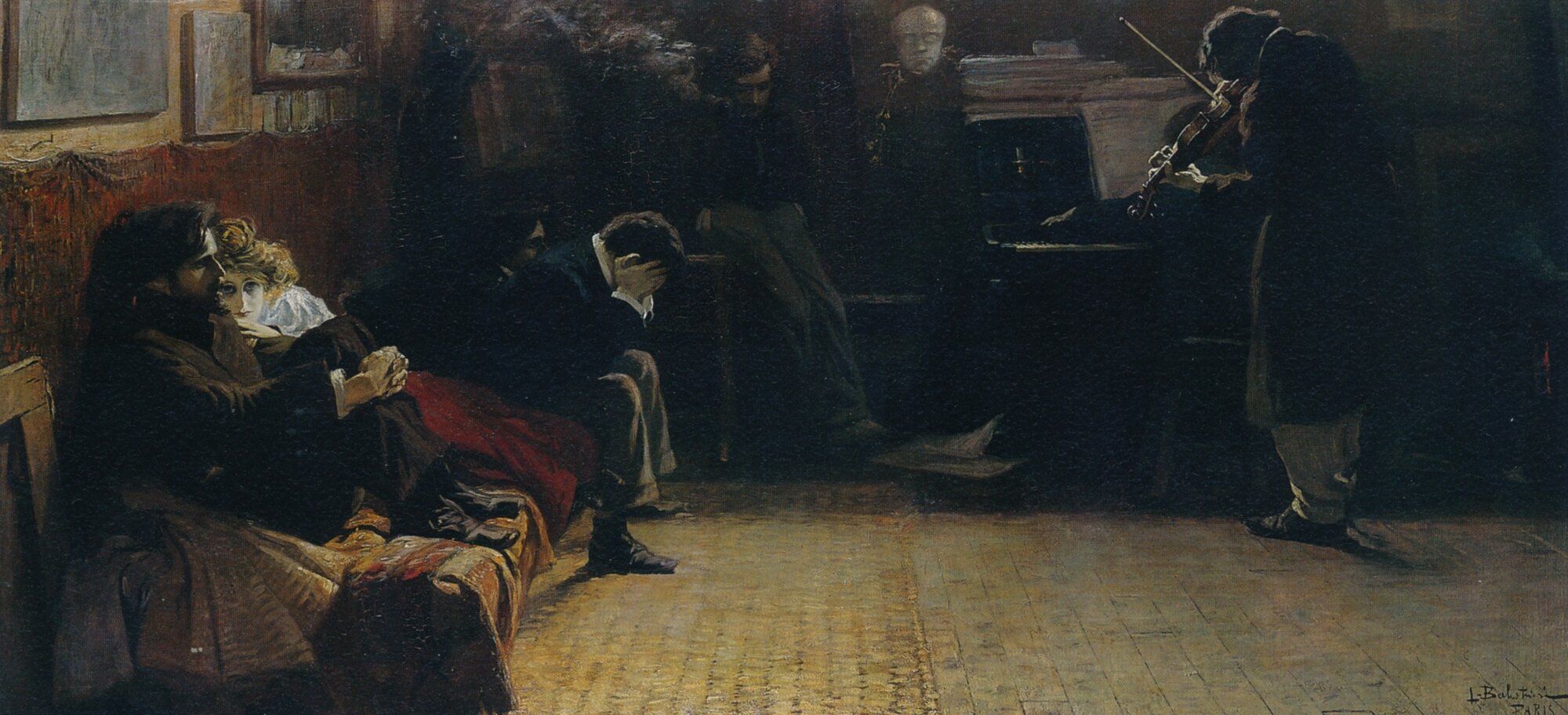
Lionello Balestrieri, Beethoven (Kreutzer Sonata) (1900)
The Sonatas
In the first concert of their Beethoven cycle, Antje Weithaas and Dénes Várjon trace the composer's development from the Op. 12 sonatas to the virtuosic and expansive “Kreutzer" Sonata Op. 47.
Program Note by Richard Bratby
Sonata in A major Op. 12 No. 2
“Three sonatas for clavicembalo or fortepiano, with a violin” proclaimed the title page of the first edition of Beethoven’s Op. 12. Yet while the Sonata No. 1 in fact asserts the newfound equality of the keyboard and violin, at the start of No. 2, Beethoven, with the lightest and brightest of touches, turns back to the old order of violin accompanying piano. The violin, however, is no optional extra. Instead, throughout the movement, Beethoven plays with the upper and lower extremes of both instruments’ registers, weaving a two-way argument of featherweight clarity and wit.
And after a first movement that is effectively a scherzo in sonata form, Beethoven plunges into the cycle’s first minor-key movement. The marking, “Andante più tosto allegretto,” is perhaps a warning not to treat it as weighty tragedy; the quiet, inward melancholy of the piano’s opening statement and the understated closing bars are poignant enough in themselves. The finale follows with the gentlest of shifts in mood: but although Beethoven marks it “piacevole” (pleasantly), the episodes of this flowing rondo throw up brilliant sprays of notes from both instruments, as well as intimations of something altogether more forceful.
Sonata in A minor Op. 23
The commissioner of Op. 23, Count von Fries, knew Beethoven well enough to expect occasional displays of temperament. The Sonata plunges straight into its opening Presto with a curt five-note motif for piano over violin accompaniment—an old certainty, about to be brusquely overturned. That motif expands over the course of this sonata-form first movement as the violin finds its voice and stretches its legs; both instruments compete in angry brilliance in the torrential development section before both falter, disintegrate, and quietly collapse into the closing bar.
There is nothing for it but to laugh it off: textures in the Andante scherzoso central movement are lighter, melodies almost comically brief, and the interplay between the two instruments is both delicate and droll. With the final Allegro molto, though, we are back to the matter in hand: the violin quickly breaking loose from its accompaniment role in a movement whose tautness and intensity goes far beyond what you would expect from a rondo, while never quite—for all its slashing chords and furious passagework—going beyond what is tolerable in polite company. A tempest in a drawing-room.
Sonata in A major Op. 47 “Kreutzer”
Everything about the “Kreutzer” Sonata stems from the simple fact, reiterated on the published score, that this is not chamber music, but a virtuoso showpiece, a sonata “quasi come d’un concerto.” Writing to a deadline, Beethoven began with the finale: a bounding, unstoppable Presto originally intended for Op. 30 No. 1 the previous year. The whole Sonata is constructed to lead up to that mighty climax. The Adagio introduction sets the terms immediately: solo violin introduces solo piano, two charismatic artists now meeting as unquestioned equals. The first theme of the A-minor Presto is less a melody than a release of energy. Bravura leads to lyrical breadth and only then to the striding, heroic theme introduced by the piano, accompanied by swaggering pizzicati from the violin, that dominates the movement. The music here develops as we listen, and if the first movement is thrilling, the Andante con variazioni is breathtaking in a very different sense. Beethoven’s deceptively artless theme was encored twice at the premiere, even before the two players could move on to its four quiet, endlessly subtle variations. And with one sonorous introductory chord, we are into the finale: music that has finally found a form big enough to contain it, instruments powerful enough to carry it—and players uninhibited enough to give it life.
The Artists
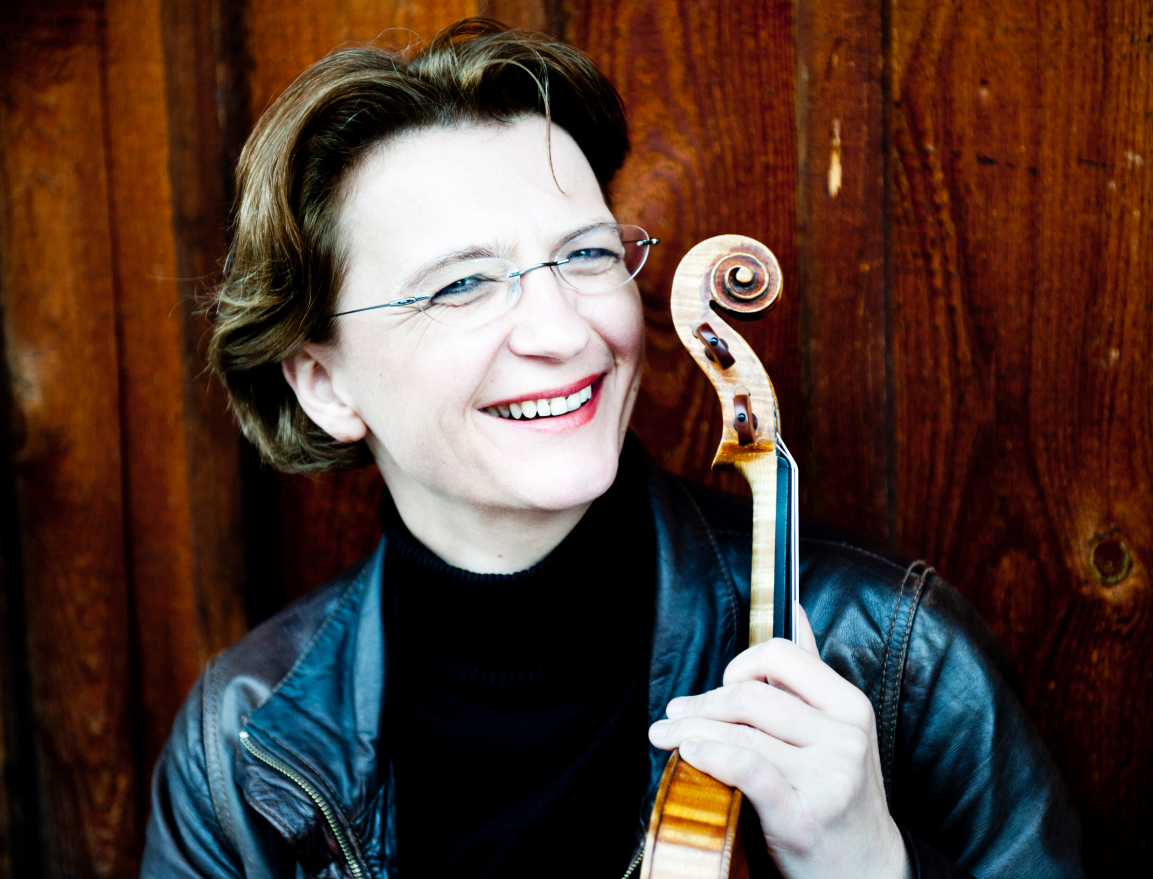
Antje Weithaas
Violin
Antje Weithaas studied violin with Werner Scholz at the Hanns Eisler School of Music in Berlin and launched her international career in the late 1980s with first-prize wins at several major competitions. She has appeared as a soloist with Berlin’s Deutsches Symphonie-Orchester, the Bamberg Symphony, all major German radio symphony orchestras, the Los Angeles Philharmonic, San Francisco Symphony, Philharmonia Orchestra, BBC Symphony Orchestra, and with leading orchestras in the Netherlands, Scandinavia, and Asia, collaborating with conductors such as Vladimir Ashkenazy, Dmitri Kitayenko, Sir Neville Marriner, Marc Albrecht, Yakov Kreizberg, and Sakari Oramo, among others. In addition to the great violin concertos by Mozart, Beethoven, and Schumann and modern classics by Shostakovich and Gubaidulina, her repertoire also includes contemporary works by Jörg Widmann and rarely performed concertos by Karl Amadeus Hartmann and Othmar Schoeck. Highlights of recent seasons have been performances with Ensemble Resonanz, Camerata Bern, Kammerakademie Potsdam, and the Duisburg Symphony Orchestra, which she joined for the world premiere of a new version of Manfred Trojahn’s Violin Concerto. Considered one of the world’s leading violin teachers, Antje Weithaas has been a professor at Berlin’s Hanns Eisler School of Music since 2004. In 2024, she completed her recording of Beethoven’s violin sonatas with Dénes Várjon, which is awarded the German Record Critics’ Award tonight.
September 2026
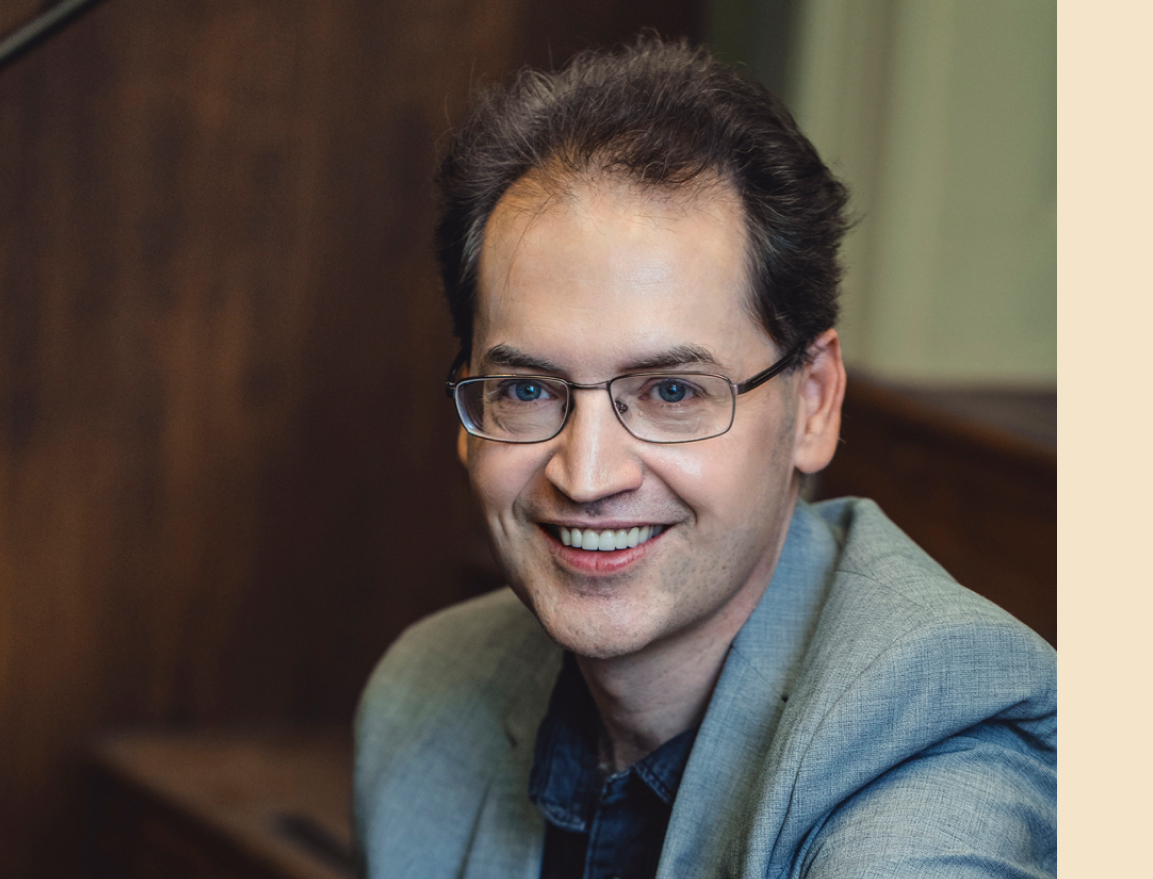
Dénes Várjon
Piano
Dénes Várjon received his education as a pianist at the Franz Liszt Music Academy in Budapest, where he studied with Sándor Falvai, György Kurtág, and Ferenc Rados. He also attended master classes with Sir András Schiff, among others. An internationally acclaimed chamber musician, his collaborators include artists such as Steven Isserlis, Tabea Zimmermann, Kim Kashkashian, Jörg Widmann, Leonidas Kavakos, Heinz Holliger, Miklós Perényi, and Joshua Bell, as well as Antje Weithaas. As a soloist, he has appeared with the Budapest Festival Orchestra, Zurich’s Tonhalle Orchestra, the Berlin Radio Symphony Orchestra, Academy of St. Martin in the Fields, Kremerata Baltica, and the Chamber Orchestra of Europe, working with conductors including Sir Georg Solti, Sándor Végh, Iván Fischer, Horst Stein, Leopold Hager, Kent Nagano, Tugan Sokhiev, and Thomas Hengelbrock, among many others. He is a regular guest at Carnegie Hall in New York, London’s Wigmore Hall, the Vienna Konzerthaus, and the festivals of Marlboro, Salzburg, and Edinburgh. His discography comprises several solo albums, works for four-hand piano, which he recorded together with his wife, Izabella Simon, the piano concertos of Schumann and Beethoven, and Beethoven’s violin sonatas with Antje Weithaas. Dénes Várjon teaches as a professor at the Franz Liszt Music Academy and in 2020 was awarded the Kossuth Prize, Hungary’s highest honor for the arts.
September 2026