Matthias Pintscher Conductor
Håkan Hardenberger Trumpet
Boglárka Pecze Clarinet, Bass Clarinet
Eda Seviniş Piano
Sindy Mohamed Viola
Boulez Ensemble
Matthias Pintscher Conductor
Håkan Hardenberger Trumpet
Boglárka Pecze Clarinet
Eda Seviniş Piano
Sindy Mohamed Viola
Claudia Stein Flute, Piccolo
Fabian Schäfer Oboe, Oboe d'amore, Cor anglais
Miri Saadon Clarinet, Bass Clarinet
Ruth Velten Soprano Saxophone
Nathaniel Sanchez Heckelphone
Aziz Baziki Bassoon
Ben Goldscheider Horn
Alper Çoker Trumpet
Filipe Alves Trombone
Sebastian Marhold Tuba
Jean-Baptiste Bonnard, Thomas Kuhn Percussion
Holger Groschopp Piano, Celesta, Electric Piano
Jiyoon Lee, Maria Arteeva, Yume Zamponi Violin
Álvaro Castelló Viola
Johanna Helm Cello
Daniel Kamien Double Bass
Program
Robert Schumann
Märchenbilder
for Piano and Viola Op. 113
Olga Neuwirth
...miramondo multiplo...
for Trumpet and Ensemble
Hans Werner Henze
Le Miracle de la Rose
for Clarinet and Ensemble
Robert Schumann (1810–1856)
Märchenbilder
for Piano and Viola Op. 113 (1851)
I. Nicht schnell
II. Lebhaft
III. Rasch
IV. Langsam, mit melancholischem Ausdruck
Olga Neuwirth (*1968)
...miramondo multiplo...
for Trumpet and Ensemble (2006/22)
I. aria dell’angelo
II. aria della memoria
III. aria del sangue freddo
IV. aria della pace –
V. aria del piacere
Intermission
Hans Werner Henze (1926–2012)
Le Miracle de la Rose
for Clarinet and Ensemble (1981)
Entrée – Air – Plainte – Rigaudon – Proménade –
Variations – Loure – Chansons provençales
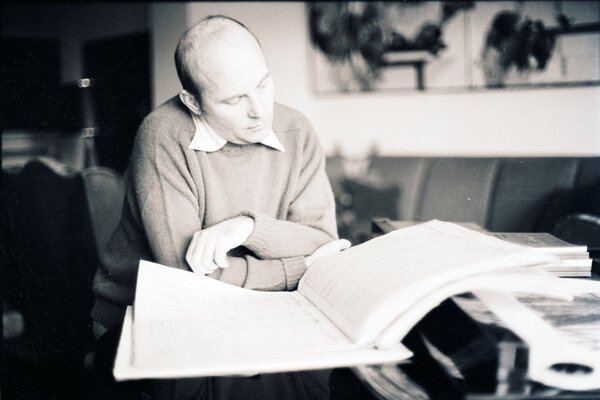
Hans Werner Henze in his home near Rome, 1981 (Hans Werner Henze Stiftung)
Dramas through Music
Musicians, critics, and philosophers have long debated the nature of the relationship between music and drama. Ever since Monteverdi’s pathbreaking dramme per musica of the early 1600s, musical theater has largely relied on the expressive power of words. At the same time, composers created a vast repertoire of purely instrumental music inspired by extramusical “programs.” Each of the three composers featured in tonight’s concert takes a different approach to the issue of wordless “dramas through music.”
Program Note by Harry Haskell
Dramas through Music
Works by Schumann, Neuwirth, and Henze
Harry Haskell
Musicians, critics, and philosophers have long debated the nature of the relationship between music and drama. Ever since Monteverdi’s pathbreaking dramme per musica of the early 1600s, musical theater has largely relied on the expressive power of words. At the same time, however, composers created a vast repertoire of purely instrumental music inspired by extramusical “programs” or nonverbal stimuli, such as Mendelssohn’s Lieder ohne Worte for piano. When friends urged him to tag these enchanting “songs without words” with descriptive titles, Mendelssohn famously demurred, saying, “What the music I love expresses to me is not thought too indefinite to be put into words, but, on the contrary, too definite.” A century later, Stravinsky put it even more categorically: “If, as is nearly always the case, music appears to express something, this is only an illusion and not a reality. It is simply an additional attribute which, by tacit and inveterate agreement, we have lent it, thrust upon it, as a label, a convention in short, an aspect which, unconsciously or by force of habit, we have often come to confuse with its essential being.” Each of the three composers featured on tonight’s program takes a different approach to the issue of wordless “dramas through music.” The debate continues.
Fairy-tale Pictures
Robert Schumann embodied the spirit of the Romantic era in his affinity for small-scale musical forms and lyrical utterances, his reliance on literary and other extramusical sources of inspiration, and, above all, the value he placed on emotional freedom and spontaneity. Although he wrote four symphonies, several concertos, and even a lone opera, his impulsive genius found its most characteristic expression in art songs and piano pieces, as well as a small body of chamber music for keyboard and strings. The Märchenbilder (Fairy-tale Pictures), written in March 1851, were part of an outpouring of fantasy-like instrumental miniatures intended in large part for amateur music makers. Hoping to earn wider fame (and no doubt a bit of real money), Schumann aimed to maximize sheet-music sales by publishing alternative versions for viola and violin. Indeed, his original title for the work was Violageschichten, or “Viola Tales,” suggesting that the instrument itself was the protagonist of his four musical narratives.
According to the violist Wilhelm Joseph von Wasielewski, to whom the Märchenbilder are dedicated, the composer described his music as “child’s play.” (The first edition of the score was illustrated with a cover drawing of an old woman holding a group of children enthralled with her storytelling.) Indeed, despite fleeting moments of darkness, Schumann’s musical fairy tales are not the stuff of which little ones’ nightmares are made. The viola’s warm, baritonal timbre casts a pervasive glow, holding any lurking demons safely at bay. The four pieces are neatly balanced between slow and fast tempos, major and minor keys, triple and duple meters. The mellow introspection of the two outer movements contrasts with the briskly assertive, athletic character of the middle ones. Throughout the work, Schumann taps a characteristically rich vein of lyricism and caprice.
Art-in-Between
“Kaleidoscopic” is a word that has been frequently applied to the music of Austrian composer Olga Neuwirth. The very model of a modern interdisciplinary artist, she draws inspiration—and often borrows techniques—from literature, film, art, architecture, and the natural sciences. What she calls the “androgynous sound” of her music is as wide-ranging as its scope. Voices, instruments, and sundry electronic sources, from the ondes martenot to pop synthesizers, all contribute to the kaleidoscopic colors and textures that characterize a typical Neuwirth score. Perhaps not surprisingly for a musician who came of age in the heyday of postmodernism, and who studied painting and film before taking up composition, her music is also richly allusive. References to the works of various musicians, writers, filmmakers, and other creative artists are scattered throughout her extensive catalogue, resulting in a hybrid, multilayered, and hard-to-categorize listening experience that she describes as “art-in-between.” Neuwirth is especially known for her wildly imaginative musical theater works, including a multimedia adaptation of David Lynch’s surrealist film Lost Highway; The Outcast, a feminist re-envisioning of Melville’s Moby-Dick in which the narrator Ishmael is played by a woman; a similarly unconventional reworking of Berg’s Lulu viewed from the perspective of an African American artist against the backdrop of the civil rights movement; and a “fictional musical biography” called Orlando, loosely based on Virginia Woolf’s novel. Her latest stage work, a “Grand Guignol” satire titled Monster’s Paradise (and featuring a boorish autocrat suspiciously like Donald Trump), will have its world premiere in Hamburg next month.
As a teenager, Neuwirth aspired to become a jazz trumpeter, following in the footsteps of her father, the late jazz pianist Harald Neuwirth. A jaw injury suffered in car accident quashed those ambitions, but in 2006 they bore fruit in …miramondo multiplo…, a kind of non-concerto for trumpet and orchestra. (The untranslatable Italian title suggests something like “viewing the world from multiple perspectives.”) Rather than showcasing the solo trumpet in a contest with the orchestra, as in a traditional concerto, Neuwirth treats it as first among equals in a less adversarial—but no less inherently dramati—concertante setting. In her words, the music enacts “various relationships between the individual and the group, based not on conflict but on cooperation, democratization, and careful listening to each other.” Each of the work’s five movements, or “arias,” evokes a different aspect of the musical past, from Handel and Mahler to Stravinsky and Miles Davis, in what the musicologist Stefan Drees calls “a kaleidoscopic labyrinth of real and fake quotations.” These allusions, fragmentary and fleeting though they are, give …miramondo multiplo… an extra dimension that is at once historical and personal. Neuwirth later recycled passages from the work in a multimedia “sound installation,” incorporating texts by Hannah Arendt and Walter Benjamin, that focused self-referentially on her composition process.
Theater of the Imagination
Musical theater was central to Hans Werner Henze’s oeuvre throughout his life, from his emergence in Germany as a member of the post–World War II Darmstadt avant garde to his midlife metamorphosis into an outspoken socialist who founded a music festival in Montepulciano, Italy, predicated on the principle of community participation. Henze wrote plenty of nontheatrical music as well—his ten symphonies are among the towering achievements in that genre in recent decades—but his on-the-job training in German opera houses as a young man reinforced his aptitude as a musical dramatist. The 1952 premiere of Boulevard Solitude, a jazz-infused operatic take on the tale of Manon Lescaut, was followed by the tragic Elegy for Young Lovers and The Young Lord, a fairy-tale comedy in the 19th-century bel canto tradition. Henze’s broad-brush mixture of musical idioms, from serialism to neo-Romanticism, prompted detractors to dismiss him as a reactionary (and led to a very public feud with Pierre Boulez, who likened him to “a barber with well-oiled hair”). Just as Henze often linked singers onstage to specific instruments in the orchestra, so he treated instrumentalists as non-singing actors in works such as the Monteverdi-inspired ballet Orpheus and his twin pieces of “imaginary theater,” El Rey de Harlem (The King of Harlem) and Le Miracle de la rose (The Miracle of the Rose). “Composers, like visual artists and of course writers, are storytellers,” he told an interviewer in 2006. “We have to entertain, we are encouraged to tell stories. I used to be very much alone in this view, and it’s only in the last 20 or 30 years that I’ve realized how things have changed.”
Composed in 1981 for the enterprising London Sinfonietta, Le Miracle de la rose takes its name—and much of its bizarrely surrealistic atmosphere—from Jean Genet’s quasi-autobiographical novel of 1946. Its seven continuous movements are cast in the form of a traditional instrumental suite, with titles evoking an assortment of French courtly dances and folksongs. Although Henze provides a detailed plot synopsis in a note to the published score, listeners are implicitly licensed to construct their own scenarios on the basis of the music alone. The protagonist of this wordless drama (usually, but not always, Genet) is the solo clarinet, with secondary roles assigned to the English horn (a murderer on his way to the guillotine), trombone (his lawyer), horn (a priest), trumpet (the judge), and heckelphone (the executioner). The latter four, Henze tells us, are transformed into insects who burrow into the murderer’s heart by way of a classical landscape strewn with flowers. A brusque drumbeat signals their approach to the inner chamber; there they discover “a red rose awesome in its size and beauty,” which the priest instantly recognizes as the mystical rose symbolizing the Virgin Mary. In the final scene of this macabre, Kafkaesque fantasy, both the rose and the music disintegrate, leaving the murderer defenseless to meet his fate. In combining the nightmarish mood of Berg’s Wozzeck with the neoclassical idyll of Stravinsky’s Soldier’s Tale, Le Miracle de la rose crystallizes Henze’s concept of music theater: “What I would like,” he once said, “is for music to become language, for it not to remain simply a sound space in which feelings can be reflected in a controlled manner, as if ‘emptied’—one should be able to understand music as a language.”
A former performing arts editor for Yale University Press, Harry Haskell is a program annotator for Carnegie Hall in New York, the Brighton Festival in England, and other venues, and the author of several books, including The Early Music Revival: A History, winner of the 2014 Prix des Muses awarded by the Fondation Singer-Polignac.
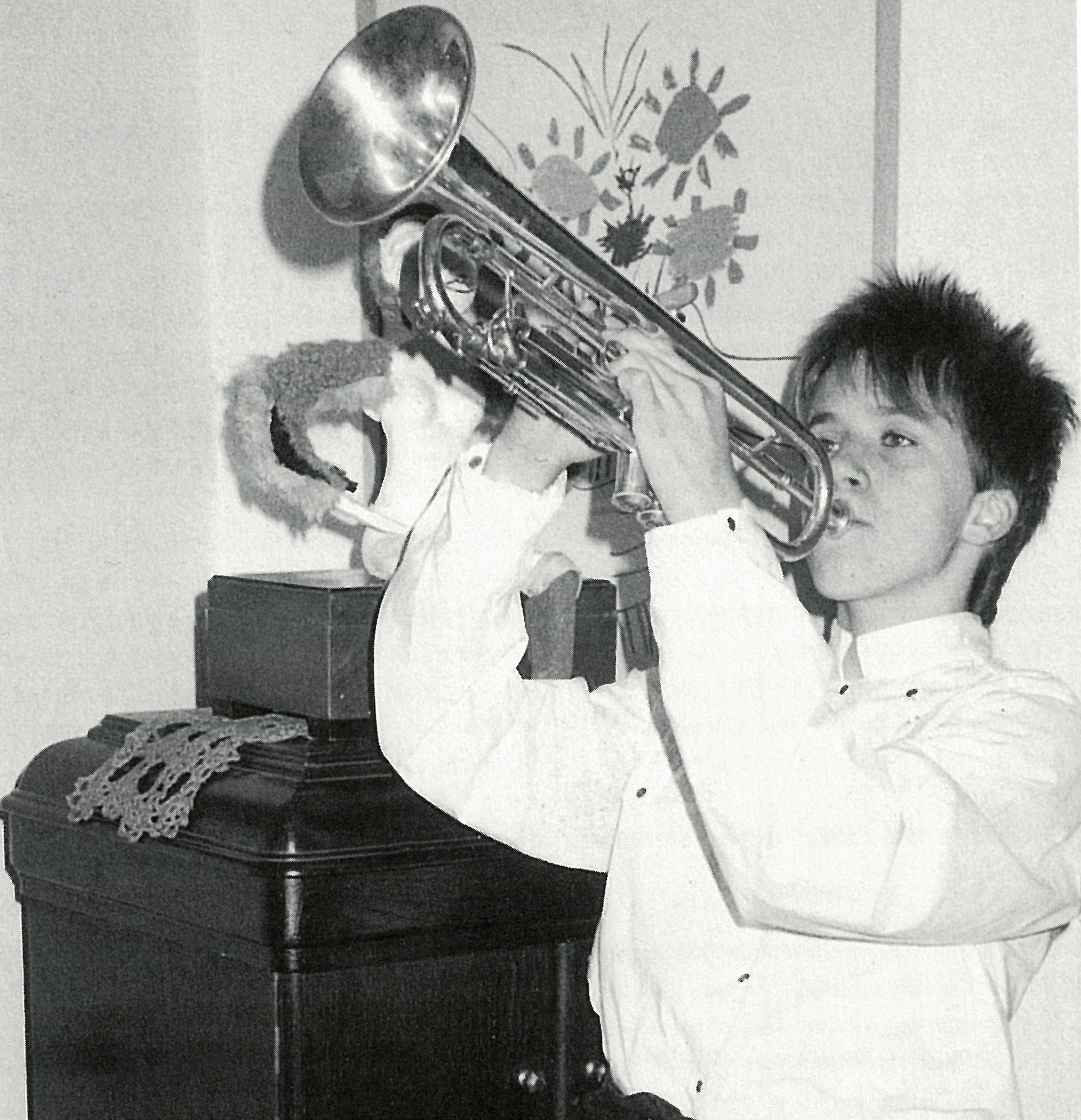
Olga Neuwirth, aged 14, playing the trumpet (1982)
(© Puppa Neuwirth, reproduced in Olga Neuwirth. Zwischen den Stühlen, ed. by Stefan Drees, Salzburg 2008)
Klangliche Erinnerungsräume
Im Programm des Boulez Ensembles fügen sich Schumanns Charakterstücke, Neuwirths Trompetenkonzert und Henzes „Imaginäres Theater“ zu einem Panorama wortloser musikalischer Bilderfolgen, die allesamt von außermusikalischen Ideen inspiriert sind.
Essay von Kerstin Schüssler-Bach
Klangliche Erinnerungsräume
Werke von Schumann, Neuwirth und Henze
Kerstin Schüssler-Bach
Veredelter Volkston
Robert Schumanns Märchenbilder
Nicht nur als Musikdenker und -schriftsteller, auch als Komponist ist Robert Schumann eine Referenzfigur der Moderne. Seine Fragilität, seine Doppelbödigkeit, seine Intensität und sein Mut zur Grenzüberschreitung hat viele Komponist:innen der Neuzeit inspiriert. Und auch wenn Schumann mit seiner einzigen Oper Genoveva nur wenig Erfolg beschieden war, so ist doch seine dichterische Vorstellungskraft ein Ansporn, seine Musik als imaginäres Theater zu hören.
Ohne Worte kommen die Märchenbilder von 1851 aus, poetische Charakterstücke, die sich nicht auf ein direktes Programm beziehen. Einer der später verworfenen Titel war „Violageschichten“. Bei der Uraufführung im November 1853 in Bonn mit Clara Schumann am Klavier übernahm der Widmungsträger und spätere Biograf Schumanns, Wilhelm Joseph von Wasielewski, den Bratschenpart. Wasielewski hatte unter Mendelssohn im Leipziger Gewandhaus als Geiger musiziert, Schumann brachte ihn mit nach Düsseldorf als Konzertmeister. Er nahm wohl entscheidenden Einfluss auf die Entstehung dieser vier Charakerbilder.
Das Instrument ist wie ein Barde in Szene gesetzt: mit dunkel raunenden Tönen aus dem Reich der versunkenen Legenden. Schumann war nicht der Einzige, der um diese Zeit den etwas archaischen, sonoren Klang der Bratsche für eine legendenhafte Patina entdeckte: Bereits 1836 grub Giacomo Meyerbeer für seine Oper Les Huguenots die Viola d’amore aus, die gelegentlich durch die Bratsche ersetzt wurde. Schumann schrieb zwar einen herzhaften Verriss über Meyerbeers Erfolgsstück, aber die meisterhafte Couleur locale für den Stoff aus dem 16. Jahrhundert mag ihn vielleicht doch beeindruckt haben. 1846 zog Hector Berlioz mit La Damnation de Faust nach, wo die Ballade vom „König in Thule“ von einem goldenen Bratschensolo durchzogen ist. Zwei rasche, dramatische Sätze umrahmen in den Märchenbildern zwei elegische, melancholische Stücke. Der veredelte „Volkston“ vermittelt sich durch klar fassliche Motive, technisch ist die Musik aber durchaus anspruchsvoll.
Versöhnungsversuch mit der eigenen Geschichte
Olga Neuwirths …miramondo multiplo…
Ein Foto von 1982 zeigt die 14-jährige Olga Neuwirth mit raspelkurzen Haaren und einer großen Trompete. Ihr Vater Harald Neuwirth war ein bekannter Jazzmusiker, und seine Tochter hatte mit ihrem ersten Trompetenunterricht als Siebenjährige den Entschluss gefasst, ein „weiblicher Miles Davis“ zu werden. Ein schwerer Autounfall, bei dem ihr Kiefer gebrochen wurde, machte diesen Traum ein Jahr nachdem das Foto entstand zunichte. Doch die Liebe zur Trompete blieb. Mit …miramondo multiplo… komponierte Neuwirth 2006 einen modernen Klassiker für Solotrompete und Orchester, der von Håkan Hardenberger und den Wiener Philharmonikern unter Pierre Boulez zur Uraufführung gebracht wurde. (Zwei Jahre später folgte die Ensemblefassung, diesmal aus der Taufe gehoben von Marco Blaauw und dem Ensemble Musikfabrik in Köln.)
Das Werk schaut, wie der italienische Titel verrät, aus verschiedenen Blickwinkeln auf die Welt. Die „Kombination von Luft und Metall“ fasziniert Neuwirth an der Trompete besonders – mithin auch der Kontrast von Weichheit und Härte, Ungreifbarkeit und Direktheit. Das Wort „Aria“ – Luft, aber auch Arie – tragen die fünf Sätze jeweils im Titel, was zum einen auf jene Materialität anspielt, zum anderen aber auch auf den sanglichen und theatralen Aspekt von …miramondo multiplo…. Die Solotrompete steht im engen Dialog mit der Ensembletrompete, ist überhaupt ein echter Partner des Ensembles. So erweist sich das Stück „als künstlerische Verbeugung vor der Individualität eines jeden Menschen, der sich nicht anpasst, sondern vom Kollektiv zwar anregen, aber nicht vereinnahmen lässt.“ (Stefan Drees).
Neuwirth führt durch einen virtuosen Parcours der klanglichen Erinnerungsräume. Als ausgewiesenes Zitat legt sich im vierten Satz („aria della pace“) Händels berühmte Sarabande „Lascia la spina“ aus Il trionfo del tempo e del disinganno – besser bekannt in ihrer späteren Version als „Lascia ch’io pianga“ in Rinaldo – über ein zartes Klanggespinst. Weitere Händel-Zitate sind eingewoben. Stephen Sondheims „Send in the Clowns“ klingt kurz an. Aber auch „Als ob“-Momente von Weill, Strawinsky, Mahler oder Neuwirth selbst (aus ihrer Oper Lost Highway) werden in komplexen rhythmischen Strukturen eingebettet.
Das tönende Kaleidoskop soll, erklärt Neuwirth, „da verschiedene Elemente immer wieder in allen Sätzen vorkommen“, auch „phantasmagorisch wirken“ – also wie eine illusionäre Bilderfolge surreal und suggestiv verschwimmen. (Hier sind wir schon wieder nah bei Robert Schumann, der seiner C-Dur-Fantasie für Klavier op. 17 diese Worte von Friedrich Schlegel voranstellte: „Durch alle Töne tönet / Im bunten Erdentraum / Ein leiser Ton gezogen / Für den, der heimlich lauschet.“) Als intime Kennerin der Trompete verlangt Neuwirth dem Instrument alles ab, mit und ohne Dämpfer, in langen melodischen Linien oder irrwitzigen Läufen. Nur im zweiten Satz lehnt sie sich dezidiert an Jazz-Techniken und den Stil ihres Idols Miles Davis an. Aus dem Material von …miramondo multiplo… kreierte Neuwirth 2007 auch eine Klanginstallation für die Kasseler Documenta 12. Hier bezog sie Texte von Walter Benjamin und Hannah Arendt ein. Die Installation gestaltete „irreale Hörbilder und kleine Szenen, also akustische, räumliche und zeitliche Wunderwelten für die Ohren, die durch ein aggressives Außen der ständigen Möglichkeit der Zerstörung ausgesetzt sind“ (Neuwirth).
Aus dem „Versöhnungsversuch mit der eigenen Geschichte“ – so die Komponistin über ihre autobiografische Motivation – entsteht in …miramondo multiplo… eine Reflexion über die Möglichkeiten und die Gefährdung kreativen Komponierens in theatraler Setzung. Am Schluss bleibt die Trompete als „Instrument der Verlängerung des menschlichen Atems“ übrig – ein leises Fanal der Menschlichkeit.
Imaginäres Theater
Hans Werner Henze: Le Miracle de la rose
Für viele junge Komponist:innen war Hans Werner Henze ein väterlicher Mentor. Olga Neuwirth begegnete ihm als 15-Jährige bei einem Projekt in der Musikschule Deutschlandsberg in der Steiermark. „Henze hatte für Jugendliche unglaubliche Geduld und vermittelte Energie durch sein Erzählen; dass man sich immer irgendeine kleine Geschichte vorstellen soll“ erinnerte sich Neuwirth 2004 in einem Gespräch mit Bernhard Günther.
Matthias Pintscher hat ihn als 21-Jähriger kennengelernt, als er ihm einige Arbeiten vorlegen durfte. „Henze hat sich meine Sachen sehr genau angeschaut. Und etwas später hat er mir meinen ersten Auftrag für sein Musikfestival, den Cantiere in Montepulciano, gegeben.“ So war es Pintscher ein besonderes Anliegen, das Gedenkjahr zum 100. Geburtstag von Henze mit Le Miracle de la rose zu eröffnen. Das „Imaginäre Theater“ des genuinen Opernkomponisten Henze interessiert Pintscher besonders, hat er doch selbst vor wenigen Tagen an der Staatsoper Unter den Linden mit Das kalte Herz seine vierte Oper vorgestellt. Doch auch Henzes textliche Inspiration durch einen Roman von Jean Genet liegt dem frankophilen Pintscher nahe: „Bei Genet habe ich zum ersten Mal gespürt, dass die französische Sprache auch sehr hart und abgründig sein kann, nicht nur duftig und elegant.“
In seinem zweiten, 1946 erschienenen Roman Le Miracle de la rose (Das Wunder der Rose) verarbeitet Genet autobiografische Erfahrungen und fiktive Erlebnisse in einer Erziehungsanstalt und einem Gefängnis. Homoerotische Begierden werden in Bilder von prunkvoller Poesie, aber auch pornografischer Direktheit übersetzt. Zentralfigur ist der Mithäftling Harcamone, ein zum Tode verurteilter und zum Märtyrer überhöhter Mörder.
Obsession und Mysterium von Genets Welt bildete Hans Werner Henze, der seine Homosexualität offen lebte, in mehreren Kompositionen nach. 1981 fand diese Faszination ihren künstlerischen Niederschlag in einer Auftragsarbeit für die London Sinfonietta: die „Musik für einen Klarinettisten und 13 Spieler“, betitelt nach Genets Roman. Der Untertitel „Imaginäres Theater II“ verweist auf den 1979 komponierten Vorgänger El Rey de Harlem (Der König von Harlem), das „Imaginäre Theater I“ nach Federico García Lorca. In diesem Werkpaar untersucht Henze die Möglichkeiten, poetisch-sprachgebundene Impulse in eine instrumentale Abstraktion zu überführen. Während in El Rey de Harlem noch eine Mezzosopranistin mitwirkt, verzichtet Henze in Le Miracle de la rose auf das vokale Element.
Stattdessen werden Charaktere des Romans durch Instrumente verkörpert: der junge Harcamone, der „schlafend sterben“ möchte, durch das melancholische Englischhorn, außerdem vier schwarze Gestalten: der Richter durch die Trompete, der Geistliche durch das Horn, der Anwalt durch die Posaune und der Henker durch das Heckelphon, eine in tieferer Lage klingende Schwester der Oboe. Perkussive Schläge begleiten sie. Die Klarinette steht als Betrachter außerhalb dieses Personals, wie Genets erzählendes Ich.
Nach diesem dramatischen „Entrée“ in der Gefängniszelle verwandelt sich Harcamone in der „Air“ in einen Prinzen. Seine Gegenspieler mutieren zu kleinen Wanzen, die an ihm emporkrabbeln. Traum und Alptraum verschlingen sich in einer gestischen, auch das Erhaben-Schöne nicht scheuenden Musik. Harte Schläge im Klavier und Schlagzeug gemahnen an die Hinrichtung Harcamones. In der gespenstisch-dunklen „Plainte“ (Klage) machen sich zwei Gefährten auf, um Harcamones Herz zu suchen. Die Reise geht weiter im „Rigaudon“ – eigentlich ein altfranzösischer, lebhafter Tanz –, wo der Körper in einer Landschaft aufgeht: „Endlos erstrecken sich die Gänge im Inneren Harcamones“ (Henze).
In „Variations“ dringen die vier schwarzen Gestalten des Entrée durch Gassen und Winkel einer Stadt. „Jean Genet (Bassklarinette) und ich (Partitur) wundern uns noch immer über den Vorzug, Harcamones innerem Leben beizuwohnen und unsichtbare Zeugen des heimlichen Abenteuers der vier schwarzen Männer sein zu können“, kommentiert Henze lakonisch. Das rhapsodisch genutzte Material verdichtet sich zu einem Kinderlied Harcamones. Im „Loure“ (wieder ein altfranzösischer Tanzsatz) erreichen die vier schwarzen Herren das Herz Harcamones. Leises Herzschlagen, ein wilder Marsch voll Angst und Begierde, kalte Trommelschläge – und die Tür öffnet sich zum Geheimnis: „wir sehen uns einer […] an Größe und Schönheit ungeheuerlichen Rose“ gegenüber, so Henze. Sanfte Streichertriller geleiten die Soloklarinette in die „Chansons provençales“ hinüber – ein Wiegenlied der Liebe und des Todes.
Dr. Kerstin Schüssler-Bach arbeitete als Opern- und Konzertdramaturgin in Köln, Essen und Hamburg und hatte Lehraufträge an der Musikhochschule Hamburg und der Universität Köln inne. Beim Musikverlag Boosey & Hawkes in Berlin ist sie als Vice President Composer Management tätig. Sie schreibt regelmäßig für die Berliner Philharmoniker, die Elbphilharmonie Hamburg, das Lucerne Festival und das Gewandhausorchester Leipzig. 2022 erschien ihre Monographie über die Dirigentin Simone Young.
The Artists
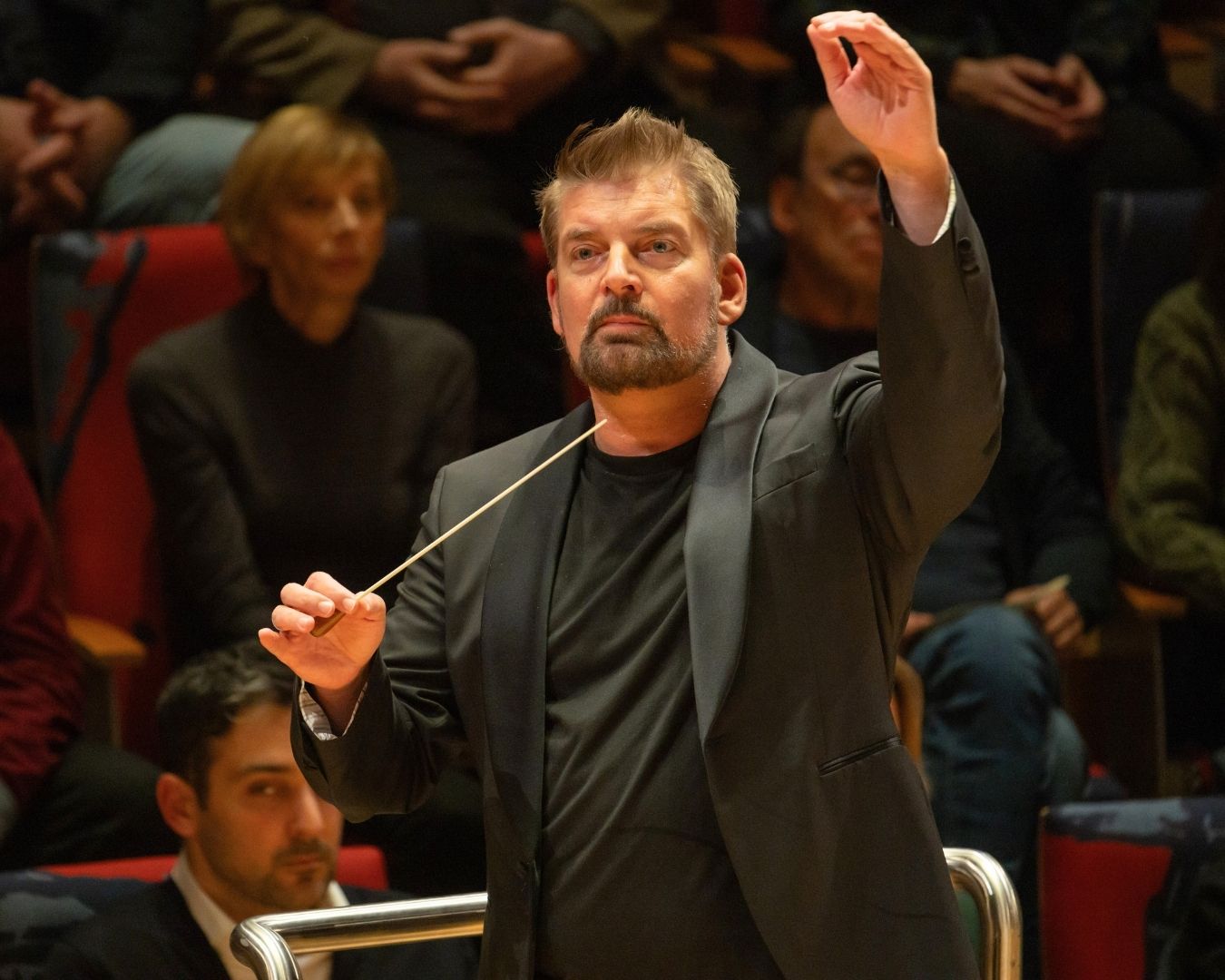
Matthias Pintscher
Conductor
Matthias Pintscher began his training as a conductor with Peter Eötvös, later focused on composition, and has been pursuing a dual career ever since. His works have been performed by orchestras including the Chicago Symphony, New York Philharmonic, Berliner Philharmoniker, Orchestre de Paris, and the Boulez Ensemble, among many others. His NUR for piano and ensemble had its world premiere at the Pierre Boulez Saal in 2019; beyond II (bridge over troubled water) was first heard in July 2020 as part of the online Festival of New Music. Just a few days ago, he led the world premiere of his opera Das kalte Herz at Berlin’s Staatsoper Unter den Linden. In 2023, Matthias Pintscher concluded a highly successful decade-long tenure as music director of the Paris-based Ensemble intercontemporain, founded by Pierre Boulez, which received the prestigious Polar Music Prize in 2022. In the fall of 2024, he took over the position of music director with the Kansas City Symphony. Since 2020 he has also been Creative Partner of the Cincinnati Symphony Orchestra, where among many other works he recently conducted the world premiere of a new piano concerto by composer inti figgis-vizueta. He previously served as Artist in Association with the BBC Scottish Symphony Orchestra, Creative Chair for Zurich’s Tonhalle Orchestra, artist in residence with the Los Angeles Chamber Orchestra, and, from 2016 to 2018, as principal conductor of the Lucerne Festival Academy Orchestra. He has taught composition at New York’s Juilliard School since 2014.
January 2026
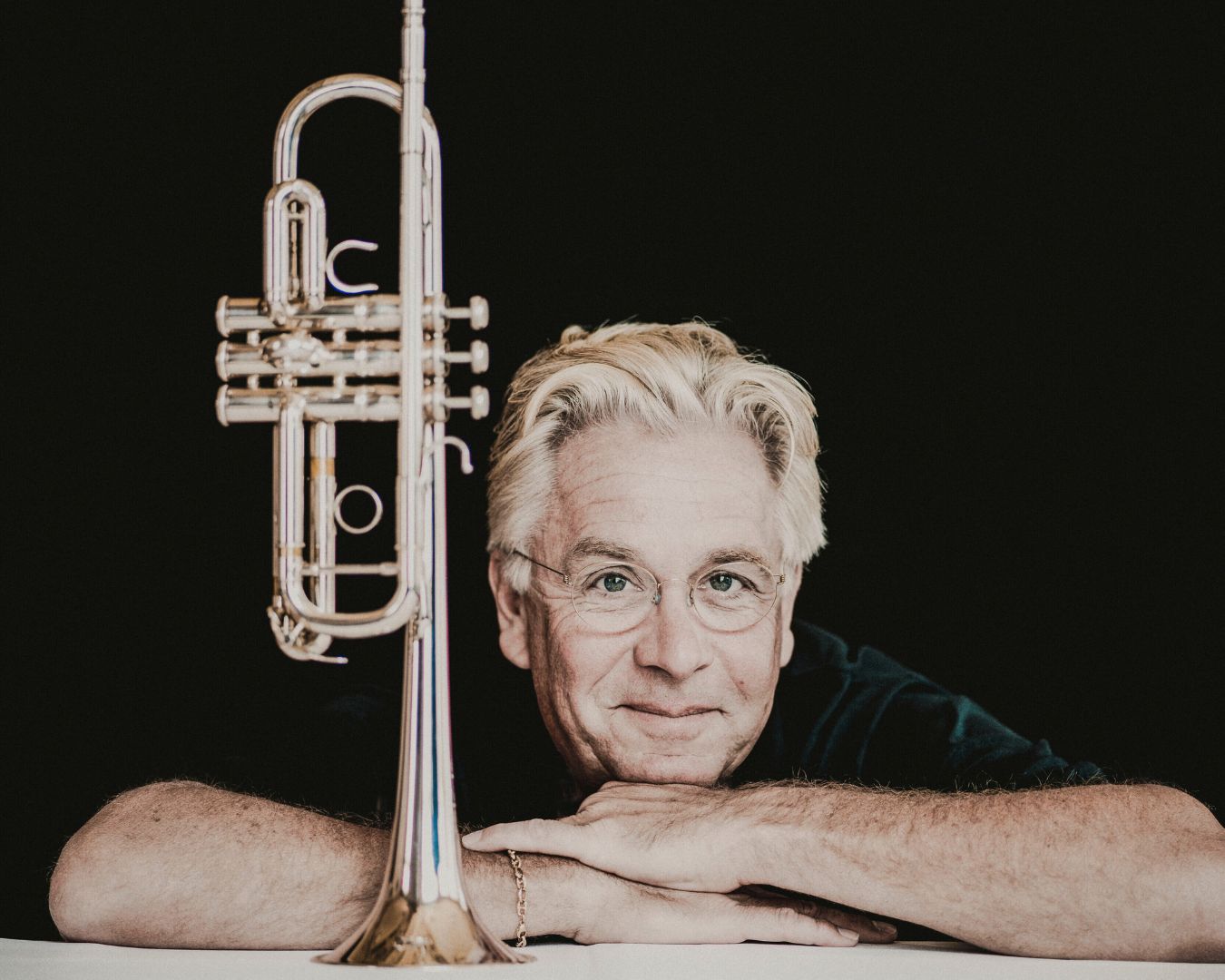
Håkan Hardenberger
Trumpet
Håkan Hardenberger is one of the world’s preeminent trumpeters and interpreters of contemporary music. During his four-decade career, he has pushed the boundaries of his instrument and inspired numerous composers and fellow musicians to explore uncharted musical territory. Sir Harrison Birtwistle, Brett Dean, Helen Grime, HK Gruber, Hans Werner Henze, György Ligeti, Jörg Widmann, and Mark-Anthony Turnage, among others, have written new works for him. In 2006, he premiered Olga Neuwirth’s …miramondo multiplo… (in its original version for full orchestra) with the Vienna Philharmonic conducted by Pierre Boulez. He regularly performs with many of the world’s leading orchestras, including the Berliner Philharmoniker, Leipzig’s Gewandhaus Orchestra, Bavarian Radio Symphony, Amsterdam’s Concertgebouw Orchestra, Boston Symphony, and the NHK Symphony Orchestra, working with conductors such as Sir Simon Rattle, Marin Alsop, Alan Gilbert, Daniel Harding, Andris Nelsons, and Susanna Mälkki. Highlights of the current season include national premieres of Jörg Widmann’s Towards Paradise in Norway with the Oslo Philharmonic and in the Netherlands with the Concertgebouw Orchestra. Håkan Hardenberger is a professor at the conservatory in his hometown of Malmö.
January 2026
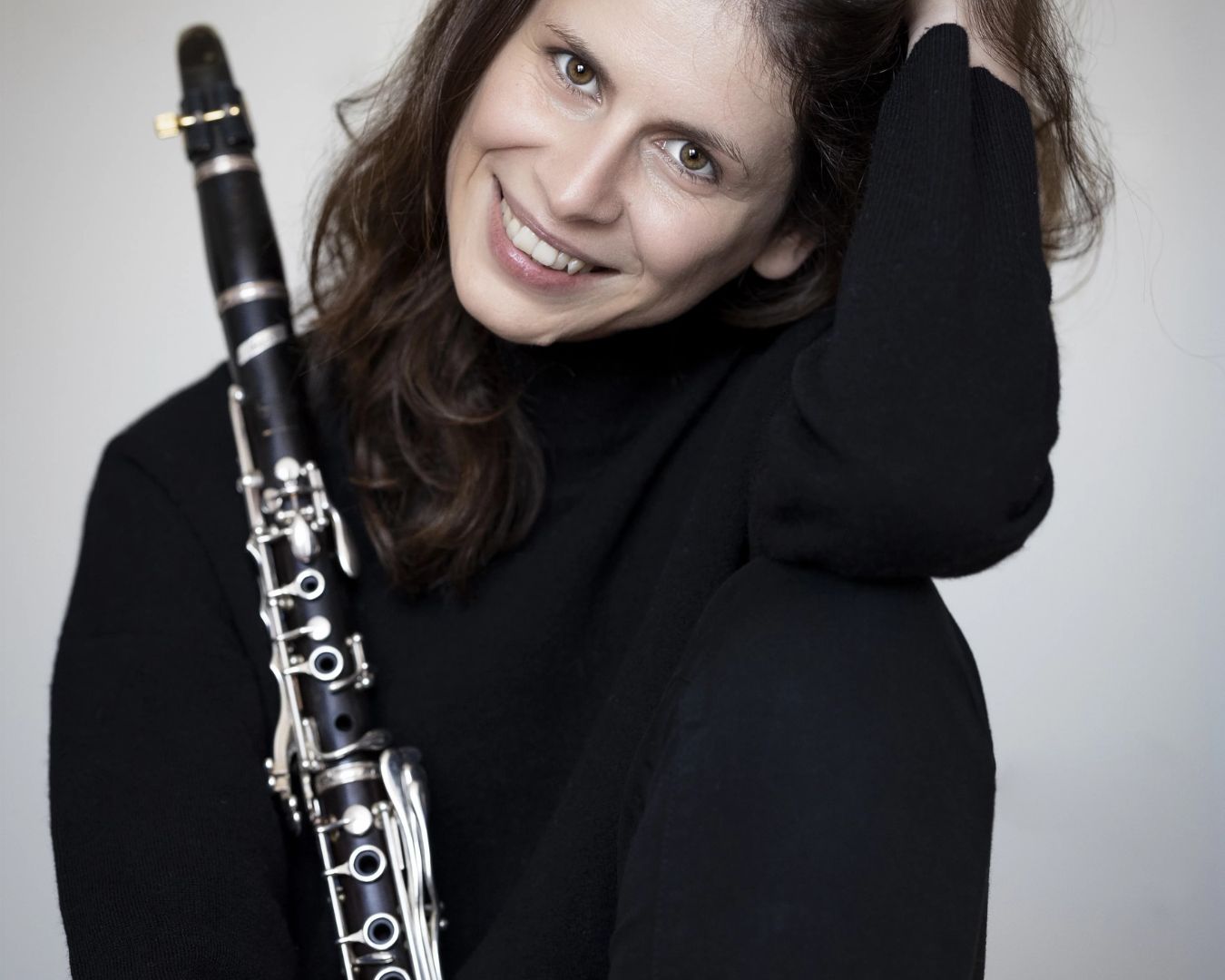
Boglárka Pecze
Clarinet
Hungarian clarinetist Boglárka Pecze has been a fixture on the European New Music scene for many years. She received a scholarship from the German Music Competition and trained at the International Ensemble Modern Academy, where she discovered her passion for contemporary music. Concerts have taken her to renowned venues and festivals throughout Europe, Asia, and the U.S., including the Concertgebouw Amsterdam, the Salzburg Festival, and the Shanghai International Music Festival. As a founding member of Trio Catch, which performed at the Pierre Boulez Saal in 2019, she has collaborated with composers such as Helmut Lachenmann, Isabel Mundry, Georges Aperghis, and Beat Furrer, and has been awarded the German Record Critics' Prize and the Berenberg Culture Prize. In addition to her performing career, Boglárka Pecze is also a committed arts manager and supports other cultural professionals through her own company. In 2022–23, she took over as managing director of Ensemble Recherche. She is a member of the board of trustees of the Hanne Darboven Foundation and served as a juror for the Composition Prize of the City of Stuttgart from 2019 to 2024.
January 2026
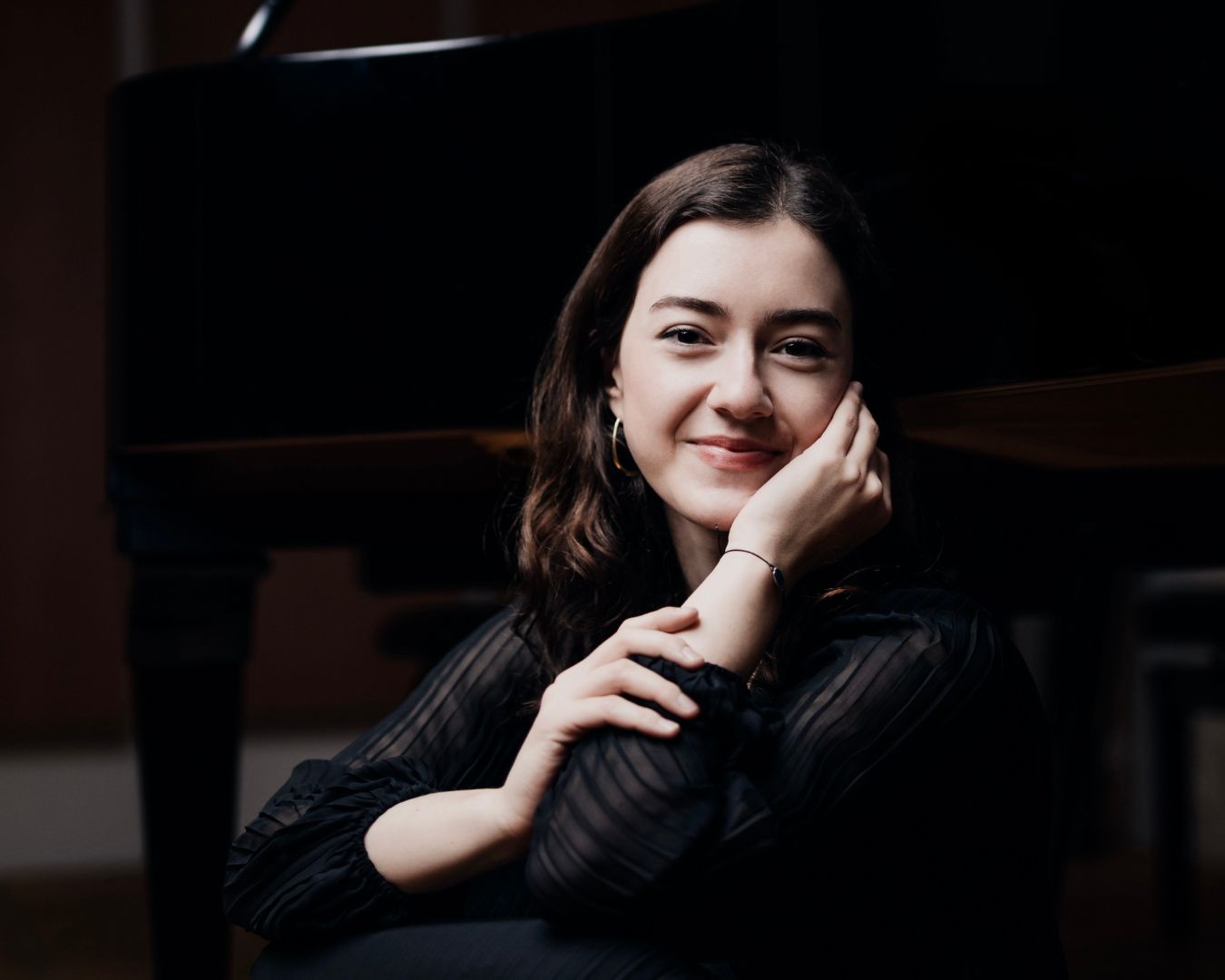
Eda Seviniş
Piano
Turkish pianist Eda Seviniş is currently completing her master’s degree with Sir András Schiff at the Barenboim-Said Akademie in Berlin. She previously studied at Bilkent University in Ankara and with Marc Silverman at Manhattan School of Music. She has attended masterclasses with Daniel Barenboim, Elena Bashkirova, Pavel Gililov, and Stanislav Ioudenitch, among others, and won first prize at the International Robert Schumann Competition in Düsseldorf in 2021. In 2022, she was named “Woman Star of Tomorrow” by the Istanbul Foundation for Culture and Arts and performed at the 50th Istanbul Music Festival. Concerts have taken her to the Musikdorf Ernen Festival, Festival Internacional de Santander, and Bellapais International Music Festival in Cyprus, among others. Her master’s studies are supported by the Dr. Nejat F. Eczacıbaşı Foundation and the Contemporary Arts Alliance Berlin.
January 2026
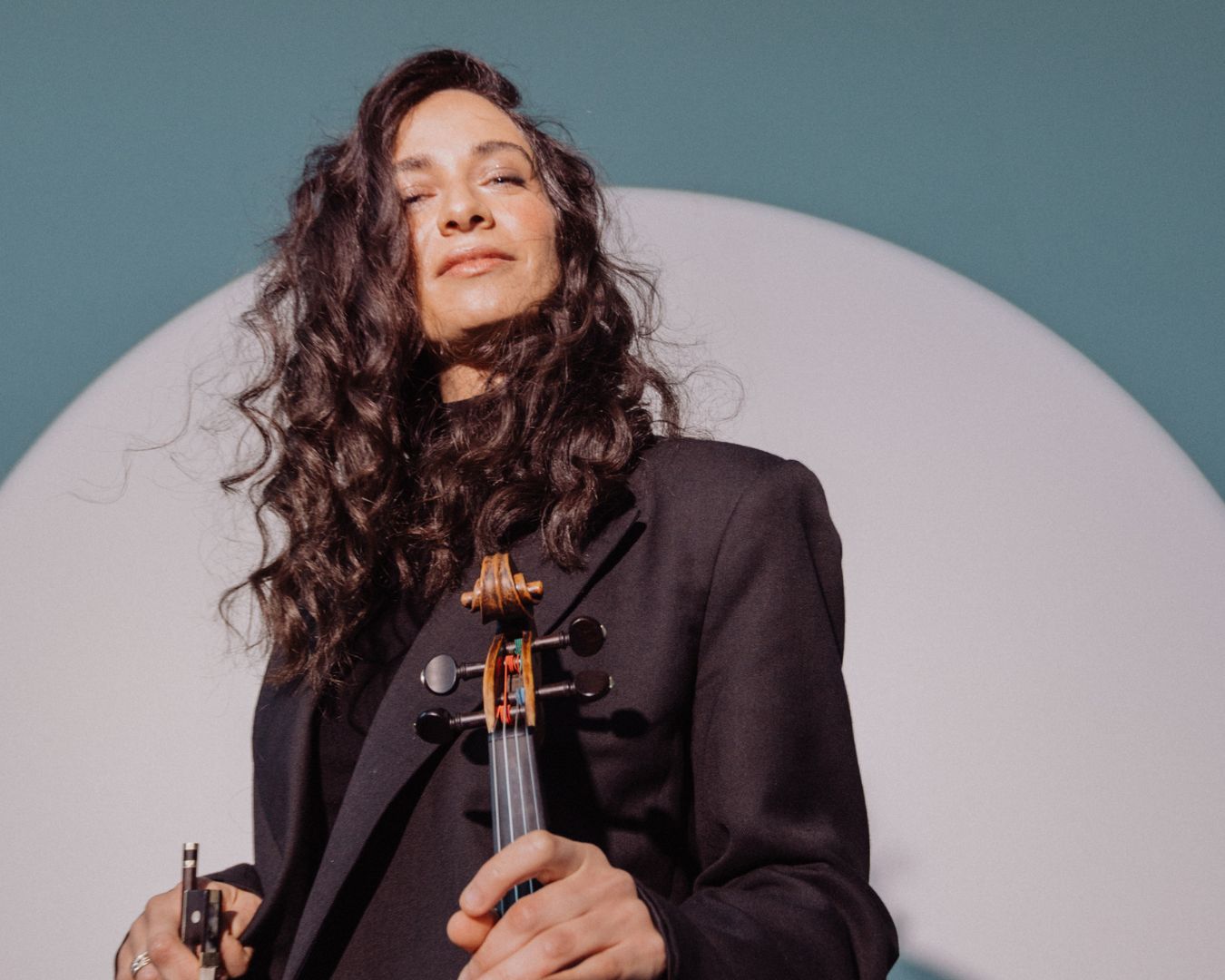
Sindy Mohamed
Viola
Born in Marseille in 1992, Sindy Mohamed graduated from the conservatory in her hometown before completing her studies at the Paris Conservatoire with Pierre-Henri Xuereb, at Berlin’s Hanns Eisler School of Music, and at the Kronberg Academy with Tabea Zimmermann. She is a prizewinner of the International Anton Rubinstein Competition and has performed with the Royal Northern Sinfonia conducted by Lars Vogt, Heidelberger Sinfoniker, Cottbus Philharmonic Orchestra, the Mecklenburg-Vorpommern Festival, the Heidelberger Frühling festival, and at London’s Wigmore Hall. As a chamber musician and soloist, she regularly appears at the Moritzburg Festival, Schubertiade Schwarzenberg-Hohenems, Kronberg Festival, Festival d’Aix-en-Provence, and La Folle Journée in Nantes, among others, collaborating with artists such as Renaud Capuçon, Isabelle Faust, Daniel Barenboim, Emmanuel Pahud, Jan Vogler, Elisabeth Leonskaja, and Kian Soltani. Highlights of this current season include performances at Berlin’s Intonations festival and at Chamber Music Connects the World as well as the release of her debut album recorded with pianist Julien Quentin. Sindy Mohamed is a member of the West-Eastern Divan Orchestra and Ensemble as well as a regular performer with the Boulez Ensemble and was heard at the Pierre Boulez Saal earlier this season as a soloist with the Cairo Symphony Orchestra.
January 2026