Matthias Pintscher Conductor
Katharine Dain Soprano
Julia Hamos Piano
Anne Romeis Flute
Denis Kozhukhin Piano
Boulez Ensemble
Program
Pierre Boulez
Sonatine for Flute and Piano
Jörg Widmann
Labyrinth IV
for Soprano and Ensemble
Matthias Pintscher
NUR
for Piano and Ensemble
Pierre Boulez (1925–2016)
Sonatine for Flute and Piano (1946/49)
Très librement. Lent – Rapide –
Très modéré, presque lent –
Tempo scherzando –
Subitement tempo rapide
Anne Romeis Flute
Denis Kozhukhin Piano
Jörg Widmann (*1973)
Labyrinth IV
for Soprano and Ensemble (2019)
on texts by Euripides, Clemens Brentano, Friedrich Nietzsche, and Heinrich Heine
I. Zeugung des Minotaurus
II. Kinderlied für ein Ungeheuer
III. Gang ins Labyrinth
IV. Im Labyrinth
V. Traurig schau ich in die Höh’
VI. Tötung des Minotaurus
Matthias Pintscher Conductor
Katharine Dain Soprano
Ema Bajc Flute, Piccolo
Miri Saadon Clarinet, Bass Clarinet
Mario Kopf Bassoon, Double Bassoon
Alper Çoker, Manuel Abreu Trumpet
Iñaki Ducun Trombone, Bass Trombone
Holger Groschopp Piano
Adrian Salloum, Jean-Baptiste Bonnard Percussion
Teodoro Anzellotti Accordion
Jiyoon Lee, Judith Stapf Violin
Álvaro Castelló Viola
Johanna Helm Cello
Paul Wheatley Double Bass
Intermission
Matthias Pintscher (*1971)
NUR
for Piano and Ensemble (2019)
I. lightly, floating
II. sospeso, sospirando
III. erratico, con durezza
Matthias Pintscher Conductor
Julia Hamos Piano
Anne Romeis Flute, Piccolo
Ema Bajc Flute, Bass Flute
Alexander Glücksmann Clarinet
Miri Saadon Bass Clarinet
Nina Janßen-Deinzer Bass Clarinet, Double Bass Clarinet
Mario Kopf Bassoon, Double Bassoon
Una Weske, Martin Lab Horn
Alper Çoker Trumpet, Flugelhorn
Adrian Salloum, Jean-Baptiste Bonnard, Gyöngyvér Nyilas Percussion
Holger Groschopp Celesta
Anna Viechtl Harp
Jiyoon Lee, Judith Stapf Violin
Álvaro Castelló, Gordon Lau Viola
Johanna Helm, Noel Wilde Cello
Paul Wheatley Double Bass
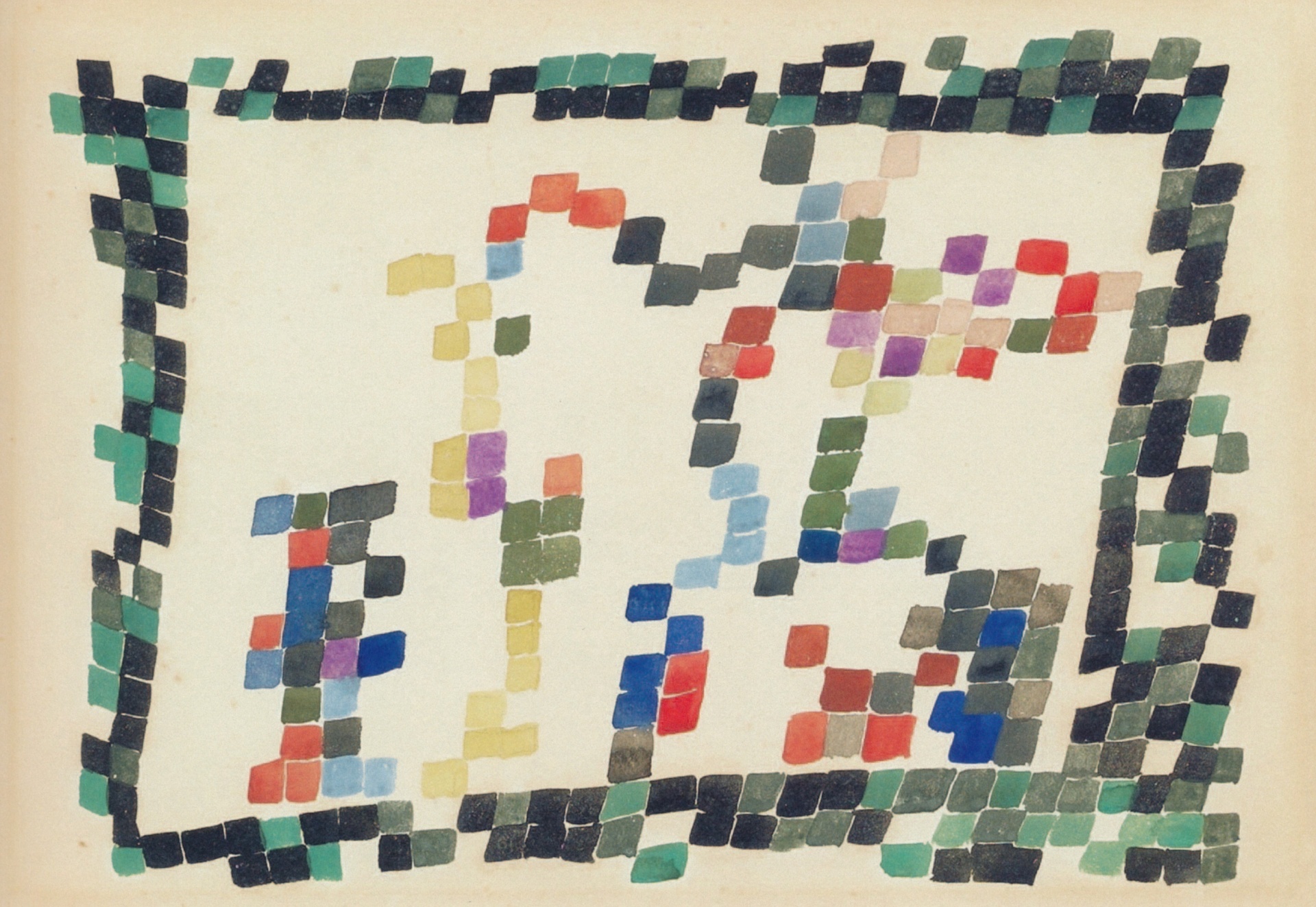
Sophie Taeuber-Arp, Taches quadrangulaires évocant et encadrant des personnages (1920)
Works of Structure and Imagination
Pierre Boulez’s radical Sonatine, written when he was 20, serves as a curtain raiser for two works by leading composers of our time, both premiered at the Pierre Boulez Saal in recent years: Matthias Pintscher's NUR and Jörg Widmann's Labyrinth IV.
Program Note by Richard Bratby
Works of Structure and Imagination
Music by Boulez, Pintscher, and Widmann
Richard Bratby
“Play It as Written”
Boulez’s Sonatine for Flute and Piano
In October 1944, the 19-year-old Pierre Boulez began formal composition lessons in Paris with Olivier Messiaen. It came as a bracing jolt to him, in February of the following year, when he encountered the music of the Second Viennese School at a private recital organized by the composer and scholar René Leibowitz—a revelation, in fact (as he later recalled) that “another musical universe existed outside Messiaen’s class.” Before long, he was taking lessons with Leibowitz.
Within a few months he would begin to chafe against the rigid aesthetic dogma of Leibowitz’s approach. But for a period, the rhythmic complexity of Messiaen, the formal rigor of Leibowitz, and the bracing new possibilities offered by serialism worked together to reshape Boulez’s creative imagination. “I am in the middle of composing a Sonatine for flute and piano, in which I have worked particularly on structure and counterpoint,” he wrote to Leibowitz, and the work was completed on February 8, 1946.
Certainly, it was different—very different—from the established French conservatoire tradition of single-movement woodwind showpieces. It is not that the Sonatine lacks virtuosity: quite the contrary. But its slow, incantatory introduction (marked “Très librement”) and multi-section form conceal the outlines of a radically reworked sonata structure, rather than the slow-fast operatic pattern of the traditional pièce de concours.
And the formidable difficulty of the flute writing (which includes extended techniques, such as flutter-tonguing) is integral to the Sonatine’s brilliant and often forceful musical argument. “Très brusque” and “brutal” are the instructions that Boulez inscribes in the closing bars. This is a young composer who sees destruction as a vital preliminary to creation. And yet the whole work is shot through with a sense of clarity and instrumental color. In its moments of lightness, lyricism, and flashing fantasy, the Sonatine offers a first taste of the poetic world that we recognize, fully formed, in Le Marteau sans maître, written about eight years later.
In 1946, though, it was a step too far. Boulez had planned to dedicate the Sonatine to Jean-Pierre Rampal—a daring young flutist, sympathetic to Leibowitz’s aims. But Boulez’s un-barred score frustrated him. “I could sense that the work had a strong emotional appeal,” Rampal recalled, “…but with an extremely heavy concert schedule, the idea of spending hours, perhaps even days, picking my way through a difficult modern work was sapping my spirit. Cautiously I asked if he could put in a few bar lines. ‘Play it as written. The unity of the rhythm is counted at the beat,’ he replied, ever true to his principles.”
Frustrated, Rampal put the Sonatine aside. In time, Boulez would concede Rampal’s point, and he re-edited the score for its eventual publication in 1954. The world premiere, meanwhile, was given in Brussels on February 28, 1947, by Herlin Van Boterdael and pianist Marcelle Mercenier. Boulez was unable to be present, but was pleased to hear that it had received vociferous protests from the startled Belgian audience.
“Various Forms of Fire”
Pintscher’s NUR for Piano and Ensemble
In an interview with VAN magazine in 2017, Matthias Pintscher contrasted his compositional process to that of his mentor Pierre Boulez. “He would come toward the [musical] objects by determining the form first. And I’m the opposite: I follow my instincts, I try to find my form after finding the objects.” But after following those instincts and finding that form, what comes next is about refinement, discipline: in a word, artistry. “Do you compose when you’re experiencing strong feelings?” asked VAN. “Never,” replied Pintscher. “There are no tears when you’re writing. Before or after, maybe, but not during. You’re searching. For me it’s like Japanese calligraphy. All the inspiration and preparation goes towards the moment when you dunk your brush into the ink, and you execute the stroke, the sign, the gesture. Maybe you prepare two days or 20 years for it. But you can’t alter it. It’s done. And it represents some sort of perfection. Even if there’s only a hint of perfection in that gesture, it’s valid.”
The sensation of emotion recollected—and re-ignited—in tranquility is evident throughout the three movements of NUR, a chamber concerto for piano and ensemble composed in 2018 and premiered by Daniel Barenboim and the Boulez Ensemble here at the Pierre Boulez Saal on January 20, 2019. That the emotion is real; indeed, that it can burn, is beyond question: nur is the Hebrew-Arabic word for fire and light (it is also an Arabic given name, applicable to male and female alike), and it seems reasonable to suppose that the work was the result of the kind of extended inner search Pintscher describes.
“To be honest, I felt I had nothing to contribute to the [concerto] repertoire and so for many years was reluctant to write a piano concerto. Then, suddenly, everything seemed to align,” he told the writer Thomas May shortly before the premiere. Barenboim’s own virtuosity seemed to pull Pintscher’s ideas into focus, and the work was written in a matter of a few weeks in the summer of 2018.
“My main inspiration for the title was that it could comprise multiple layers and represent various forms of fire, all sorts of states,” Pintscher said, going on to speak of the contrast between the “metallic brilliance” of the piano and, beneath and around it, the “shadow sound” of the chamber ensemble. “The piano rises up from this acoustically dark space,” the composer says. This is a concerto conceived less as a contest or display piece than a “dialogue between this metallic instrument and what it elicits in the sonic realm of the orchestra.”
But there is a whole imaginative world underpinning the work’s subtle (yet often dazzling) superstructure: fire is both elemental force and the enabler (and destroyer) of civilization. If the work’s opening horn calls (“lontano”—from a distance), or the doom-laden rumblings and “sighing” canto sospeso of the central movement (with its title half-remembered from Luigi Nono’s lament in a time of conflict) evoke deeper and more complex memories, that, after all, is simply how art works. And perhaps the spirit (though certainly not the letter) of Wagner’s Loge is present in the erratico finale: uniting past and present, playfully creating even as it destroys and leaving behind sparks which smolder in the memory—ever ready to burst back into imaginative flame.
“Both Fascinated and Repulsed”
Widmann’s Labyrinth IV for Soprano and Ensemble
As that rarest of things (in the modern age, at least), a virtuoso performer who is also a composer, Jörg Widmann is in some senses a Romantic (note the capital R) figure. His whole career has been defined by a dialogue with the history (and legacy) of German music: an opera (Babylon) with its roots in the myths of Weimar Berlin, choral music that alludes to Haydn, a song cycle on Brentano and Des Knaben Wunderhorn, and string quartets that engage, unabashedly, with the legacy of Beethoven.
So perhaps it was always inevitable that so determined an explorer of the cultural subconscious would seek to venture further, to dig even deeper into the ancient patterns and terrors that underlie our shared European story. The story of the monstrous Minotaur, fathered on Queen Pasiphaë by a Cretan bull and then trapped in a labyrinth created by the inventor Daedalus, has been told in music since at least as far back as Monteverdi. Widmann began his excavations in 2005 with Labyrinth for 48 strings. In Zweites Labyrinth (2006) he used a large orchestra, and in Drittes Labyrinth (2014) he added a soprano: the voice of the Minotaur’s half-sister (and nemesis) Ariadne.
With Labyrinth IV, commissioned by the Daniel Barenboim Stiftung and premiered at the Pierre Boulez Saal in June 2019, Ariadne is still present but we also hear the (wordless) voice of the Minotaur, represented by the 15-piece instrumental ensemble. Widmann has assembled a narrative spanning the whole Minotaur myth from creation to apotheosis, using poetry by Euripides, Clemens Brentano, Friedrich Nietzsche, and Heinrich Heine. At times, however (as in the third movement, a purely instrumental canon) the tormented monster speaks without words. The result has been compared to a chamber opera, with the soprano moving around the performance space much as Ariadne (who is, according to Widmann, “both fascinated and repulsed by the Minotaur”) explores the labyrinth.
In the composer’s own words: “After my first two purely orchestral Labyrinth compositions and the imaginary scena for a soprano and large orchestra of the Third Labyrinth, it became clear to me that in Labyrinth IV a minotaur-like masculine voice would have to join the soprano voice of Ariadne. The instrumental body in Labyrinth IV is much smaller in scale than in the previous labyrinths. It has become an ensemble piece with two voices.
“The piece begins with the conception of the Minotaur: the Minoan bull, Pasiphaë, and the fake bull. At the center is a labyrinth scene with the grumbling, snorting Minotaur and the virgins and young men sacrificed to him, who—if we believe Friedrich Dürrenmatt’s thesis—tear each other apart in sheer fear and panic. The final scene takes place on Naxos, with Ariadne and Dionysus throwing the crown into the sky as a sign of their marriage, where it becomes the eternal constellation of their love in the starry labyrinth.”
Richard Bratby lives in Lichfield, UK, and is chief classical music critic of The Spectator. He writes for Gramophone, Engelsberg Ideas, and The Critic. His books include Forward: 100 Years of the City of Birmingham Symphony Orchestra and Refiner’s Fire: The Academy of Ancient Music and the Historical Performance Revolution.
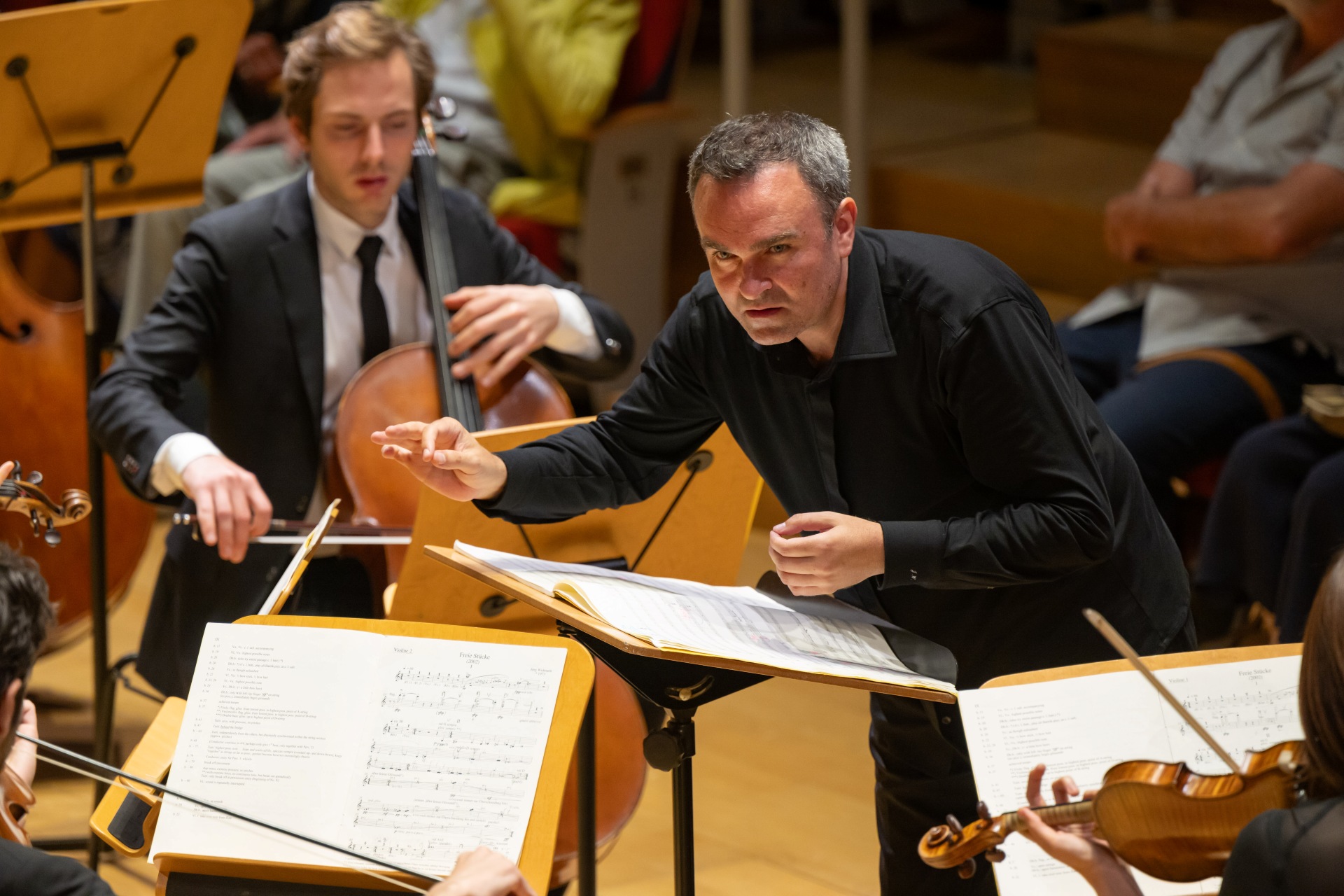
Jörg Widmann conducting the Boulez Ensemble in 2023 (© Peter Adamik)
Glückliche Konstellationen
Im ersten Jahrzehnt seines Bestehens hat das Boulez Ensemble mit zahlreichen Uraufführungen das zeitgenössische Ensemblerepertoire erweitert. Mit Matthias Pintschers NUR und Jörg Widmanns Labyrinth IV kehren zwei dieser Werke im Rahmen des West-Eastern Divan Festival zurück in den Pierre Boulez Saal.
Essay von Kerstin Schüssler-Bach
Glückliche Konstellationen
Werke von Boulez, Pintscher und Widmann
Kerstin Schüssler-Bach
„Mein erster Schritt“
Pierre Boulez: Sonatine für Flöte und Klavier
Als erste im Druck veröffentlichte Komposition nimmt Pierre Boulez’ Sonatine für Flöte und Klavier von 1946 sozusagen die Stellung eines Opus 1 in seinem Werkkatalog ein. „Diese Sonatine ist mein erster Schritt auf dem Weg zur seriellen Kompositionsweise, wie ich sie verstehe.“ Er habe hier „zum ersten Mal versucht, eigenständige rhythmische Strukturen, deren Möglichkeiten Messiaen aufgezeigt hatte, im Kontext klassischer serieller Strukturen zum Ausdruck zu bringen“, erklärte der Komponist 1958 in einem Interview.
Als Schüler von Olivier Messiaen studierte der 20-jährige Boulez vor allem dessen komplexe rhythmische Arbeit. Ein anderes Vorbild war der kurz zuvor tragisch zu Tode gekommene Anton Webern, der damals noch nicht weithin bekannt war. Aus Weberns Partituren übernahm der junge Komponist, wie er später sagte, „den Begriff einer bestimmten Intervallstruktur“. Als formale Anregung diente Arnold Schönbergs Kammersymphonie op. 9: Boulez interessierte daran die Verbindung der vier Sätze zu einer Einheit, während diese vier Abschnitte gleichzeitig einen einzigen Sonatenhauptsatz entwickeln. Diese Mehrdeutigkeit der Form erprobte er auch in seiner Sonatine: „Genau genommen handelte es sich um ein einziges Grundmaterial, das zunächst zu einem ersten Thema wurde, zu einer Art Sonaten-Allegro, und das sich nach und nach in ein Scherzo, einen langsamen Satz und ein Finale verwandelte.“ Boulez verband diese Einflüsse mit einer sehr dynamischen, teils aggressiven Geste und dichten Textur.
Ursprünglich entstand die Sonatine für den drei Jahre älteren, später so berühmten Flötisten Jean-Pierre Rampal. Er konnte dem Stück allerdings wenig abgewinnen und hat es nie gespielt. Die Uraufführung 1947 in Brüssel mit dem Flötisten Herlin Van Boterdael und der Pianistin Marcelle Mercenier wurde „mit großen Vorbehalten, wenn nicht gar Buhrufen aufgenommen“, wie der belgische Musikwissenschaftler Célestin Deliège in einem Interview mit Boulez anmerkt. Der junge Komponist überarbeitete das Werk vor der Drucklegung gründlich. Die Premiere der revidierten Fassung fand dann 1956 bei den Darmstädter Internationalen Ferienkursen für Neue Musik mit dem Flötisten Severino Gazzelloni und dem Pianisten David Tudor statt. Hier hatte sich Boulez mittlerweile als richtungsweisende Figur der Avantgarde etabliert, auch als Dozent und Dirigent.
Die Bezeichnung „Sonatine“ wirkt sehr viel harmloser, als das Stück ist. Bis heute zählt es zu den anspruchsvollsten Herausforderungen des Flötenrepertoires, sowohl hinsichtlich der enormen spieltechnischen Schwierigkeiten wie auch, durch starke Kontraste in Klangfarbe, Register und Tempo, der gestalterischen Aufgaben. Trotz der raschen Beleuchtungswechsel geht das Material auf eine einzige Zwölftonreihe zurück. Die Konstruktion drängt sich aber dank des spielerischen, zwischen vorwärtstreibenden und kurzen lyrischen Abschnitten pendelnden Ideenreichtums niemals in den Vordergrund. Längst ist Boulez’ Sonatine zu einem modernen Repertoireklassiker geworden.
Metallische Brillanz, dunkle Schattenklänge
Matthias Pintscher: NUR für Klavier und Ensemble
Eine glückliche Konstellation von „guten Sternen“ sei es gewesen, die 2018 über der Komposition von NUR stand, erklärte Matthias Pintscher im Interview mit Thomas May im Vorfeld der Uraufführung: Viele Jahre sei er immer wieder nach einem Klavierkonzert gefragt worden. Doch bis dahin hatte er „nie auch nur ansatzweise darüber nachgedacht, weil ich mich nicht in der Lage sah, diesem Repertoire etwas hinzuzufügen.“ Der Respekt vor dem, was bereits gesagt war, schien mithin sehr groß.
Aber Pintschers Freundschaft mit dem New Yorker Naturwissenschaftler und Unternehmer Paul Sekhri, dessen Passion für die Musik und speziell für das Klavier sich in einer umfangreichen mäzenatischen Tätigkeit niederschlägt, wies einen Weg. Schon Pintschers Solostück NOW I für das Lucerne Festival, geschrieben 2015 zum 90. Geburtstag von Pierre Boulez, verdankt sich der Pianomanie Sekhris. Zuletzt entstand auf dessen Anregung Pintschers Aubade, 2026 uraufgeführt von Yefim Bronfman. Auch NUR für Soloklavier und Ensemble entsprang Sekhris Mäzenatentum. Doch es sei, so Pintscher, nicht ohne die intensive Verbindung zu Daniel Barenboim denkbar gewesen, die seine Vorbehalte gegen das Klavier schmelzen ließ. Der Gründer des Pierre Boulez Saals übernahm dann auch den Solopart in der Uraufführung, die unter der Leitung des Komponisten im Januar 2019 im elliptischen Raum stattfand.
Pintscher definiert sich als „sehr spirituellen Menschen“ und beschäftigt sich als Jude intensiv mit den hebräischen Schriften und ihrer Sprache. Für dieses Werk wählte er als Titel ein Wort, das sowohl im Hebräischen als auch im Arabischen eine Bedeutung trägt: nur – „Feuer“ oder „Licht“. In verschiedenen Aggregatzuständen sei Feuer in dieser Musik präsent, sagt Pintscher. Das Klavier erhebe sich „in großer metallischer Brillanz“ über den Schattenklang des Ensembles (in den gedeckten Farben von Bassklarinette und Kontrafagott). Von einem herkömmlichen Klavierkonzert kann trotz der traditionellen Dreisätzigkeit nicht die Rede sein. Der Komponist spricht von einer antiphonalen Interaktion zwischen dem metallenen Klang des Klaviers und dem dunklen Raum des Orchesters.
Wie aus der Ferne ruft das erste Horn, zart und ohne Eile. Es ist eine geheimnisvolle, fast romantische Kantilene, die behutsam andere Instrumente mit ihren geräuschhaften Reaktionen in das Geschehen hineinzieht. Erst nach dieser kleinen Introduktion erobert sich das Klavier die Bühne – ganz allein, den Impuls des Horns sanft aufgreifend, zu einer dichteren Textur verwebend und erstmals den dynamischen Pol des Fortissimo erklimmend. Damit zündet das Klavier wahrlich das Licht im Ensemble an: Kleinteilige, aufgeregte Figuren wandern zwischen den Gruppen hin und her, das Klavier tritt hinter die sich nun profilierenden Celli zurück, nimmt als gleichberechtigter Partner einen Dialog mit Celesta und Vibraphon auf. Über tiefen Liegetönen des Klaviers blitzen verschattete Arabesken der Bass- und Kontrabassklarinette und des Fagotts auf. Luftgeräusche und Überblasen der Bläser, am Steg oder auf dem Griffbrett gestrichene Töne der Streicher entspinnen ein feines Klangnetz, das den kristallenen Ton des Klaviers umhüllt. Wie Flammenzüngeln verbreitet sich dessen neuer, auf- und abschießender Impuls in den Streichern und mündet in einen kurzen kadenzartigen Abschnitt. Der Tonraum weitet sich nach oben: Hohe Akzentnoten verteilen sich vom Klavier aus über die Instrumente des Ensembles. Ein im Klavierkorpus erzeugter Ton ruft zum ruhigen Ausklang des ersten Satzes auf.
Nach einem schwebend-schattenhaften, durchgehend im zwei- bis fünffachen Pianissimo gehaltenen Intermezzo schießt der dritte Satz mit einem abgerissenen sforzato-Akkord los. Diesmal ist es die Energie des Ensembles, die auf die Solistin übergeht. In unfassbar schnellen Figuren jagt das Klavier schließlich fort, bis wieder ein magischer Moment des in sich hineinlauschenden Stillstands erreicht ist. Die rasende Bewegung wird erneut aufgenommen und führt zu hämmernden Passagen. Wie einen Brandbeschleuniger wirft die Solistin ein auskomponiertes fortissimo-Glissando in den Raum. Nach dieser Explosion scheint das Feuer zu verlöschen, doch einzelne Partikel flackern immer wieder auf. Noch einmal zerbirst das Klavier förmlich vor Energie und reißt das Ensemble mit, hin zu einem vehementen Schluss.
Bei der Konzeption von NUR habe er, sagt Matthias Pintscher, zwar nicht spezielle Aspekte des Klavierspiels von Daniel Barenboim hervorheben wollen. Doch drei seiner Charakteristika hätten ihn besonders inspiriert: „die unglaubliche Spontaneität des Moments und die Brillanz des Geistes“, aber auch die Fähigkeit zur „großen Schlichtheit, um sich selbst zuzuhören und einen Raum zu geben.“
„Im güldnen Labyrinth“
Jörg Widmann: Labyrinth IV für Sopran und Ensemble
Ebenso wie Matthias Pintschers NUR wurde auch Jörg Widmanns Labyrinth IV 2019 im Pierre Boulez Saal uraufgeführt. Dass beide Werke hier seitdem mehrfach gespielt wurden, ist sicht- und hörbarer Ausdruck der intensiven Pflege eines zeitgenössischen Ensemblerepertoires. Seit 2017 hat Jörg Widmann zudem die Edward W. Said-Professur für Komposition an der Barenboim-Said Akademie inne, ist diesem Ort also engstens verbunden.
Sieben Werke umfasst mittlerweile sein Labyrinth-Zyklus, der 2005 seinen Anfang nahm. Sogar ein 2023 veröffentlichter Dokumentarfilm über den Komponisten, Klarinettisten und Dirigenten trägt den Titel Im Labyrinth. Als „schöne Metapher für die Kunst und für das Leben“ bezeichnete Widmann das System des Labyrinths, das durch zahlreiche Richtungsänderungen und Sackgassen schließlich doch zum Ziel führt. Die suchende Orientierung im Dickicht der Möglichkeiten sieht er als künstlerische Herausforderung: „Mein Problem war immer, dass ich zu viele Ideen habe. Das Einzige, was ich weiß, ist, dass es sich bei der nächsten Komposition wieder wie ein Labyrinth anfühlen wird.“
In Widmanns Konzeption labyrinthischer Kompositionen spielt außerdem der Raumklang eine große Rolle: Dieser wandert seine Strecke in verschiedene Richtungen, indem die Musiker:innen im Saal verteilt sind. Auch Labyrinth IV begibt sich auf diese verschlungenen Pfade. Die Sängerin bewegt sich durch verschiedene Positionen im Verlauf einer Tour de force, die ihr stimmlich und gestalterisch Höchstes abverlangt.
Ein Schrei, ein Hauchen, Stöhnen und Seufzen, dazu Schlagzeug und tiefe Instrumente: Das Werk beginnt mit der sexuellen Vereinigung der kretischen Königin Pasiphaë mit einem Stier. Aus Gewalt und Lust wird der Minotaurus geboren, halb Mensch, halb Stier. (Sein Schicksal erzählt Widmanns Stück nicht: Pasiphaës Mann, König Minos, sperrt das Wesen in ein labyrinthisches Gefängnis. Ihm werden junge Männer und Frauen zum Fraß vorgeworfen, bis Theseus das Ungeheuer besiegt.)
Nach dem Zeugungs- und Geburtsakt nimmt Labyrinth IV die Perspektive der Ariadne ein: Sie ist die Tochter von Minos und Pasiphaë und somit die Halbschwester des Minotaurus. Mit einem Zitat des Euripides stellt Ariadne sich ihm gegenüber: „mit archaisch-tiefer Bruststimme gesprochen, das Unfassbare vor Augen“, so die Vortragsanweisung. Darauf geht die Musik über in ein summendes Kinderlied, auf Verse Clemens Brentanos, durch ein Labyrinth der glitzernden Celestaklänge und des traurigen Akkordeon-Budenzaubers. In einem Kanon verfolgen sich die instrumentalen Bewegungen gegenseitig, steigern sich mehr und mehr, bis zu einem Aufschrei der Sopranistin, grundiert durch harte Schläge: „Unnennbarer! Entsetzlicher!“ Sprechgesang und exaltierte Melismen wechseln zu dieser „Klage der Ariadne“ auf Verse aus Friedrich Nietzsches Dionysos-Dithyramben. Auf der Empore positionierte Trompeten erweitern den Raum der Bedrängnis und Gewalt. Aus dem Würgegriff löst sich die Sopranistin mit einem lyrischen Rückzug auf Worte von Heinrich Heine: „Hat im güldnen Labyrinth sich vielleicht verirrt am Himmel“ – eine thematisch-musikalische „Rückblende“, so Widmann, auf das Brentano-Lied.
Der Minotaurus wird wieder angelockt und schließlich in einem großen, brutalen Höhepunkt getötet. Nach einer von Widmann so genannten „Todesfanfare“, die die Musik des Zeugungsaktes wiederholt, beendet Ariadne diesen Albtraum zu Nietzsches „Ich bin dein Labyrinth“ – ein Satz, der auch in Wolfgang Rihms Nietzsche-Oper Dionysos (2010) prominent platziert wurde. Mit einem harten Abriss setzen die Instrumente dem Kampf und der gleichzeitigen Faszination Ariadnes ein Ende. Sie befreit sich von ihren Nachtmahren. Des Helden Theseus, der im Mythos den Minotaurus tötet und mit Ariadne davonsegelt, bedarf es nicht mehr.
Dr. Kerstin Schüssler-Bach arbeitete als Opern- und Konzertdramaturgin in Köln, Essen und Hamburg und hatte Lehraufträge an der Musikhochschule Hamburg und der Universität Köln inne. Beim Musikverlag Boosey & Hawkes in Berlin ist sie als Vice President Composer Management tätig. Sie schreibt regelmäßig für die Berliner Philharmoniker, die Elbphilharmonie Hamburg, das Lucerne Festival und das Gewandhausorchester Leipzig. 2022 erschien ihre Monographie über die Dirigentin Simone Young.
The Artists
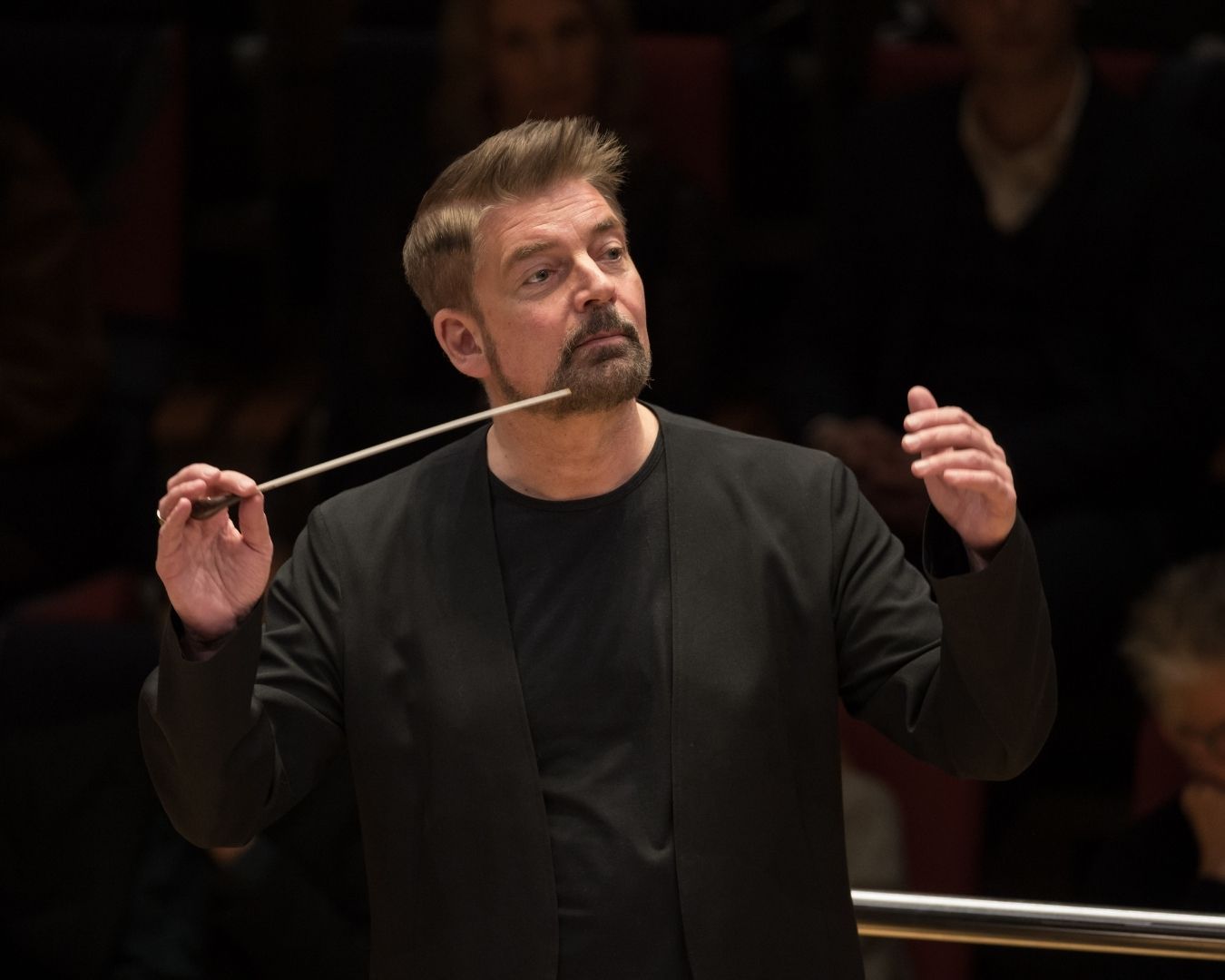
Matthias Pintscher
Conductor
Matthias Pintscher began his studies as a conductor with Peter Eötvös and later focused on composition. He has pursued a successful dual career ever since, and his works have been performed by orchestras including the Chicago Symphony, New York Philharmonic, Berliner Philharmoniker, and Orchestre de Paris, among many others. The Boulez Ensemble premiered his piano concerto NUR (2019) and beyond II (bridge over troubled water) (2020). In January 2026, he led the world premiere of his opera Das kalte Herz at Berlin’s Staatsoper Unter den Linden, where he previously conducted productions of Wagner’s Lohengrin und Der fliegende Holländer as well as the world premiere of Beat Furrer’s Violetter Schnee. In 2023, Matthias Pintscher concluded a highly successful decade-long tenure as music director of the Paris-based Ensemble intercontemporain, which was founded by Pierre Boulez. In the fall of 2024, he became music director of the Kansas City Symphony, and since 2020 he has been Creative Partner of the Cincinnati Symphony Orchestra. He was appointed music director of the Los Angeles Chamber Orchestra this past summer and will take up the position in the 2027–28 season. Matthias Pintscher previously served as Artist in Association with the BBC Scottish Symphony Orchestra, Creative Chair for Zurich’s Tonhalle Orchestra, artist in residence with the Los Angeles Chamber Orchestra, and, from 2016 to 2018, as principal conductor of the Lucerne Festival Academy Orchestra. He has held a professorship for composition at New York’s Juilliard School since 2014.
November 2026
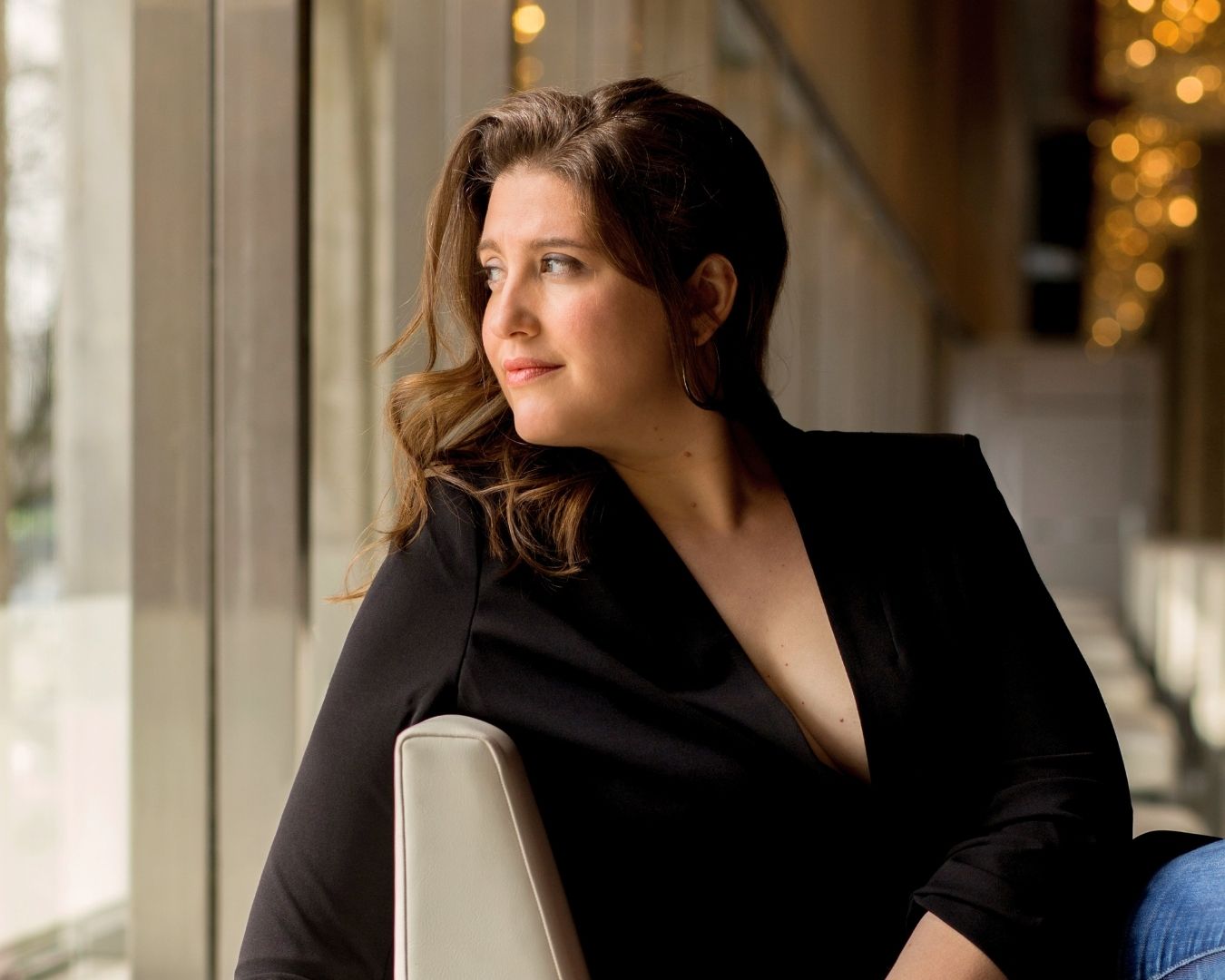
Katharine Dain
Soprano
Katharine Dain is equally in demand on the operatic stage and on the concert platform, performing works of the Classical and Romantic repertoire as well as contemporary music. The American soprano has been heard as Mozart’s Konstanze, Fiordiligi, Donna Anna, and Countess Almaviva in opera houses across France, Belgium, and the Netherlands and made her debut at the Dutch National Opera in Claude Vivier’s Kopernikus. She also appeared in the world premieres of I have missed you forever (Amsterdam 2022) and Barzakh (Antwerp/Ghent 2024). Together with pianist Sam Armstrong she has released two acclaimed song albums: Regards sur l’infini, featuring works by Debussy and Messiaen, won the Edison Klassiek for Best Debut Recording, while Forget This Night with works by Karol Szymanowski, GrażynaBacewicz, and Lili Boulanger was named CD of the Month by BBC Music Magazine. In 2020, Katharine Dain made her debut with Amsterdam’s Concertgebouw Orchestra in the world premiere of Bram Kortekaas’s Notenkrakers’ notulen. She has also performed with the Orchestra of the 18th Century, Rotterdam Philharmonic, Netherlands Chamber Orchestra, BBC National Orchestra of Wales, and the ensembles Arcangelo and Asko|Schönberg, among many others. In the 2022–23 season, she served as artist in residence with Finland’s Tapiola Sinfonietta. She returns to the Pierre Boulez Saal this coming December for a program with the Ragazze Quartet.
November 2026
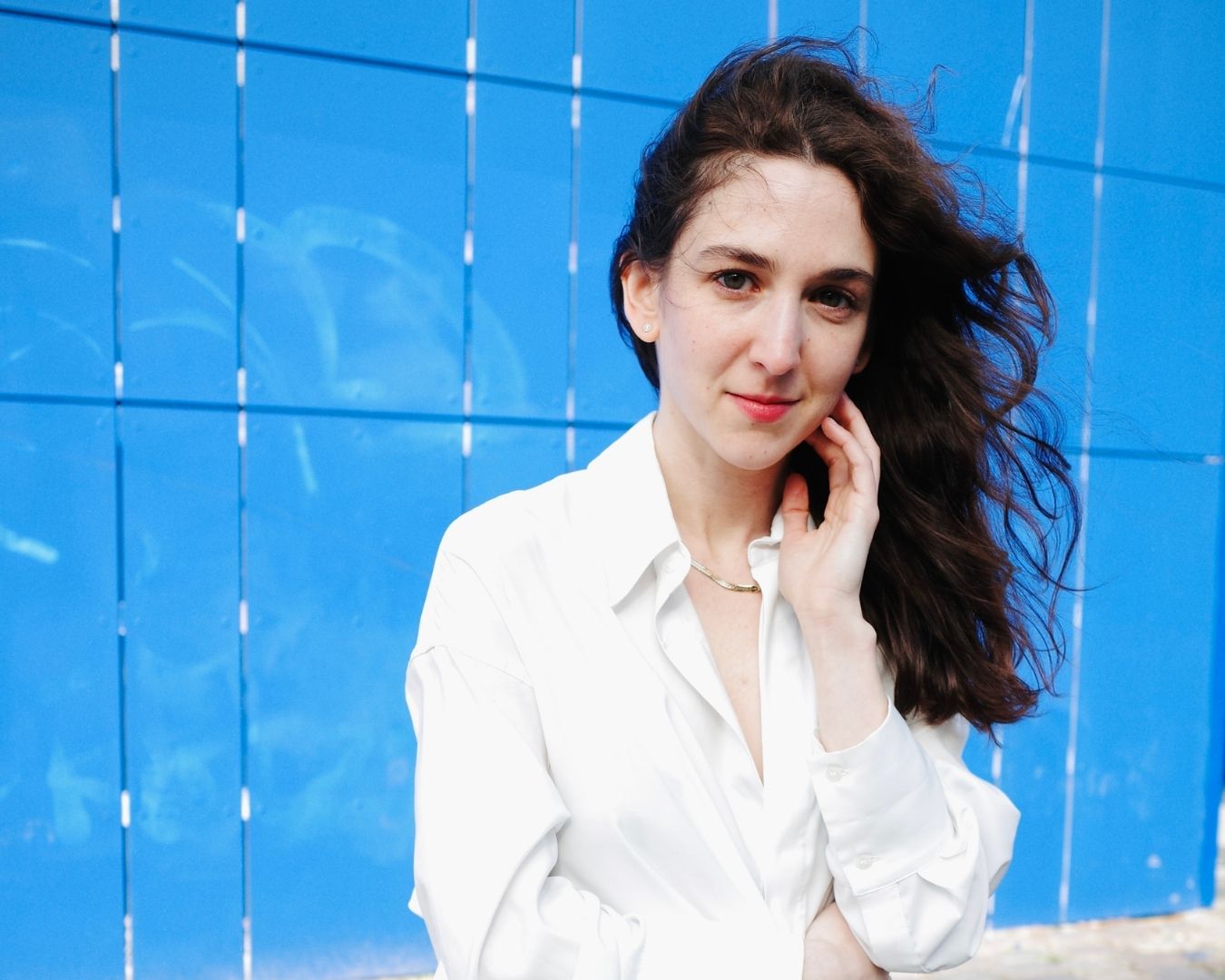
Julia Hamos
Piano
American-Hungarian pianist Julia Hamos studied with Christopher Elton at London’s Royal Academy of Music, with Richard Goode at the Mannes School of Music in New York, and with Sir András Schiff at the Barenboim-Said Akademie; she completed her education at the Kronberg Academy. A winner of the Sterndale Bennett Prize of the Royal Academy of Music and the Fidelman Award of the Mannes School, she has performed at venues including London’s Wigmore Hall, Beethovenhaus Bonn, New York’s Lincoln Center, the Kennedy Center in Washington, D.C., and the Liszt Academy in Budapest. She has also appeared at Poland’s Krzyżowa Music Festival, the Trasimeno Music Festival in Italy, IMS Prussia Cove in Cornwall, the Verbier Festival, and at Kronberg’s Chamber Music Connects the World with Tabea Zimmermann and Christian Tetzlaff. A champion of interdisciplinary projects, she has collaborated with the Martha Graham Dance Company, the New English Ballet Theatre, and the theater department of New York’s New School. Her debut album Ellis Island, featuring works by Kurtág, Ligeti, Bartók, Schubert, Meredith Monk, and others, was released in 2025. Julia Hamos has been heard at the Pierre Boulez Saal as the soloist in Ligeti’s Piano Concerto and in Pierre Boulez’s sur Incises with the Boulez Ensemble, and performed her first solo recital here in March 2025.
November 2026
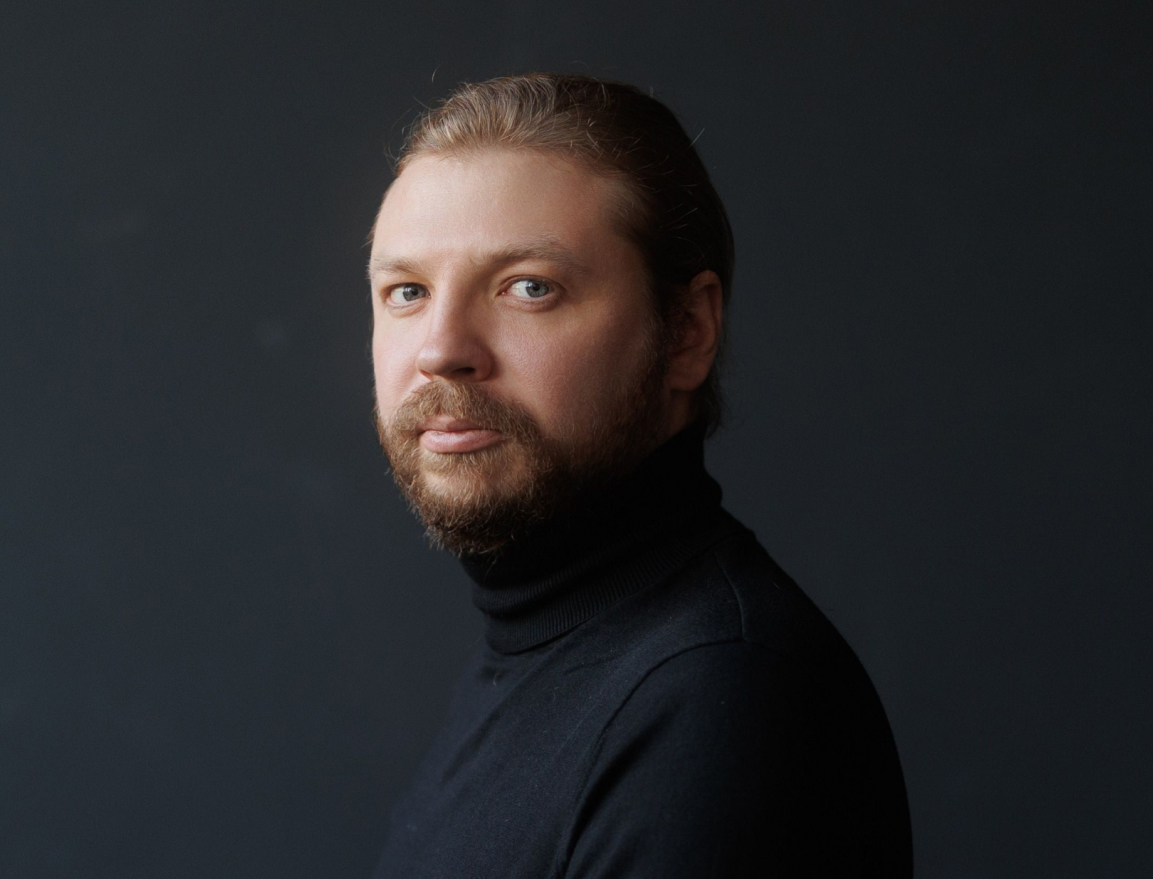
Denis Kozhukhin
Piano
Born into a family of musicians in Nizhni Novgorod in the former Soviet Union, Denis Kozhukhin studied at the Reina Sofía College of Music in Madrid with Dmitri Bashkirov and Claudio Martínez Mehner and at the Stuttgart Musikhochschule with Kirill Gerstein. Since winning first prize at the Concours Musical Reine Elisabeth in Brussels in 2010, he has been in demand internationally as a pianist and chamber musician and has appeared at major festivals and concert halls, including the Verbier Festival, the BBC Proms, the Klavier-Festival Ruhr, and Germany’s Rheingau Musik Festival, as well as the Berlin Philharmonie, Leipzig Gewandhaus, Vienna Konzerthaus, Herkulessaal in Munich, New York’s Carnegie Hall, and London’s Wigmore Hall. He has performed as a soloist with orchestras such as the Concertgebouw Orchestra Amsterdam, Berlin’s Deutsches Symphonie-Orchester and Staatskapelle, Chicago Symphony, Philadelphia Orchestra, London Symphony, and Mahler Chamber Orchestra. Denis Kozhukhin has released solo recordings of works by Brahms, Prokofiev, Haydn, Mendelssohn, and others, piano concertos by Grieg, Tchaikovsky, Ravel, and Gershwin, an album of music by Carl Maria von Weber with Jörg Widmann and the Irish Chamber Orchestra, and most recently a duo album with cellist Pablo Ferrández. He has been closely associated with the Pierre Boulez Saal since its opening.
November 2026
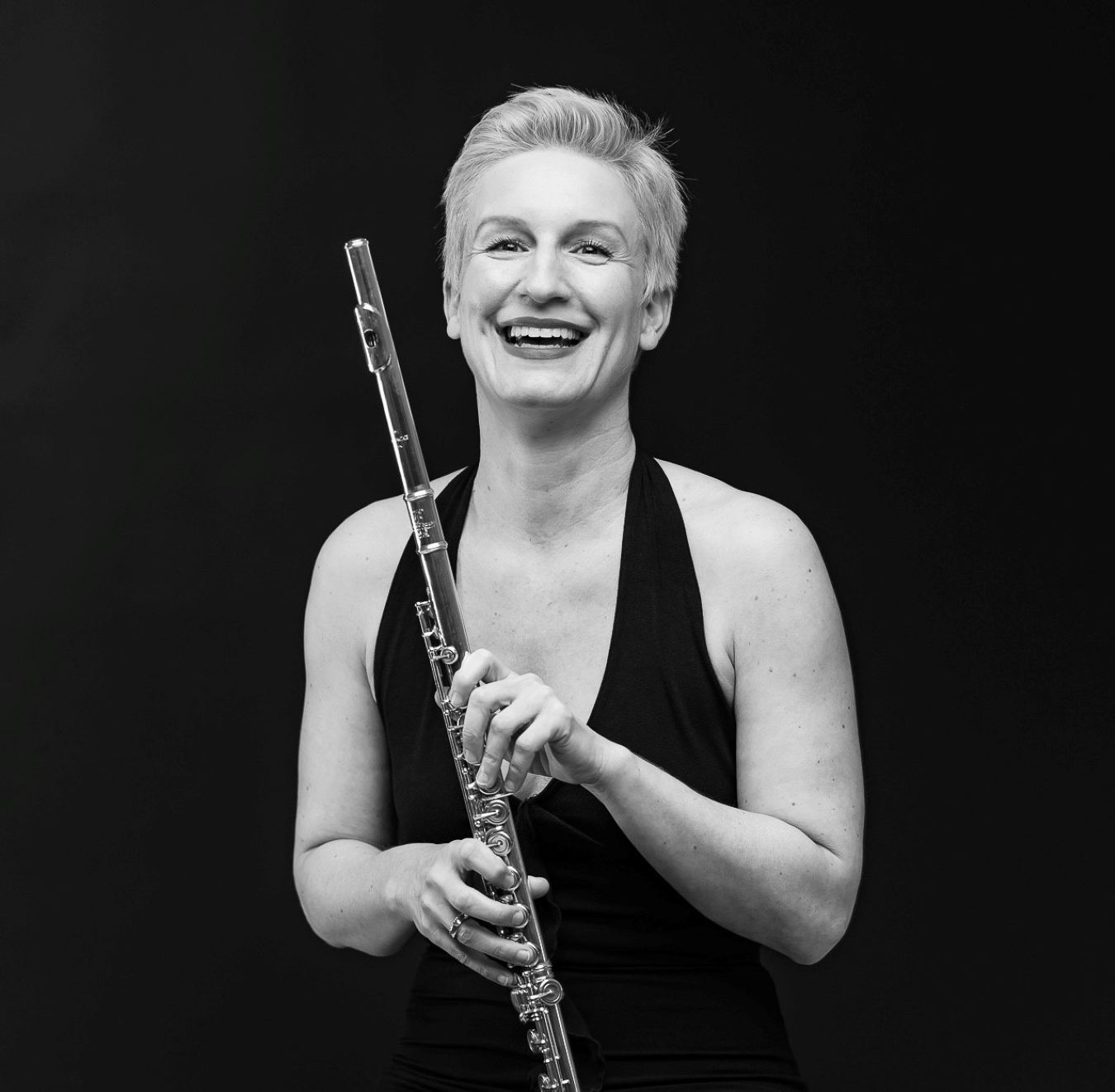
Anne Romeis
Flute
Anne Romeis began her musical education with Wilm Coolen and later studied with Mirjam Nastasi at the Freiburg Musikhochschule. She gained international attention at a young age as a prize-winner at major competitions and since 1996 has been a flutist with the SWR Symphony Orchestra. In addition to her orchestral work, she has appeared at festivals around the world including the Festival d’Automne in Paris, the Vienna Festival, Prague Spring, Warsaw Autumn, the Salzburg Festival, and the BBC Proms. Throughout her career, she has collaborated with conductors such as Pierre Boulez, Daniel Barenboim, Michael Gielen, Kent Nagano, Zubin Mehta, Herbert Blomstedt, and Marek Janowski, among many others. Contemporary music makes up a central part of her artistic activities. She can be heard on numerous CD and radio productions and participated in more than 100 world premieres, working closely with leading composers of our time. A regular guest at the Pierre Boulez Saal as a member of the Boulez Ensemble, she teaches at the Folkwang University of the Arts, the Freiburg Musikhochschule, and the Center for Orchestral Studies NRW.
November 2026
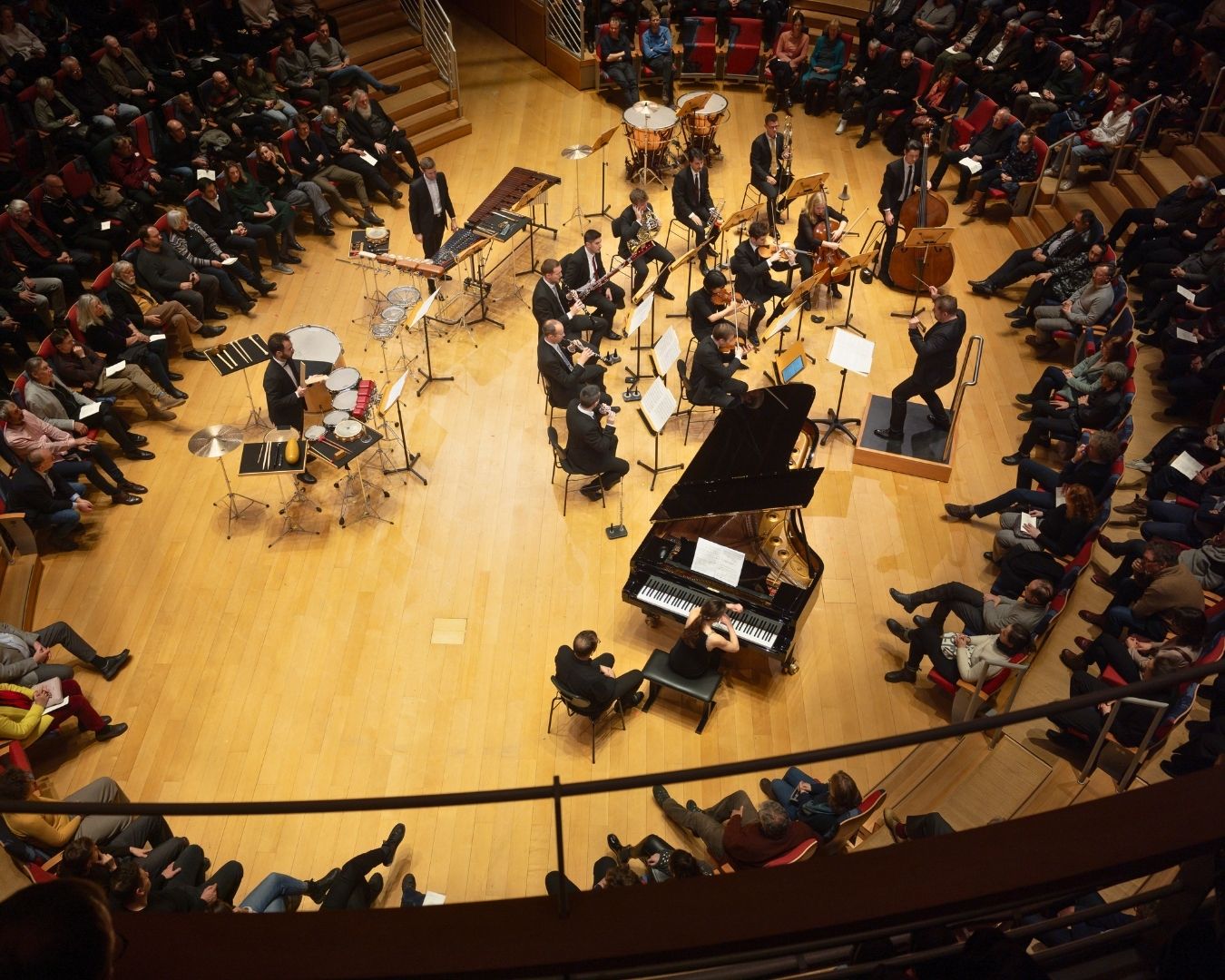
Boulez Ensemble
Founded by Daniel Barenboim, the Boulez Ensemble has its artistic home in the Pierre Boulez Saal at the Barenboim-Said Akademie, where it made its first appearance in June 2015 at the building’s topping-out ceremony. This was followed in January 2017 by the international debut at Carnegie’s Zankel Hall in New York as part of a memorial concert for Pierre Boulez. Since the opening of the Pierre Boulez Saal in March 2017, the ensemble has performed more than 65 concerts here, collaborating with artists such as Thomas Guggeis, Oksana Lyniv, Zubin Mehta, Sir Antonio Pappano, Matthias Pintscher, Sir Simon Rattle, François-Xavier Roth, Lahav Shani, Giedrė Šlekytė, Jörg Widmann, Emmanuel Pahud, Mojca Erdmann, Christiane Karg, Magdalena Kožená, and Dominique Horwitz, among many others. As a flexible group not bound by a permanent roster of performers, the Boulez Ensemble consists of musicians primarily drawn from the ranks of the Staatskapelle Berlin and the West-Eastern Divan Orchestra, as well as faculty and students of the Barenboim-Said Akademie and international guest artists. The ensemble’s artistic identity is expressed in its concert programs, which combine compositions from the Classical and Romantic repertoire with masterpieces of the 20th century and works by contemporary composers, while also juxtaposing duo and trio pieces with music for larger ensemble. The works of Pierre Boulez form a central part of the group’s repertoire. The ensemble also regularly presents world premieres of newly commissioned works, including compositions by Benjamin Attahir, Johannes Boris Borowski, Luca Francesconi, Vladimir Genin, Matthias Pintscher, Aribert Reimann, Kareem Roustom, Vladimir Tarnopolski, and Jörg Widmann.
November 2026