Christian Tetzlaff Violin
Program
Johann Sebastian Bach
Sonata for Solo Violin No. 2 in A minor BWV 1003
Partita for Solo Violin No. 2 in D minor BWV 1004
Sonata for Solo Violin No. 3 in C major BWV 1005
Partita for Solo Violin No. 3 in E major BWV 1006
Johann Sebastian Bach (1685–1750)
Sonata for Solo Violin No. 2 in A minor BWV 1003 (1720)
I. Grave
II. Fuga
III. Andante
IV. Allegro
Partita for Solo Violin No. 2 in D minor BWV 1004 (1720)
I. Allemanda
II. Corrente
III. Sarabanda
IV. Giga
V. Ciaccona
Intermission
Johann Sebastian Bach
Sonata for Solo Violin No. 3 in C major BWV 1005 (1720)
I. Adagio
II. Fuga
III. Largo
IV. Allegro assai
Partita for Solo Violin No. 3 in E major BWV 1006 (1720)
I. Preludio
II. Loure
III. Gavotte en Rondeau
IV. Menuet I – Menuet II
V. Bourrée
VI. Gigue
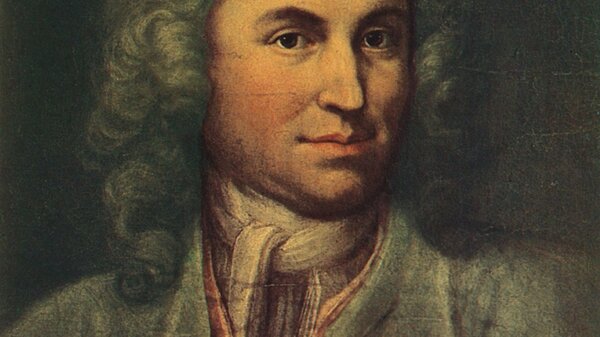
Johann Sebastian Bach, anonymous portrait (c. 1715?)
Bach Unaccompanied
The premise of a solo violin sustaining a long-range musical argument by no means originated with Johann Sebastian Bach. Decades before him, other composers had explored intricate polyphony and extended writing for the instrument. It was Bach, however, who pushed the concept to an unprecedented level of ambition.
Program Note by Thomas May
Bach Unaccompanied
Passion, Polyphony, Play
Thomas May
The premise of a solo violin sustaining a long-range musical argument by no means originated with Johann Sebastian Bach. Decades before him, composers such as Johann Paul von Westhoff and Heinrich Ignaz Franz Biber had explored intricate polyphony and extended writing for the instrument. It was Bach, however, who pushed the concept to an unprecedented level of structural, technical, and expressive ambition. In the six works to which he gave the title Sei Solo [sic] a Violino senza Basso accompagnato—“Six Solo Works for Violin without Accompanied Bass”—he created a fascinatingly self-contained musical language that continues to reveal inexhaustible depths more than three centuries since their creation.
“Bach is a living, deep soul who speaks to us, and we have the tools to perform these pieces with strong emotions, with a speaking quality that tells their narrative,” Christian Tetzlaff remarked in a feature in the American magazine Strings. Discussing why he has recorded the complete Sonatas and Partitas no fewer than three times to date, he contrasts contemporary understanding to their expressive range with the “hero worship” approach that dominated much of the previous century, which often emphasized a misbegotten sense of monolithic “grandiosity”: “I can only say how sad it is that the moments of dancing and weeping and laughing seem to be missing. How could these be absent when you’re playing the most communicative music on the planet?”
From Köthen to the Concert Hall
The autograph fair copy of these works, BWV 1001–1006, is generally dated to 1720—during the composer’s tenure at Köthen—though the precise origins of such consequential music remain uncertain; the scholar Christoph Wolff suggests Bach may have begun contemplating the pieces as early as a decade before. Bach served in Köthen as kapellmeister to Prince Leopold, a connoisseur of music and a skilled violinist. Because the prince was a devout Calvinist, his court required very little liturgical music, and this freed Bach from the burden of producing new works for church service. Instead, he was allowed to focus on secular instrumental composition, producing works ranging from the solo violin and cello pieces to the “Brandenburg” Concertos and Orchestral Suites.
With the violin works in particular, Tetzlaff is convinced that they possess both a personal and spiritual dimension. As he writes in the commentary accompanying his third complete recording, released in 2017: “The emotional content of this cycle is also reflected in the choice of the instrument: in its sound, the violin is a somewhat more personal instrument than the harpsichord. It is somewhat more malleable, sensitive, smaller, can sound entirely lost, but can also open itself quite powerfully.” These qualities make the violin an eminently suitable vehicle for “Bach’s personal little prayer book.”
The sense that a deeply personal character inheres in the cycle has prompted speculation that the unusual wording of Bach’s Italian title in the manuscript, including the solecism “sei solo” rather than the expected plural “sei soli,” may carry an intentional autobiographical resonance: “you are alone.” This reading gains added poignancy in light of the sudden death of Bach’s first wife, Maria Barbara, in 1720, the year the autograph fair copy was completed. Tetzlaff views the great Chaconne concluding the D-minor Partita as “a funerary lament—or fear of death or in some passages yearning for death,” quite possibly intended as an epitaph for Maria Barbara. “If this experience [of loss] found its way into the music, then it would also explain why, in a cycle for violin solo, a horrifying monument suddenly takes shape in a Partita, which normally has short movements.”
Yet Bach’s achievement did not emerge in isolation. During his first Weimar period (1703–7), he may have even studied with the aforementioned Westhoff, whose publication of suites and partitas for solo violin in Dresden in 1682 and 1696 helped pave the way for the later violin works. The sonatas and partitas were reported to hold an especially cherished position in Bach’s own estimation. His pupil Johann Friedrich Agricola recorded that Bach often played fully harmonized versions of this music on the harpsichord, and they commanded particular respect within his own circle. “One of the greatest violinists told me once that he had seen nothing more perfect for learning to be a good violinist, and could suggest nothing more perfect to anyone eager to learn, than the violin sonatas without bass,” wrote his son Carl Philipp Emanuel Bach in 1774.
Still, it was not until 1802 that BWV 1001–1006 appeared in print for the first time. Later in the 19th century, Joseph Joachim’s fervent advocacy helped cement their place in the core repertoire of any serious violinist, anticipating the attention Pablo Casals would bring to the solo Cello Suites in the 20th century.
Form, Dance, and Illusion
Bach’s solo violin compositions explore what a single instrument can do on its own, with no harmonic or accompanimental support. This challenge continues to fascinate composers—Luciano Berio demonstrated this across more than four decades of his own career in his Sequenza cycle—while performers must grapple with the internal polyphonic logic of this writing.
Bach’s entire set comprises three sonatas alternating with three partitas, creating an overall sequence in which contrasting formal and expressive approaches follow one another. The Sonatas—BWV 1001, 1003, and 1005—each adhere to the four-movement sonata da chiesa (“church sonata”) pattern codified in the 1680s by Arcangelo Corelli in his published collections for violin, which established the convention of a slow–fast–slow–fast sequence of movements. In Bach’s treatment, they begin with a slow movement that serves as a prelude to a briskly paced, energetic fugue; another slow movement, contemplative in character, then precedes the rapid finale, which has a fugal or dance-like cast.
The Partitas—BWV 1002, 1004, and 1006—offer a sharp contrast with the formal regularity of the Sonatas. Cast as dance-based movements, they unfold in more experimental and unpredictable ways, each unique in its sequence and character. As Wolff points out, their practical origin ties them to the physical impulse of the dance. He recalls the function of “dancing masters in the service of nobility [who would improvise] on a kit violin or pochette (a small violin to fit in a pocket) when teaching dance lessons,” situating these works within a broader culture of performative and improvisatory dance practice. This very flexibility allows the partitas to encompass the vast scale and emotional gamut of the D-minor Chaconne of BWV 1004—the apotheosis and most ambitious expression of the solo violin works.
Among the astonishing feats embodied in this music is Bach as illusionist: he achieves the impression of multiple independent voices using a single instrument. He does so through arpeggiations, carefully structured double stops to imply richer harmonies, and overlapping melodic phrases across the register.
Tetzlaff observes that over the years he learned to shed “nonsensical habits like the division of four-part chords into 2+2 voices for a ‘controlled organization’—with the consequence that the conversation involving four independent voices cannot be heard and experienced, and everything sounds like mere fiddling.” To do justice to Bach’s polyphonic conception, “the various volume levels have to correspond to the content—which also means extreme piano and fortissimo in some passages—instead of sublime control.”
From Grave to Gigue
The first movement of the A-minor Sonata evokes an introspective fantasy leading into a fugue on a nine-note theme, while the Andante, in C major, is followed by a fugal finale that includes a rare instance of Bach’s addition of dynamic indications in the manuscript. Tetzlaff views this sonata as “a genuine Passion,” noting that the recurring tritone intervals and sighing figures suggest a wordless cantata whose themes might be “sin, death, and danger.” He links the opening Grave to the figure of Jesus in the Garden of Gethsemane: “Why have I been left alone? Why is nobody now able to stand by my side?”
Tetzlaff likewise sees the Chaconne of BWV 1004 as another “Passion composition,” describing it as “the dark magnetic pole” of the first four dance movements of the D-minor Partita. Bach’s capacity to elicit an entire universe from a single violin reaches its pinnacle here. Extending to 257 bars, the Chaconne unfolds in triple meter, elaborating 64 variations built on a four-bar harmonic pattern that descends, in the manner of a lament. Tetzlaff points to Bach’s use of the Golden Section to organize the proportions of the Chaconne’s three-part structure, with a pivot toward the light in D major at the midpoint and a more-compressed return to the depths of D minor for the final variations.
In Bach’s autograph manuscript—an object of calligraphic beauty—the Sonata in C major commences on the same page, and even in the same register, as the conclusion of the D-minor Partita—“practically without a break,” as Tetzlaff puts it. C major in fact turns out to be a hard-won goal at the beginning of this Sonata but is jubilantly affirmed in the contrapuntally ingenious and extensive fugue, in which he discerns “a sense of being delivered from anguish, as if by a higher power.”
Having begun the cycle of “sei solo” violin music on the instrument’s lowest register in the G-minor Sonata, Bach completes it by ascending to the bright upper register with which the E-major Partita begins, with a frequent use of open strings. Here, the invitation to the dance is keenly felt, ending with a brief but irresistible gigue that, for Tetzlaff, proclaims: “Now we are all human beings again and will attempt to enjoy this as much as possible.”
Thomas May is a writer, critic, educator, and translator whose work appears in The New York Times, Gramophone, Strings, Chorus America’s The Voice, and other publications. The English-language editor for the Lucerne Festival, he is also U.S. correspondent for The Strad and program annotator for the Los Angeles Master Chorale and the Ojai Festival.
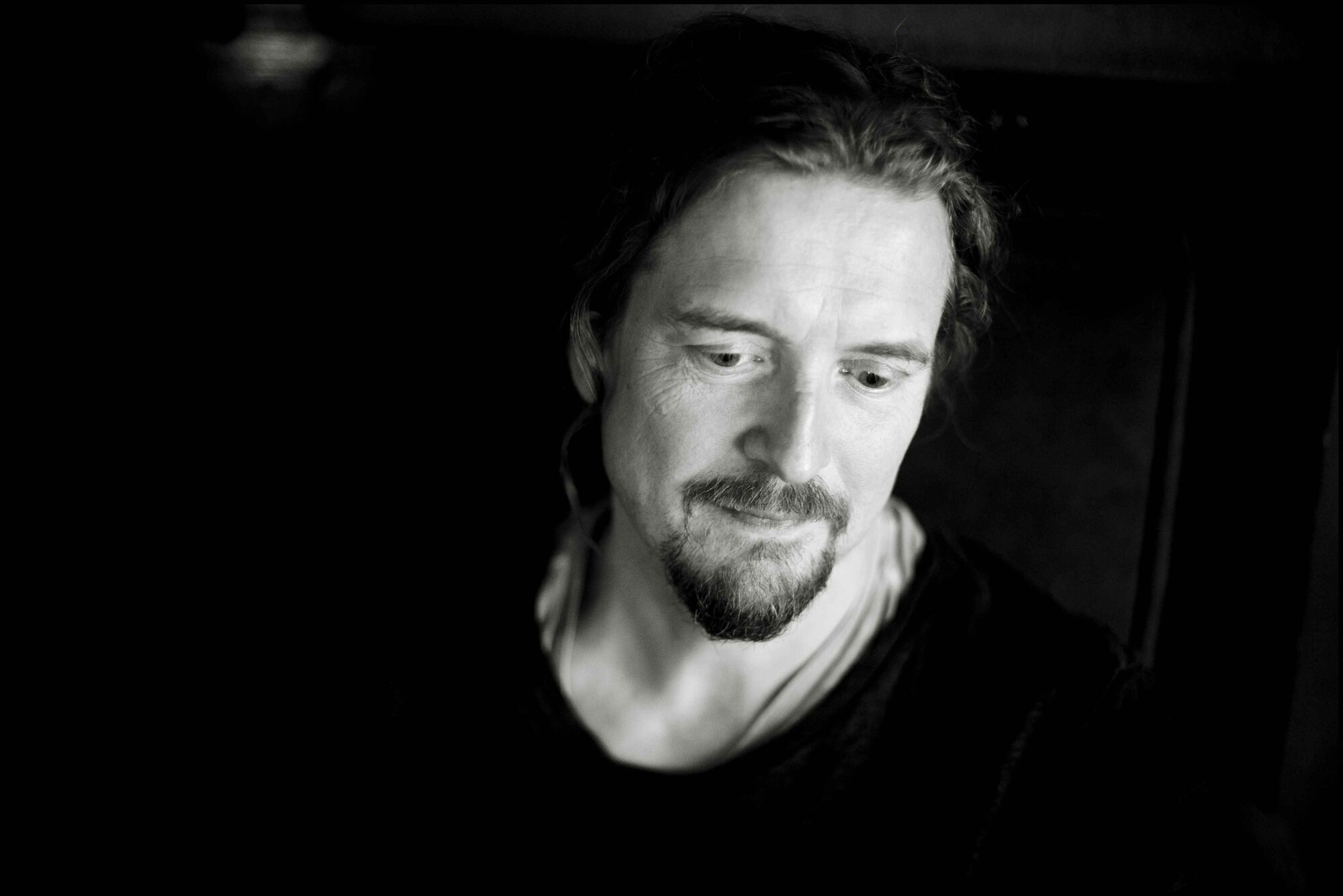
“It’s Bach’s Personal Prayer Book”
Christian Tetzlaff talks to Alexandra Coghlan about celebrating turning 60 with a performance of the Sonatas and Partitas for Solo Violin.
“It’s Bach’s Personal Prayer Book”
Christian Tetzlaff talks to Alexandra Coghlan about celebrating turning 60 with a performance of the Sonatas and Partitas for Solo Violin
“The violin is a very good medium for personal communication. There may be something bigger or richer in works for the clavichord, but a few gut strings played pianissimo with a tiny bit of vibrato does have a very special effect. I think that’s why Bach chose this vehicle for his most amazing creations.”
Christian Tetzlaff may be biased, but the German violinist—who celebrates his 60th birthday this year—makes a persuasive case for the extraordinary musical anomaly that is Johann Sebastian Bach’s Six Sonatas and Partitas for Solo Violin. Composed with little hope of public performance, at a time when “solo violin pieces weren’t exactly the hottest seller,” this sequence of works was less a commercial undertaking than a confessional one, a “personal prayer book,” as Tetzlaff has it. “You could ask,” he says, “why Bach wastes all this richness on something he assumed would never be performed? I think the answer is in the title. Bach’s autograph manuscript calls the work
‘Sei solo a Violino senza Basso accompagnato.’ He was good at Italian; he knew it should be ‘Sei soli,’ but he writes ‘Sei solo’: “You are alone.’ I think this refers to a state of meditation, of music in conversation with itself.”
Scholars have drawn a connection between the title, the brooding 15-minute D-minor Chaconne at the cycle’s center, and the sudden death of Bach’s first wife. Does Tetzlaff agree with so specific and biographical a reading? “For me it makes total sense. He was away on tour when she died, and by the time he returned home she was already buried. Anyone would be haunted by that. For him to write these pieces for solo violin, to include a Chaconne with a descending chromatic scale—the musical symbol of pain and suffering –running throughout is revealing.”
A musician’s musician, reliably found in the audience once his own concerto performances are done, Tetzlaff has made a career as much as an archaeologist as a soloist, stripping layers of performing conventions and traditions from scores by composers as diverse as Ligeti, Beethoven, and Lalo, with Gramophone and Diapason d’Or awards to show for it. New music is a constant too, as well as chamber music—including recordings and regular tours with his Grammy-nominated Tetzlaff Quartet, and a trio that also includes his sister, the cellist Tanja Tetzlaff.
Tetzlaff’s relationship with Bach’s Sonatas and Partitas started at the age of 14, perhaps the longest continuous thread in his career, including no fewer than three different recordings, each chasing clarity and expressive freedom with ever more directness and lack of display. “I was lucky to train with a teacher who didn’t just hand me the Galamian edition with all its violinistic tricks for performing cleanly, but lacking that crucial sense of dancing and singing.”
For the last 20 years, Tetzlaff has gone out of his way to perform the works live as the complete cycle he believes them to be. “They are all great pieces separately, but that’s not what it’s about. They’re all related, with quotations shared from one to another, and a harmonic structure that goes from darkness to light. We start on the lowest G string in G minor and end on the high E on the E string in E major: that’s the journey. And Bach uses every form in music available to him along the way, from styles of 200 years earlier to the most modern dances. It’s a compendium of everything held together by one idea. He creates a whole universe for the little violin. At the same time as intimacy there’s a real grandiosity, and it’s this tension which makes these pieces so unique.”
A complete performance lasts well over two hours—significantly shorter, Tetzlaff jokes, than a Bruckner symphony. Deciding to perform the cycle initially “took a lot of chutzpah,” he admits, but now it’s a process he relishes. “When you start there is the feeling of a mountain ahead of you. But once you’re in, the most astonishing thing happens. There’s this sense of trance or flow; piece after piece passes through you. It’s very intense, like a one-on-one with the audience. Everything else disappears.”
Milestone birthdays prompt reflection, looking forwards as well as back. Does Tetzlaff feel optimistic about the future? “People have been lamenting the death of classical music since I started playing. But it never arrives, because we have something really important to offer—something analogue, something that really engages with the soul. When I sit in an audience, I see what this music still does to us all: partners clasping hands, people crying, how a piece can force you to look inside yourself. I see no reason to be pessimistic. This is a job I cherish more and more, and one I genuinely believe is valuable to society.”
Originally published in Wigmore Hall’s The Score
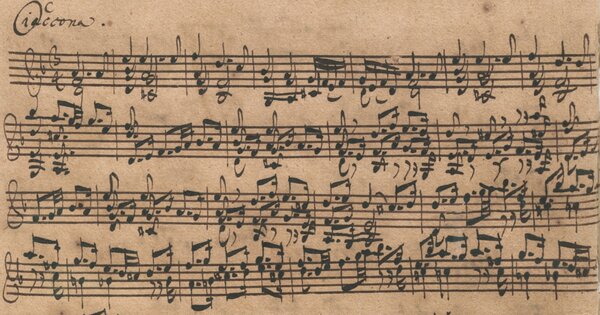
Bach’s manuscript of the D-minor Ciaccona from the Partita No. 2 (Staatsbibliothek Berlin)
Eine Welt von Gedanken und Empfindungen
Bachs Sonaten und Partiten für Solovioline zählen zu den meistbewunderten Kompositionen der Musikgeschichte. Christian Tetzlaff hat sie im Lauf seiner Karriere bereits mehrfach eingespielt und präsentiert nun vier dieser Werke im Pierre Boulez Saal.
Essay von Kerstin Schüssler-Bach
Eine Welt von Gedanken und Empfindungen
Bachs Sonaten und Partiten für Solovioline
Kerstin Schüssler-Bach
Bereits dreimal hat Christian Tetzlaff seit 1994 die sechs Sonaten und Partiten für Violine solo von Johann Sebastian Bach eingespielt. Im Begleittext zur letzten, preisgekrönten Aufnahme von 2017 schreibt er: „Ich glaube nicht, dass etwas in meiner Sicht grundsätzlich anders ist als bei den früheren Aufnahmen, aber ich kann die natürliche Tiefe und Freiheit in dieser Musik jetzt mehr genießen.“
Die dreifache Aufnahme dokumentiert nicht nur Tetzlaffs intensive, jahrzehntelange Auseinandersetzung mit Bachs Solostücken, sondern auch den außerordentlichen Status dieser Gipfelwerke. Wer immer auch nur halbwegs professionell eine Geige in der Hand halten kann, versenkt sich in dieses Monument der Violinliteratur und versucht sich zumindest an den (wenigen) leichter zu spielenden Sätzen. Als Studienobjekte zur Auslotung des geigerisch noch so eben Machbaren zirkulierten Bachs Solowerke nach seinem Tod in Abschriften. Erstmals gedruckt wurden die drei Sonaten 1802 om Bonner Verlag Simrock.
Doch für den Konzertgebrauch war die Zeit noch nicht reif. Der Gewandhaus-Konzertmeister Ferdinand David spielte die nachmals so berühmte Chaconne us der d-moll-Partita 1840 erst, nachdem Felix Mendelssohn eine Klavierbegleitung hinzugefügt hatte. Eine solche für alle sechs Sonaten und Partiten legte Robert Schumann 1852/53 vor. Ziel war es, diese unbequeme Musik für ein breiteres Publikum zu erschließen. Immerhin hätten sich Mendelssohn und Schumann auf Bach selbst berufen können. Dessen Schüler Johann Friedrich Agricola berichtet über die Solo-Violinwerke: „Ihr Verfasser spielte sie selbst auf dem Clavichorde, und fügte von Harmonie dazu bey, als er nöthig fand.“
Der 14-jährige Joseph Joachim wagte 1846 in Wien eine unbegleitete Aufführung der Chaconne und machte sie zu seinem Paradestück. Allmählich setzte sich eine kultische Verehrung durch. Joachims Freund Johannes Brahms bearbeitete die Chaconne 1877 für Klavier linke Hand und nannte sie „eines der wunderbarsten, unbegreiflichsten Musikstücke. Auf ein System, für ein kleines Instrument schreibt der Mann eine ganze Welt von tiefsten Gedanken u. gewaltigsten Empfindungen.“ Hätte er das Stück selbst komponiert, schreibt Brahms an Clara Schumann, dann hätte ihn „sicher die übergroße Aufregung u. Erschütterung verrückt gemacht.“
Die interpretatorischen Herausforderungen der Bach’schen Solowerke waren und sind mit reinem Virtuosentum nicht zu bewältigen. George Bernard Shaw hörte 1890 in London den fast 60-jährigen Joachim, der seinen künstlerischen Zenith bereist überschritten hatte, und fand für dessen Interpretation der dritten Sonate in C-Dur wenig schmeichelhafte Worte: „Joachim kratzte Töne hervor, denen gegenüber der Versuch, eine Muskatnuss unter einer Stiefelsohle zu zermalmen, sich wie der Wohlklang einer Äolsharfe angehört hätte.“ Dennoch war er begeistert: „Joachims glanzvolle Karriere und Bachs strahlender Ruhm hatten uns derartig hypnotisiert, dass wir widerwärtigen Lärm für Sphärenmusik zu halten geneigt waren.“
Freiheit der Auseinandersetzung
Im 21. Jahrhundert ist bei einer öffentlichen Aufführung der Bach’schen Werke kein „widerwärtiger Lärm“ mehr zu befürchten – zu sehr hat sich das technische Rüstzeug perfektioniert. Heute stellt sich eher die Frage, inwieweit eine Interpretation den Erkenntnissen der historischen Aufführungspraxis folgt. Christian Tetzlaff verwendet weder Barockbogen noch Darmsaiten. Aber er macht sich das barocke Verständnis von Rhetorik und Phrasierung zu eigen, dosiert das Vibrato sehr sparsam, erfasst die idiomatischen Nuancen der Tanzsätze. Abwechslungsreich geht er die Bewältigung der vierstimmigen Akkorde an: Ihr schematisches Aufbrechen in zwei und zwei Tonpaare nennt er eine „unsinnige Gewohnheit“. Hier ist jene „Freiheit“, die Tetzlaff für seine gereifte Auseinandersetzung mit Bach reklamiert, auch spieltechnisch greifbar. Interpretatorisch zeigt sie sich beispielsweise in seiner Flexibilität des Tempos, die Raum für das spontane Nachlauschen und Vertiefen einzelner Momente lässt. Die Architektur der Stimmführung bleibt plastisch, ohne dass die melodische Klangfülle verblasst. Dynamische Pegel – die Bach nur selten vorgibt – werden aus der Textur begründet und ausgeschöpft.
Tetzlaffs individueller Zugang zu den Bach’schen Sonaten und Partiten umfasst auch die im Dunkeln liegende Entstehungsgeschichte. Zwar ist das vollständig erhaltene Autograph – eine der schönsten, schwungvollsten Handschriften Bachs – mit 1720 datiert. Demnach fällt die Vollendung in Bachs Jahre als Kapellmeister am Hof von Leopold von Anhalt-Köthen. In dieser Periode (1717–23) hatte sich Bach, inspiriert von der kleinen, feinen Kapelle des kunstsinnigen Fürsten, auf Instrumentalmusik konzentriert. Vielleicht aber gehen Vorarbeiten schon in die erste Weimarer Zeit (1703) zurück. Hier hatte Bach vermutlich den „Kammermusikus“ Johann Paul von Westhoff kennengelernt, dessen sechs Suiten für Violine solo (1696) in ihrer zyklischen Konzeption als Vorbild gelten können. Bach selbst diente in der Hofkapelle des Weimarer Herzogs als Geiger. Er war mit dem Instrument seit seiner Kindheit vertraut – was man angesichts seiner Meisterschaft auf den Tasteninstrumenten gern vergisst.
Über diese historischen Erkenntnisse hinaus versteht Christian Tetzlaff den Zyklus der Sonaten und Partiten als „ein persönliches Gebetbüchlein von Bach“. Er begründet diese Sichtweise nicht nur damit, dass die Violine „vom Klang her ein etwas persönlicheres Instrument als das Cembalo“ sei. Tetzlaff erinnert daran, dass Bachs erste Frau Maria Barbara im Juli 1720 überraschend verstorben war, während ihr Mann sich auf einer Dienstreise befand. Wie Bach mit diesem Schock umgegangen ist, wissen wir nicht. Ob die auf 1720 datierte Reinschrift vor oder nach dem Tod Maria Barbaras niedergeschrieben wurde, ist gleichfalls unbekannt. Die zeitliche Koinzidenz führt Tetzlaff zu dem behutsamen Gedankenspiel, dass diese Solowerke die „Idee der Vereinsamung“ zumindest berühren – und dass vor allem die monumentale Chaconne „eine Totenklage“ sei, ob als dunkle Passionsmusik oder als persönlicher Epitaph. In ihrer viel diskutierten Einspielung von 2001 haben der Geiger Christoph Poppen und das Hilliard Ensemble die Chaconne mit den „versteckten Botschaften“ von Choralfragmenten collagiert, ausgehend von einer These der Violinpädagogin Helga Thoene. Solche Assoziationen mögen spekulativ sein, dienen aber als plausible emotionale Unterfütterung eines interpretatorischen Zugangs zu diesem gewaltigen Werk.
Sonate Nr. 2 a-moll BWV 1003
In den Sonaten folgt Bach dem Modell der Sonata da chiesa, der italienischen Kirchensonate, wie sie Arcangelo Corelli ausprägte: Sie ist viersätzig und beginnt mit einem gravitätischen langsamen Satz, dem eine Fuge folgt. Ein langsamer Satz und ein Allegro schließen sich an. Ursprünglich war die Sonata da chiesa tatsächlich für den Kirchengebrauch gedacht, und noch Johann Nikolaus Forkel berichtete 1802, dass in Bachs Zeit „in der Kirche während der Communion gewöhnlich ein Concert oder Solo auf irgend einem Instrument gespielt“ wurde. Im eröffnenden Grave herrscht der improvisierende Gestus in großen Melodiebögen und frei sich auf- und niederschwingendem Figurenwerk vor. Eine mehrstimmige Fuge für ein Melodieinstrument zu schreiben, das sich eigentlich der linearen Gleichzeitigkeit von Stimmverläufen widersetzt, war selbst für Bach eine schwierige Aufgabe. Die tänzerische Fuge in dieser Sonate deutet die Fortführung der Themen in einer sogenannten „Scheinpolyphonie“ manchmal nur an. Im Andante gibt sich die Violine zu einer innigen Melodie mit einer durchlaufenden Basslinie selbst die Unterstimme – was eine tief berührende, geradezu meditative Wirkung entfaltet. Ganz auf Geläufigkeit rascher Notenwerte setzt das abschließende Allegro, dessen unablässige Bewegung durch dynamische Laut-leise-Effekte gegliedert wird.
Partita Nr. 2 d-moll BWV 1004
Als Partita bezeichnete man im Barock die suitenartige Abfolge von stilisierten Tänzen der höfischen französischen Tradition. Am kultivierten Köthener Hof wurde das gesellschaftliche Musizieren gepflegt, und dabei lag natürlich auch Musik nach der neuesten französischen Mode auf den Pulten. Bach schrieb in dieser Zeit ebenfalls Suitenkompositionen für Cello und für Clavier.
Das Grundgerüst der Suite besteht aus der seit Mitte des 17. Jahrhunderts gültigen Standardfolge Allemande – Courante – Sarabande – Gigue. Ihm folgt auch Bach in der d-moll-Partita, die er allerdings mit dem mächtigsten Satz abschließt, der jemals für Solovioline komponiert wurde: der majestätischen Chaconne. Sie sprengt in Dauer und Gehalt alle Banden, zumal die einer höfischen Tanzmusik. In fast 15 Minuten breiten sich über einem gleichbleibenden harmonischen Gerüst kunstvollste Variationen in unbegreiflicher Fülle aus, zunehmend losgelöst von aller Erdenschwere. Die melodischen und motivischen Elemente der Chaconne fächern sich immer weiter auf, eine Kette von Dur-Variationen bereitet den entfesselten Höhepunkt vor. Die letzte Variationengruppe schlägt den Bogen zu den feierlichen Akkorden des Anfangs zurück und endet in fast demütiger Bescheidenheit.
Sonate Nr. 3 C-Dur BWV 1005
Anders als der Eröffnungssatz der zweiten Sonate verzichtet dieses Adagio auf die Geste der Improvisation. Aus dem schwermütigen, punktierten Grundmotiv heraus verdichtet sich der Klang in mysteriösen harmonischen Fortschreitungen. Auch hier steht eine Fuge an zweiter Stelle. Sie verarbeitet den Choral „Komm, heiliger Geist“ und stellt ihm einen markanten, chromatischen Kontrapunkt zur Seite. Angesichts ihrer höchsten satztechnischen Ansprüche wie Engführung, Umkehrung und Orgelpunkt scheint die These, dass sie zunächst für die Orgel konzipiert wurde, nicht von der Hand zu weisen. „Die contrapunctische Kunst darin ist für eine Solo-Geige von solcher Complicirtheit, daß dem Spieler fast das Unmögliche zugemuthet wird“, notierte Philipp Spitta, der große Bach-Biograf des ausgehenden 19. Jahrhunderts. Diese konzentrierte Kraft entspannt sich im Largo mit seiner zarten, expressiven Kantilene. Einen brillanten Abschluss bietet wieder das Allegro assai, das Finger- und Bogentechnik gleichermaßen herausfordert.
Partita Nr. 3 E-Dur BWV 1006
Ans Ende des Zyklus stellt den virtuosen Bewegungsrausch einer Partita im hellen E-Dur. Das extrovertierte Preludio mit seiner überbordenden Spielfreude hat ihm offenbar selbst so gefallen, dass er es gleich in zwei Kantaten (BWV 29 und BWV 120a) als Eröffnungsstück wiederverwendete. Ein besonderes klangfarbliches Erlebnis ist die schwungvolle Passage, in der die Technik der Bariolage gefordert ist: Die rasend schnelle Notenfolge wird abwechselnd auf benachbarten Saiten gespielt, mal als gegriffener Ton, mal auf der leeren Saite, wobei die höhere Note auf der tieferen Saite ausgeführt wird. Durch die Schnelligkeit wird das Ohr geradezu verführt, Mehrstimmigkeit zu hören, wo eigentlich Einstimmigkeit notiert ist. Es folgen französische Modetänze: die langsame, punktierte Loure, angereichert mit Doppelgriffen, die charmante Gavotte, zwei Menuette (das zweite mit dissonanten Dudelsack-Effekten) und die aufstampfende Bourée. Mit der quecksilbrigen Gigue endet das Wunderwerk dieses Zyklus in eleganter Beweglichkeit. Ein ganz unprätentiöser Schluss – als habe Bach nach dieser Demonstration größter Kunstfertigkeit ganz bewusst nach einer spielerischen Auflösung gesucht.
Dr. Kerstin Schüssler-Bach arbeitete als Opern- und Konzertdramaturgin in Köln, Essen und Hamburg und hatte Lehraufträge an der Musikhochschule Hamburg und der Universität Köln inne. Beim Musikverlag Boosey & Hawkes in Berlin ist sie als Vice President Composer Management tätig. Sie schreibt regelmäßig für die Berliner Philharmoniker, die Elbphilharmonie Hamburg, das Lucerne Festival und das Gewandhausorchester Leipzig. 2022 erschien ihre Monographie über die Dirigentin Simone Young.
The Artist
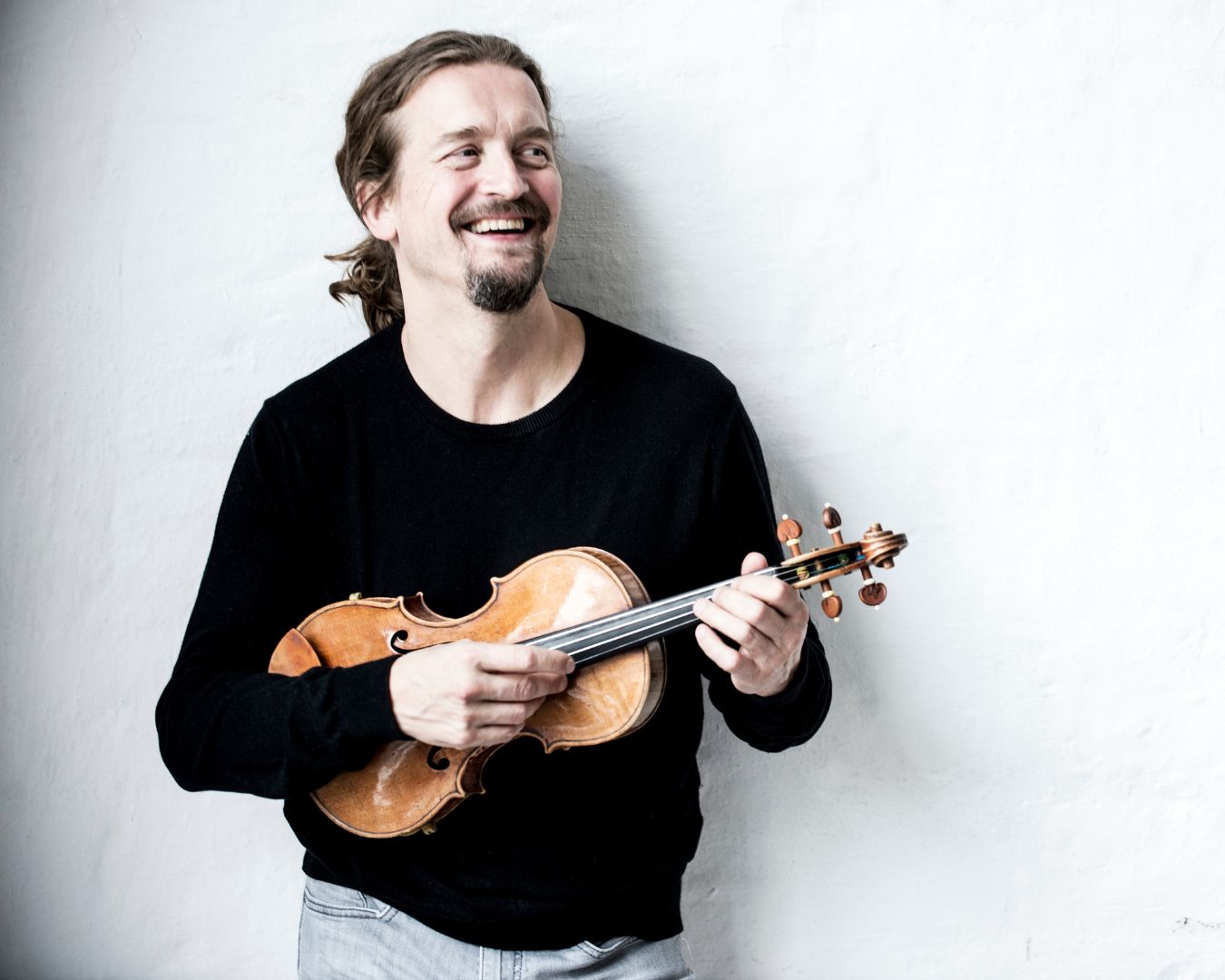
Christian Tetzlaff
Violin
Hamburg-born Christian Tetzlaff studied at the Lübeck Musikhochschule with Uwe-Martin Haiberg and with Walter Levin in Cincinnati and has long been a regular guest on the world’s leading concert stages, both as a soloist and as a chamber musician. He has appeared with many of the world’s leading orchestras, among them the Vienna Philharmonic, New York Philharmonic, Amsterdam’s Concertgebouw Orchestra, the major London orchestras, and the Berliner Philharmoniker (for which he served as artist in residence). This season, he is artist in residence with the Berlin Rundfunk-Sinfonieorchester, performing violin concertos by Berg, Suk, and Dvořák. In February, he gave the world premiere of Ondrej Adamek’s Second Violin Concerto, which he then also took to Switzerland and the Czech Republic. In 1994, he founded his own string quartet together with his sister, cellist Tanja Tetzlaff, and has toured with the ensemble every year since. Christian Tetzlaff has received numerous awards for his recordings, including the German Record Critics’ Annual Award for his third recording of Bach’s solo sonatas and partitas. He teaches at the Kronberg Academy and has been artistic director of Heimbach’s Spannungen festival since 2023, succeeding Lars Vogt. At the Pierre Boulez Saal, he was last heard alongside Leif Ove Andsnes for the opening of the 2025–26 season.