Golda Schultz Soprano
Jonathan Ware Piano
Program
Songs by
George Crumb
Clara Schumann
Florence Price
Johannes Brahms
Rita Strohl
Richard Strauss
George Crumb (1929–2022)
Apparition (1979) (Whitman)
I. The Night in Silence
Vocalise I. Summer Sounds
II. When Lilacs Last in the Dooryard Bloom’d
III. Dark Mother
Vocalise II. Invocation
IV. Approach Strong Deliveress
Vocalise III. Death Carol
V. Come Lovely and Soothing Death
VI. The Night in Silence
Clara Schumann (1819–1896)
Volkslied "Es fiel ein Reif in der Frühlingsnacht" (Heine)
Sie liebten sich beide Op. 13 No. 2 (Heine)
Ich stand in dunklen Träumen Op. 13 No. 1 (Heine)
Florence Price (1887–1953)
Because (Dunbar)
Hold Fast to Dreams (Hughes)
Night (Wallace)
Intermission
Johannes Brahms (1833–1897)
Ophelia Songs WoO 22 (1873) (Shakespeare)
I. Wie erkenn ich dein Treulieb
II. Sein Leichenhemd weiß
III. Auf morgen ist Sankt Valentins Tag
IV. Sie trugen ihn auf der Bahre bloß
V. Und kommt er nicht mehr zurück
Rita Strohl (1865–1941)
from Dix Poésies mises en musique (1901)
La Momie (Segard)
Barcarolle (Segard)
La Tristesse de la lune (Baudelaire)
Richard Strauss (1864–1949)
Four Last Songs (1948)
I. Frühling (Hesse)
II. September (Hesse)
III. Beim Schlafengehen (Hesse)
IV. Im Abendrot (Eichendorff)
Encores
Leonard Bernstein
Somewhere from West Side Story
Kurt Weill
Lost in the Stars from Lost in the Stars
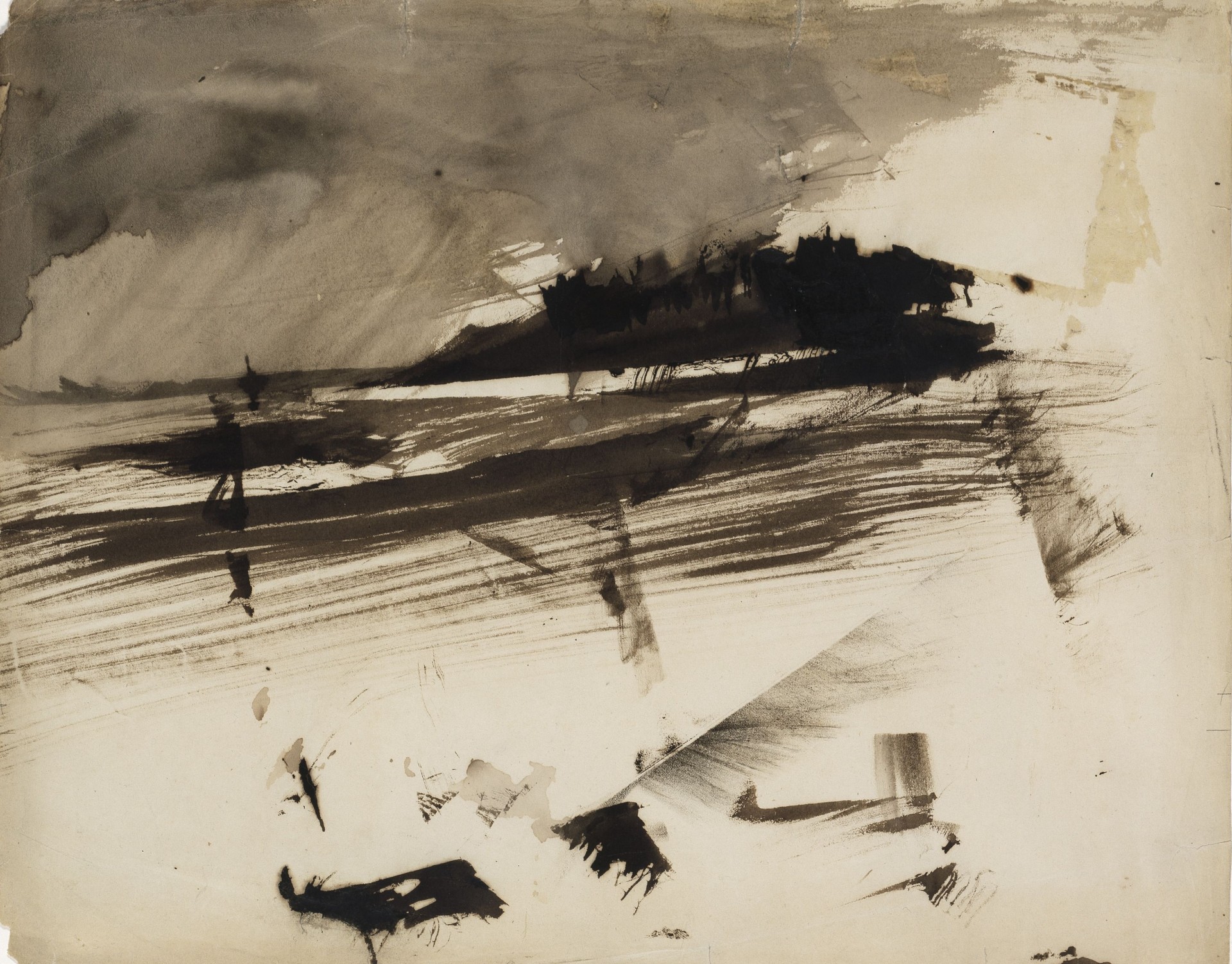
Victor Hugo, Évocation d’une île (1870)
(Staatliche Museen zu Berlin, Nationalgalerie / Volker-H. Schneider)
Into the Night
“There are those thoughts we only think in the dark of night,” Golda Schultz and Jonathan Ware write about this evening’s program. “It is then we contemplate our endings, relationships or the end of our days. How shall we face them? How shall we meet our endings? With music from Florence Price, Richard Strauss and George Crumb and texts from Shakespeare and Walt Whitman to accompany us, the journey may not be so dark…”
Essay by Paul Griffiths
Into the Night
Songs from Clara Schumann to George Crumb
Paul Griffiths
“There are those thoughts we only think in the dark of night, under the cover of darkness,” Golda Schultz and Jonathan Ware write about this evening’s program. “It is then we contemplate our endings, relationships or the end of our days. How shall we face them? How shall we meet our endings? Will we rage, or will we accept and step into the unknown? With music from Florence Price, Richard Strauss and George Crumb and texts from Shakespeare and Walt Whitman to accompany us, the journey may not be so dark…”
Night of Death, Night of Love
We start out in the night with George Crumb’s Apparition, composed in 1979 at the request of mezzo-soprano Jan DeGaetani, who had taken part nine years earlier in the first performance of the work that made Crumb’s name: Ancient Voices of Children. In that piece, as in others of the period, Crumb set poems by Lorca, but for Apparition he chose an English text, from Walt Whitman’s When Lilacs Last in the Dooryard Bloom’d—words pre-echoing Lorca’s imagery of night and death.
The selection is astute. Of Whitman’s 206 lines meditating on the assassination of Abraham Lincoln, Crumb sets just 16. His second song takes the first and third lines of the poem, leaving the second to be translated into the whole atmosphere of the cycle: “And the great star early droop’d in the western sky in the night.” Everything else in these “Elegiac Songs and Vocalises,” to quote the subtitle, comes from the long 14th section, where the narrator has a grand vision of death and hears the “carol of death” in the singing of a hermit thrush. Crumb gives death’s carol its due in the third of the vocalises, the first being full of imitation bird song for both singer and pianist. In Whitman’s poem, however, the carol is a sequence of seven quatrains, and three and a half of these form the text for all but the second song. Thus, what constitutes a small if crucial part of the poem, this carol of death, has grown to become almost the whole verbal substance of Crumb’s response, enveloping the title line and having its nature illustrated in the vocalises.
Crumb was writing here not only for DeGaetani but also for her regular accompanist, Gilbert Kalish, who had taken part with her in the premiere and highly successful recording of Ancient Voices. He accordingly used again the inside-piano techniques of that work, having the pianist create sounds directly on the strings and frame of the instrument. These sounds, resonant and glittering, contribute greatly to the night-sky poetry of Apparition.
Rewind a century and a half, to a night more bitter than bountiful. Writing for the 1829 Taschenbuch der Damen (Ladies’ Pocketbook), Heinrich Heine took a folksong, about a young couple cut down by frost on a cold night, and gave it a frame of two other poems. At Christmas 1840, her first Christmas as a married woman (and just pregnant with her first child), Clara Schumann set the folksong alone, while her husband, around the same time, set the whole group. Robert’s folksong is in strophic form. Clara, in the only example of a poem they both set to music, goes a bit further. While keeping to a folksong style, and of course to a minor key, as Robert does, she varies the second stanza to achieve an emphasis on the word “fort” (“away,” clinching the couple’s fatal elopement, perhaps with a touch of personal horror at a gesture she and Robert had not made) and to secure also solid reason for a reprise before the final stanza.
Both of the following Clara Schumann songs are from the group of six she published as her Opus 13 in 1844, and both set lyrics by Heine. Sie liebten sich beide, about two people who loved one another but never declared themselves, has a good touch of the poet’s irony, especially in the odd way it ends, but Schumann, in her strophic setting, makes it a little tragedy. Ich stand in dunklen Träumen is another. The beginning mounts in a way suggestive of Robert, but Clara soon takes over and sets the three stanzas to continuous music, the third bursting out from the second and landing on a bare harmony for the determinative final word.
In these last two songs, night itself has given way to its elusive gifts of dreams, which appear again in the second of three songs by Florence Price. The first, though, puts starkly the contrast-collision of love and death. Here, as quite often in her songs, Price not only chooses words by a fellow Black artist—in this case Paul Laurence Dunbar, highly popular in his day—but also draws her melodic style out of the spiritual.
Born in 1887, Price was the first African American woman to have an orchestral work performed by a major American orchestra (her Symphony No. 1 in E minor, in 1933 in Chicago). In Hold Fast to Dreams, the second of tonight’s songs, she set words by the leading Black writer of her time, Langston Hughes. His “life is a barren field” prompts a striking chromatic moment. Then in Night, a poem by Louise C. Wallace allows Price to restore the main theme of the program’s first half and even to circle back a little to the atmosphere of the Crumb cycle.
“Fare You Well”
Ophelia’s last appearance in Hamlet includes the above adieu and also a string of brief songs that, excused by madness, hint at what has not been spoken in the play. Johannes Brahms set these in his only endeavor for the theater, which came about through his friendship with a theatrical couple in Vienna, Joseph Lewinsky and Olga Precheisen. In 1873, the latter joined the company in Prague, taking Ophelia as her debut role (she was just 20). Evidently the classic translation by August Wilhelm Schlegel was used, and Brahms set the songs in folksong style for Precheisen to sing unaccompanied, though for rehearsal he added a piano accompaniment that he did not quite complete.
The first two songs go in couplets, in related minor keys. Dotted rhythm and a major key change the tone for the third song. No. 4 is also in a major key, but its falling phrases and held top notes underscore the melancholy, to be maintained by the minor-key final song, with its haunting close. There is no craziness in the music. Precheisen’s portrayal of madness, we may surmise, was touching, vulnerable.
Night, with its companions of love and death, returns in the following three songs, by Rita Strohl, from a collection of ten published in 1901. Though her name might suggest otherwise, she was French-born, known before her marriage as Marguerite Larousse La Villette. The family was strong in women artists—her mother and her aunt were both professional painters—and she was able to study at the Paris Conservatoire, though had to take composition lessons privately. She produced a strong output of orchestral works, chamber music, and songs up to 1904, when she turned to Wagnerian operatic cycles.
The first two of her songs heard this evening are to poems by Achille Segard, who was an art critic and author of a book on Mary Cassatt. His Verlainian verse is made for music. Strohl brings to Barcarolle rocking pentatonics to suit the image of lovers in a boat at evening. La Momie, addressed to a mummified girl (presumably in the Louvre), becomes a touching gesture across two millennia, done with minimal means. In the last song here, Strohl sets a Baudelaire sonnet as a nightscape moving in slow waves, rising to the end of the octet (“floraisons”) and falling as a poet catches an opal tear dropped from the face of the moon.
The journey ends with one of the grandest of farewells: the Four Last Songs composed by Richard Strauss between May and September 1948. They are most familiar, of course, in their orchestral scoring, the songs’ piano version brings a nice focus on the set’s fine harmony, besides allowing the singer more room to maneuver. The order of the first edition, in which they are usually performed, follows the pattern of the seasons through which they were written, from full spring to the edge of autumn. The sequence may also be felt to reflect a passing day, for though night in Beim Schlafengehen comes before twilight in the finale, the approach of death proceeds smoothly on from one to the other. At the same time, the transition takes us from Strauss’s contemporary Hermann Hesse, author of the first three poems, to the classic Eichendorff. It is he who asks the ultimate question—which Strauss, harking back 60 years, through so much, answers with a quotation from his tone poem Death and Transfiguration that seems to have been waiting all along. And again a bird sings.
Paul Griffiths has been writing on music for more than 50 years. He also writes novels, including most recently let me go on (2023).
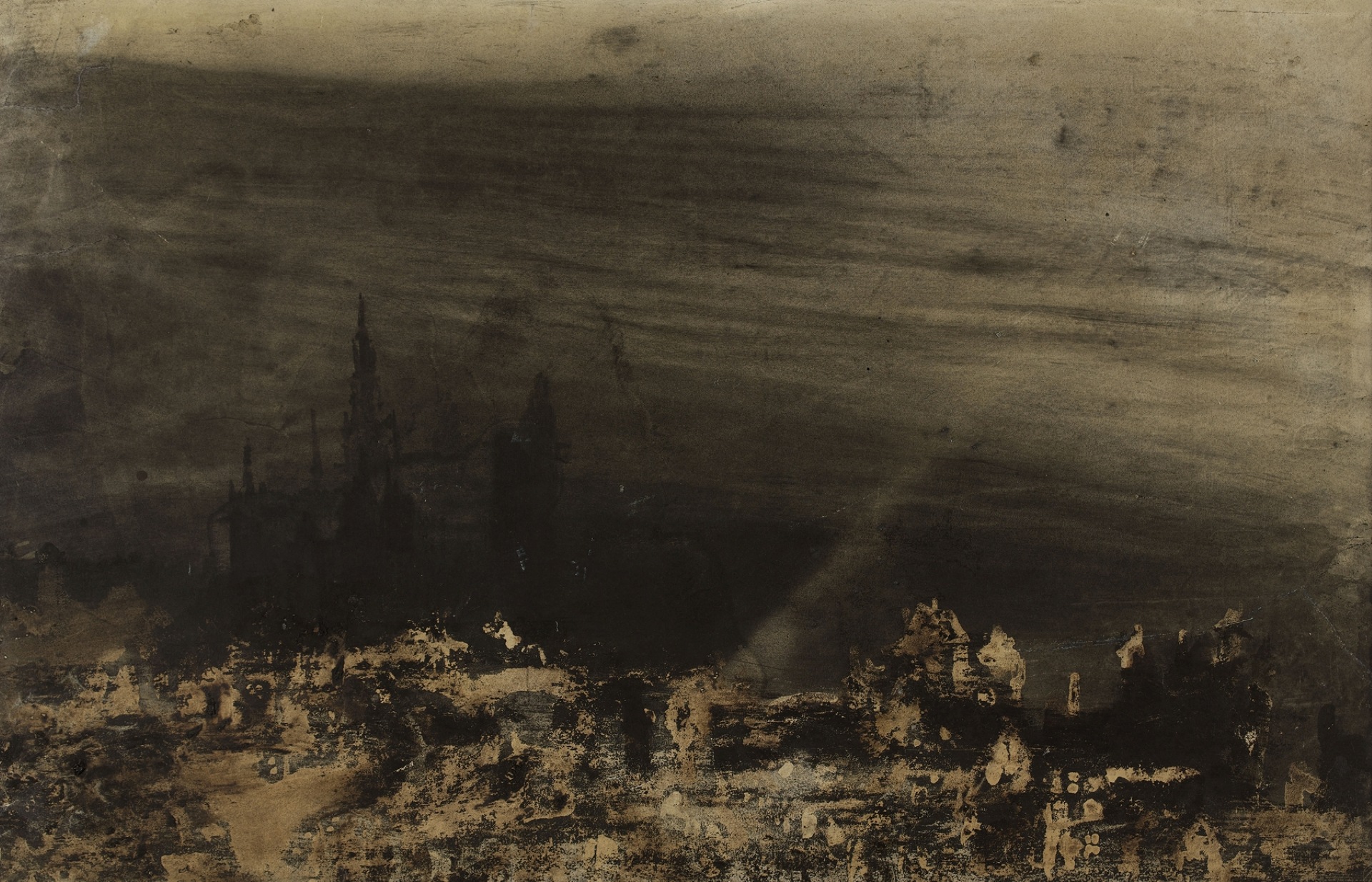
Victor Hugo, La Ville morte (1850) (Paris musées)
Im Dunkel der Nacht
Die Nacht ist ein altes Symbol für das Chaos und den Tod, aber auch für das Werden und den bergenden Mutterschoß; sie ist mit Schlaf und Traum assoziiert. Das Programm von Golda Schultz und Jonathan Ware widmet sich diesen „dunklen“ Aspekten der menschlichen Existenz mit einer Vielzahl von Stimmen, die sich ihnen – kulturell und biografisch bedingt – aus höchst unterschiedlichen Perspektiven nähern.
Werkeinführung von Antje Reineke
Im Dunkel der Nacht
Lieder von Tod und Leben, Liebe und Abschied
Antje Reineke
„Have none chanted for thee a chant of fullest welcome? / Then I chant it for thee, I glorify thee above all.“ – „Ist denn niemand, der für dich ein Lied zum Willkomm’ anstimmt? / Ich will’s singen für dich – dir, dir über allem sei Preis.“
George Crumbs Apparition aus dem Jahr 1979 ist ein Lobgesang auf den Tod, die „dark mother“ und „strong deliveress“, den „loving floating ocean“. Der Text stammt aus Walt Whitmans Elegie When Lilacs Last in the Dooryard Bloom’d, geschrieben für den im April 1865 ermordeten Abraham Lincoln und die Opfer des Amerikanischen Bürgerkriegs. Crumb entwirft dazu eine fremdartige Klangwelt, die faszinierend, mysteriös und verstörend zugleich ist. Der Tod bleibt janusköpfig: furchterregend und unheimlich für die einen, sanft und friedlich für die anderen. Das vierte Lied des Zyklus, „Approach Strong Deliveress!“, gestaltet er als unnachgiebigen, aggressiven Marsch, doch der fast freudige Gesang gilt den Toten, deren Leiden vorüber ist, nicht den Sterbenden. Der Klavierpart der Nr. 5, „Come Lovely and Soothing Death“, beginnt „trostlos, unheimlich”, imitiert dann das Wogen des Ozeans und mündet mit dem Wort „arriving“ in eine warme, zitiert wirkende alte Sprache wie aus einer anderen Welt.
Der Flieder (lilac), der jedes Jahr aufs Neue blüht, symbolisiert bei Whitman die andauernde Trauer um den verehrten Lincoln und stellt dem Tod zugleich das Erwachen der Natur im Frühling gegenüber. Denn Leben und Sterben waren für den Dichter untrennbar, ein natürlicher Prozess. Im Großen (Nacht, Ozean) wie im Kleinen (die lautmalerische Darstellung von Vögeln und Insekten in den Vokalisen Nr. 1 und 3) beschwören Crumb und Whitman daher die Natur. Am Ende kehrt Apparition zum Anfang zurück: Als „Naturlaut“ bezeichnet Crumb hier den Klavierpart aus Arpeggien, die durch das Streichen der Finger über die Saiten erzeugt werden.
***
Die Nacht ist ein altes Symbol für das Chaos und den Tod, aber auch für das Werden und den bergenden Mutterschoß; sie ist mit Schlaf und Traum assoziiert. Das Programm von Golda Schultz und Jonathan Ware widmet sich diesen „dunklen“ Aspekten der menschlichen Existenz mit einer Vielzahl von Stimmen, die sich ihnen – kulturell und biografisch bedingt – aus höchst unterschiedlichen Perspektiven nähern.
Clara Schumann und Heinrich Heine betrachten diese Themen durch die Brille der Romantik mit ihrer Vorliebe für das Dunkle, Phantastische, Traumhafte, das sich in den Liedern mit dem Schmerz unglücklicher Liebe verbindet. Der Ausbruchsversuch der Liebenden in Volkslied endet mit dem Tod (der Text ist tatsächlich ein Volkslied, das Heine in seine Neuen Gedichte aufnahm). Die ihre Gefühle verleugnenden Protagonist:innen von Sie liebten sich beide verwandeln sich dagegen in lebende Tote. Das für Heine so typische ironische Umschlagen der Stimmung mildert Clara Schumann allerdings ab: Wo der Text dem verhinderten Liebespaar spöttisch die Schuld an seinem Unglück zuweist, betont die Komposition mit zahlreichen Seufzermotiven und wie abwartend ausgehaltenen Schlusstönen seine ungestillte Sehnsucht. In Ich stand in dunklen Träumen entwickelt der Tagtraum von der Geliebten ein seltsames Eigenleben. Erst die letzten Zeilen offenbaren, dass der Sprecher die Geliebte verloren hat, und erst hier redet er sie direkt an. Die Musik blickt an diesem Punkt auf das lächelnde Bild zurück und wendet sich dann mit einer Reprise des Vorspiels wieder der Traumwelt zu.
Clara Schumann komponierte einen Großteil ihrer Lieder ab 1840 als Weihnachts- oder Geburtstagsgeschenke für ihren Mann Robert. Der Ehe war ein jahrelanger Konflikt mit ihrem Vater vorausgegangen, und es scheint naheliegend, dass in Werken wie diesen drei Heine-Vertonungen die Unsicherheiten, Ängste und langen Trennungen jener Zeit nachklingen.
***
Die 1887 in Arkansas geborene Florence Price gehörte der Chicago Black Renaissance an, einer äußerst lebendigen und wegweisenden afroamerikanischen Kulturszene der 1930er und 40er Jahre. Price hatte in Boston Orgel, Klavier und Komposition studiert, fand aber erst nach ihrer Ankunft in Chicago 1927 als Komponistin zu sich selbst. Ihre Lieder sind insofern im Kontext von Rassentrennung, Diskriminierung und den für die Schwarze Bevölkerung besonders harten Folgen der Weltwirtschaftskrise zu sehen. Ein Gedicht wie Langston Hughes’ Hold Fast to Dreams lässt sich universell lesen, doch die Träume, an denen es für Hughes festzuhalten gilt – von Price musikalisch in den Gegensatz aus flüchtiger Bewegung und lang gehaltenen Tönen gefasst –, fordern eine Welt, in der das demokratische Versprechen von Freiheit und Gleichheit für wirklich alle eingelöst wird. Die Alternative sind Verzweiflung und Depression, wie Hughes und Price (die sich vermutlich persönlich kannten) mit prägnanten sprachlichen und tonmalerischen Bildern betonen. Das Ende des Lieds kommt einem Verzweiflungsschrei gleich.
Ein Gegenstück dazu bildet Because auf einen Text von Hughes’ großem Vorgänger Paul Laurence Dunbar, das bitter und tieftraurig Gefühle der Vergeblichkeit und des Versagens reflektiert. Hier spricht jemand, der glaubt, trotz aller Bemühungen nichts erreicht zu haben, sodass der frühe Tod, den Gott ihm zugedacht hat, wie eine willkommene Gnade erscheint. Dunbar, der ein „würdiger Sänger der Lieder Gottes und der Natur“ sein und zeigen wollte, „dass wir vor allem Menschen sind und nicht einfach nur Afrikaner“, war frustriert von einer Rezeption als Künstler, die ihn zwar feierte, aber eben auf das „Afrikanische“ reduzierte. Mit nur 33 Jahren starb er 1906 an Tuberkulose. Dem religiösen Charakter seines Gedichts entsprechend gestaltet Price Because im Stil eines Spirituals, das schließlich in einem Trauermarsch übergeht, bevor die Musik buchstäblich erstirbt. Ein Bild der Hoffnung vermittelt dagegen Night, dessen Text Nacht und Tag personifiziert als Madonna mit einem schlafenden Kind beschreibt – möglicherweise angelehnt an das Phänomen der schwarzen Madonnen.
***
Mit der Figur der Ophelia aus Shakespeares Hamlet wendet sich das Programm dem ebenfalls mit der Nacht assoziierten Wahnsinn zu. Ophelia wird von den Männern, die sie liebt, bedenkenlos für ihre Intrigen missbraucht. Als Hamlet ihren Vater tötet, verliert sie den Verstand; wenig später ertrinkt sie in einem Bach. In ihrer Wahnsinnsszene stimmt sie kurze, fragmentartige Lieder an, die von Tod und verlorener Liebe handeln und sich mal auf ihren Vater, mal auf ihren Geliebten zu beziehen scheinen. Johannes Brahms’ schlichte, volksliedhafte Vertonungen dieser Verse – in August Wilhelm Schlegels klassischer Übersetzung – zielen auf „naive Einfachheit“ und die Trauer der Figur ab. Sie entstanden 1873 für eine Aufführung von Hamlet in Prag mit der befreundeten Schauspielerin Olga Precheisen als Ophelia und waren ursprünglich nicht zur Veröffentlichung bestimmt. Dies erklärt den begrenzten Tonumfang der Singstimme und den Verzicht auf instrumentale Vor- und Nachspiele – in der Aufführung wären die Lieder unbegleitet gesungen worden. Ophelias psychischen Zustand deutet Brahms musikalisch nicht an; auf der Bühne wird er durch Sprache, Gestik, Mimik und Kostüm deutlich.
***
Mit melodisch und rhythmisch flexiblen, eng am Text orientierten Vokallinien und gleichberechtigten, aber nie dominanten Klavierparts sind die Lieder von Rita Strohl exemplarisch für die französische Mélodie ihrer Zeit. Die aus Lorient in der Bretagne stammende Strohl hatte am Pariser Konservatorium Klavier studiert sowie eine private Kompositions- und Gesangausbildung erhalten und machte ab Mitte der 1880er Jahre mit Liedern, Kammermusik und Orchesterwerken auf sich aufmerksam.
In den 1901 veröffentlichten Werken, die heute Abend zu hören sind, verschwimmen die Grenzen zwischen Realität und Phantasie. La Momie auf einen Text von Strohls Zeitgenossen Achille Segard richtet sich an die Mumie eines jungen Mädchens. Der für das Frankreich des frühen 20. Jahrhunderts typische Exotismus des Liedes vermittelt hier das Zeitentrückte der Mumie, den Zauber, der von dem scheinbar schlafenden Kind ausgeht, und seine Fremdheit in der „profanen“ Umgebung des Museums, in dem es ausgestellt ist. Barcarolle, von wiegenden Wellenfiguren begleitet, zeichnet das Bild eines weltentrückten, in der poetisch überhöhten nächtlichen Natur geborgenen Liebespaares. In La Tristesse de la lune aus Charles Baudelaires epochalen Fleurs du mal schließlich erscheint der (im Französischen weibliche) Mond am wolkenbedeckten Himmel als schläfrige, träumende, traurige Frau auf einem Bett voller Kissen – ein erotisches Bild, in das sich der Gedanke des Todes mischt, indem die Wolken oder Kissen auch mit Lawinen identifiziert werden. Im Zentrum des Liedes lässt Strohl aus dem auskomponierten Einschlafen der Mondfrau eine zielstrebig aufwärts gerichtete Steigerung hervorgehen, die den blütenartigen Visionen am fernen Himmel eine über Baudelaire hinausgehende Dynamik und ekstatische Qualität verleiht.
***
Aus der Perspektive eines Künstlers am Ende eines langen, erfüllten Lebens betrachtete der 84-jährige Richard Strauss den Tod in seinen Vier letzten Liedern. Mit Eichendorffs Im Abendrot, in dem ein „wandermüdes“ Paar in der stillen abendlichen Natur ruht, wendet er sich an seine Frau Pauline, eine ehemalige Sängerin und seine ideale Liedinterpretin. Mit dem Hereinbrechen der Nacht wird die Musik immer langsamer und dunkler. „Ist dies etwa der Tod?“, fragt zögerlich der Sopran, und das Klavier ergänzt ein aufsteigendes Motiv aus Strauss’ fast sechs Jahrzehnte zuvor entstandener Tondichtung Tod und Verklärung. Die Frage bleibt offen – das Wort „Tod“ aber wird mit einem harmonisch unerwarteten, leuchtenden Durakkord unterlegt. Der Tod wirkt hier nicht bedrohlich, wahrt aber sein Geheimnis. Hoch über den ruhigen Schlussakkorden weisen die Triller des Lerchenpaares symbolisch den Weg ins Ungewisse.
Ob Strauss die erst postum uraufgeführten Lieder, die eigentlich für Orchester konzipiert sind, als Zyklus gedacht hatte, ist unbekannt. Sie bilden jedoch eine thematisch stimmige Gruppe, die von der Akzeptanz der eigenen Vergänglichkeit, aber auch vom Wiedererwachen der Natur und des Lebens im Frühling spricht. In einer tröstlichen, magischen spätromantischen Tonsprache mit weichen, weitgeschwungenen Melodielinien singen sie dem Tod, um mit Whitman zu sprechen, einen „chant of fullest welcome“.
Antje Reineke promovierte an der Universität Hamburg mit einer Arbeit über Benjamin Brittens Liederzyklen. Neben der Musik Großbritanniens gilt ihr besonderes Interesse dem Lied des 19. bis 21. Jahrhunderts.
The Artists

Golda Schultz
Soprano
After training at the Juilliard School in New York and the Bavarian State Opera Studio in Munich, South African-born Golda Schultz quickly established herself as one of the leading sopranos of her generation. Early on in her career, she appeared as Sophie in Der Rosenkavalier at the Salzburg Festival, as Countess Almaviva in Le nozze di Figaro, at the Glyndebourne Festival, and as Pamina in Die Zauberflöte at the Metropolitan Opera. Other highlights of recent years have included performances as Micaëla (Carmen) in Paris and Chicago, Liù (Turandot) at the Vienna State Opera, Agathe (Der Freischütz) at Munich’s Bavarian State Opera, Donna Anna (Don Giovanni) at the Zurich Opera House and the Festival d’Aix-en-Provence, and Nanetta (Falstaff), Anne Trulove (The Rake’s Progress), and Adina (L’elisir d’amore) at the Metropolitan Opera. This current season, she is heard as Rosalinde in Die Fledermaus in Zurich and as Agathe and Liù at the Munich Opera Festival. Golda Schultz is equally acclaimed internationally as a concert singer and has worked with major orchestras and conductors. In Berlin, she most recently appeared with Kirill Petrenko and the Berliner Philharmoniker in Mahler’s Symphony No. 8. With her longtime piano partner Jonathan Ware, she has given recitals at Wigmore Hall, the Cologne Philharmonie, and at festivals in Edinburgh, Aix-en-Provence, and Lucerne, among many other venues. The duo most recently appeared at the Pierre Boulez Saal with the program This Be Her Verse, which presents female composers from the Romantic era to the present day and was released on CD in 2022.
March 2026
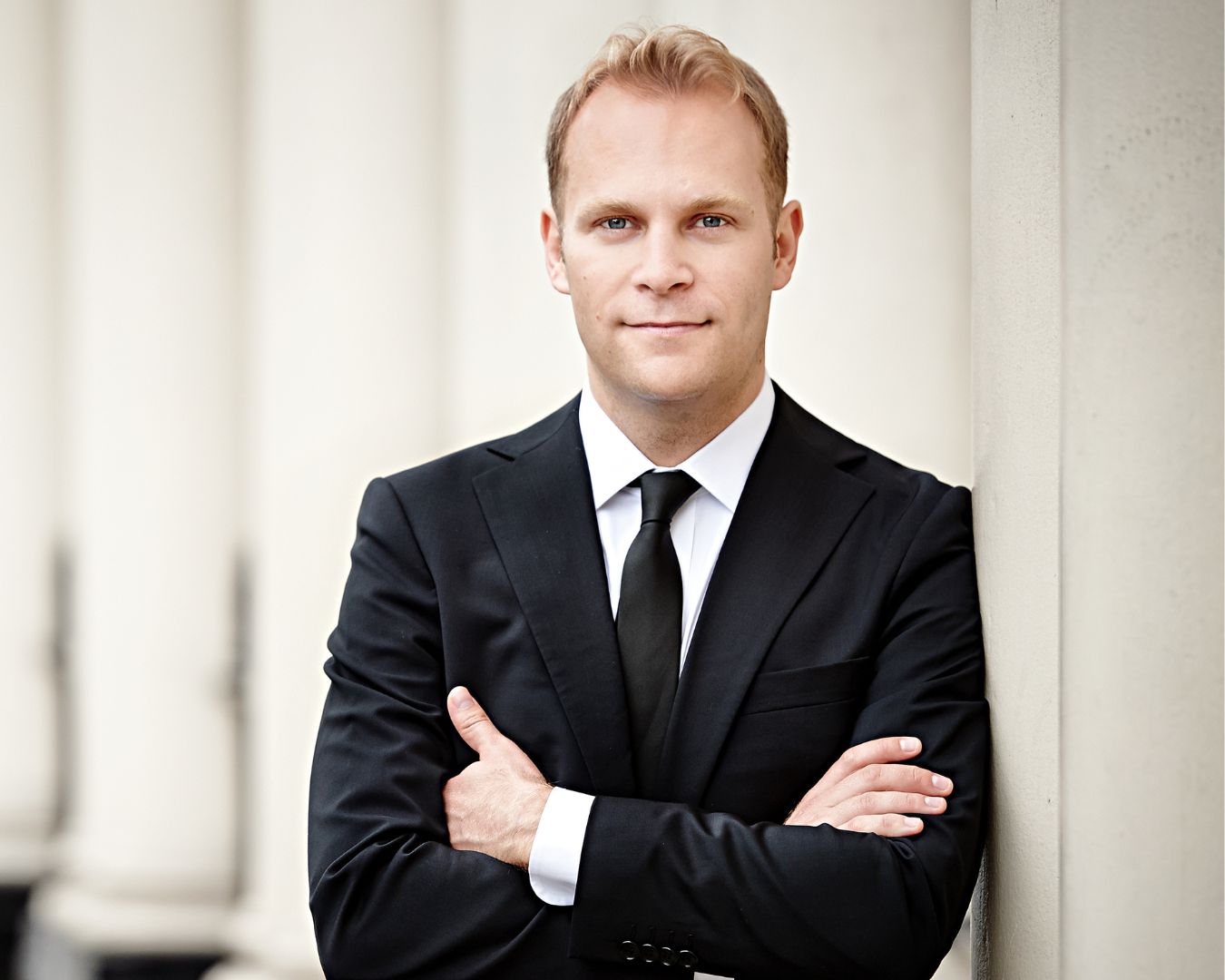
Jonathan Ware
Piano
Jonathan Ware trained at the Eastman School of Music in Rochester, at New York’s Juilliard School, and at the Hanns Eisler School of Music in Berlin. He has won major awards, including first prize at the 2014 lied competition of the International Hugo Wolf Academy in Stuttgart, which he shared with baritone Ludwig Mittelhammer, as well as the piano prizes of “Das Lied” and of the International Song Competition at London’s Wigmore Hall, where he has appeared regularly ever since. He has also been heard at New York’s Carnegie Hall, the Berlin Konzerthaus, Hamburg’s Elbphilharmonie, the Munich and Cologne Philharmonie, the Philharmonie de Luxembourg, and at the festivals of Ravinia, Rheingau, Aldeburgh, and Berlin, among others. In addition to Golda Schultz, his artistic partners include regular collaborator Elsa Dreisig (with whom he has recorded an album of songs by Strauss, Duparc, and Rachmaninoff), Mojca Erdmann, Dame Ann Murray, Ema Nikolovska, Christiane Oelze, Siobhan Stagg, Benjamin Appl, Bejun Mehta, and Luca Pisaroni. He has also recorded songs by Schubert, Wolf and Medtner with Ludwig Mittelhammer and works by Mozart with oboist Olivier Stankiewicz. Jonathan Ware teaches at the Hanns Eisler School of Music and at the Barenboim-Said Akademie and frequently appears at the Pierre Boulez Saal.
March 2026