Soo-Jin Hong Violin
Soo-Kyung Hong Cello
Jens Elvekjaer Piano
Program
Sergei Prokofiev
Excerpts from the ballet Romeo and Juliet Op. 64
Arrangement for Piano Trio: Trio con Brio Copenhagen
Rune Glerup
Descriptions of the Ephemeral (Piano Trio No. 2)
World Premiere
Felix Mendelssohn Bartholdy
Piano Trio No. 2 in C minor Op. 66
Encore
Manuel de Falla
Danza ritual del fuego
Sergei Prokofiev (1891–1953)
Excerpts from the ballet Romeo and Juliet Op. 64 (1935–6)
Arrangement for Piano Trio: Trio con Brio Copenhagen
I. Morning Serenade
II. Young Juliet
III. Masks
IV. Montagues and Capulets
V. Father Lorenzo
VI. Mercutio
Rune Glerup (*1981)
Descriptions of the Ephemeral (Piano Trio No. 2) (2025)
I. Appearance
II. Simple
III. Scherzo Without End
IV. Still Life, Night
V. Disappearance
World Premiere
Commissioned by Trio con Brio Copenhagen with support from The Augustinus Foundation and The Danish Arts Foundation
Intermission
Felix Mendelssohn Bartholdy (1809–1847)
Piano Trio No. 2 in C minor Op. 66 (1845)
I. Allegro energico e con fuoco
II. Andante espressivo
III. Scherzo. Molto allegro quasi Presto
IV. Finale. Allegro appassionato
Encore
Manuel de Falla (1846–1946)
Danza ritual del fuego
from El amor brujo (1915)
Arrangement for Piano Trio
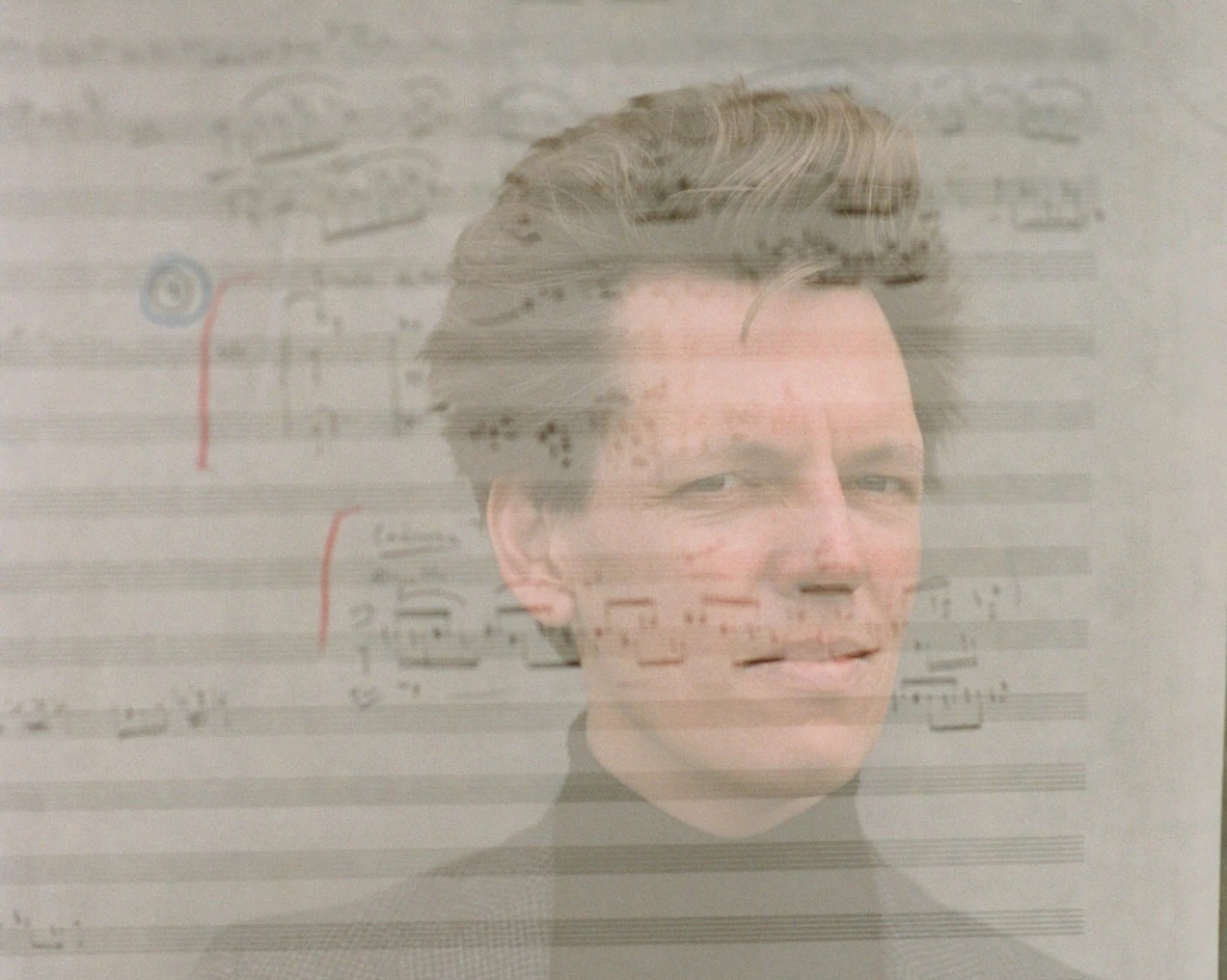
Rune Glerup (© Caroline Bittencourt)
A Trio of Trios
This evening’s program moves through three distinct ways of inhabiting the piano trio medium: as theater, as transformation, and as large-scale structure. From Prokofiev’s Shakespearean drama recast for three instruments to Glerup’s newly composed labyrinth of sound to Mendelssohn’s architectural breadth, the medium proves remarkably adaptable.
Program Note by Thomas May
A Trio of Trios
Music by Prokofiev, Glerup, and Mendelssohn
Thomas May
This evening’s program moves through three distinct ways of inhabiting the piano trio medium: as theater, as transformation, and as large-scale structure. From Prokofiev’s Shakespearean drama recast for three instruments to Glerup’s newly composed labyrinth of sound to Mendelssohn’s architectural breadth, the medium proves remarkably adaptable.
With Prokofiev’s excerpts from Romeo and Juliet, the trio assumes an unfamiliar role, with orchestral spectacle distilled into vivid character portraits, transforming expansive drama into chamber-scale theater. Lyric warmth and rhythmic bite coexist in music that retains its dramatic urgency even when stripped of orchestral color.
In Rune Glerup’s Descriptions of the Ephemeral, the focus shifts once more. Musical ideas appear, vanish, and return within a shifting “city-labyrinth” of memories and fragments, resisting linear trajectory in favor of continual transformation. The trio becomes a space of process—intimate, volatile, and alert to the fragile boundary between presence and disappearance.
Mendelssohn’s C-minor Trio stands firmly within the 19th-century chamber tradition, yet its restless propulsion and culminating chorale affirmation give it symphonic scope. Here, the trio becomes a site of sustained musical argument, where tension and release unfold through structural design.
Theater for Three Instruments
When Sergei Prokofiev wrote Romeo and Juliet in the summer of 1935, he did so at a pivotal moment in his life. After nearly two decades abroad, the composer was in the process of resettling in the Soviet Union. Once known in the West as a provocateur of the avant-garde, Prokofiev now sought what he termed a “new simplicity”: a style that would reconnect him with a broad public through clarity, lyricism, and direct expressive force.
The ballet, conceived in collaboration with director Sergei Radlov and dramaturg Adrian Piotrovsky, translates Shakespeare’s drama into a sequence of vividly delineated scenes—episodic in design, almost cinematic in pacing. After the Bolshoi Theater initially rejected the piece and its Soviet premiere was delayed until 1940, Prokofiev brought its music to audiences through orchestral suites and his own piano arrangements; Romeo and Juliet quickly assumed another life in the concert hall.
The present selection highlights Prokofiev’s gift for vivid characterization. “Morning Serenade” offers a moment of poised lyricism, its melodic grace tinged with a touch of courtly elegance. In “Young Juliet,” Prokofiev sketches the heroine in quicksilver contrasts, capturing both girlish playfulness and the emotional depth that will soon define her. “Masks” presents a different energy altogether: Romeo and his companions in disguise, the music alive with nervous wit and festive undercurrents that barely conceal the danger beneath.
The swagger of “Montagues and Capulets” (familiar from the orchestral suites as the so-called “Dance of the Knights”) embodies the implacable pride and ceremonial grandeur of the rival families. With “Friar Laurence,” the tone shifts inward. The music suggests gravity and introspection, reflecting the spiritual authority of the friar whose well-meant counsel ultimately proves tragic. The set concludes with “Mercutio” from Prokofiev’s own piano suite drawn from the ballet (Op. 75). Darting gestures and mercurial shifts evoke Romeo’s irrepressible friend—brilliant, volatile, and the catalyst for the tragedy that follows.
Heard in arrangement for piano trio, these scenes shed orchestral opulence in favor of sharper profile and chamber clarity. The concentration of texture brings Prokofiev’s melodic immediacy and rhythmic bite into intimate focus, revealing from a fresh angle the balance of lyric warmth and theatrical tension that has made Romeo and Juliet one of the defining stage works of the 20th century.
Between Appearance and Disappearance
Born in 1981, Danish composer Rune Glerup has built an international profile with music performed by ensembles including Ensemble Intercontemporain and the Danish National Symphony Orchestra, and at IRCAM in Paris, where he pursued advanced studies after graduating from the Royal Danish Academy of Music in Copenhagen. Across instrumental and electro-acoustic works alike, his approach has often been described as sculptural: attentive to the physical presence of sound itself, and to the internal life of musical material rather than to overt narrative or metaphor.
In recent years, however, Glerup has sensed a shift in his artistic direction. With the violin concerto About Light and Lightness, written for Isabelle Faust, his music began to move away from what he characterizes as a Central European modernist orientation toward something more closely connected to his Scandinavian roots. He speaks of searching for “a more Scandinavian expression, influenced by the unique Nordic light I grew up with. It is music that is lighter in its expression and more simple.” He continued this trajectory in the cello concerto Of what disappears, composed between the violin concerto and the present trio. In that sense, Descriptions of the Ephemeral belongs to this more recent phase in his work.
The five movements of the trio suggest an arc from emergence to vanishing. Yet Glerup resists a straightforwardly linear reading. “Something appears, and something disappears,” he explains. “It is a ceaseless process reflected in the work. This applies to every single bar, but also to the work as a whole. Things vanish only to reappear in unexpected places, just as they might unexpectedly disappear again.” The work reflects a ceaseless process, in which one element follows another and what disappears may return in unexpected places.
He describes the overall form as “less linear and more like a labyrinth, or a ‘city-labyrinth’ full of objects, memories, and fragments of life.” The metaphor suggests a spatial way of listening, in which orientation is constantly renegotiated and what seems stable proves provisional. The emphasis lies not on teleological drive but on the fragile threshold between presence and absence.
When asked about the work’s origin, Glerup responds with characteristic reserve. “There was an initial idea that started the work, but I no longer remember exactly what it was, nor is it important.” For him, an idea functions as “the small seed that makes the creative process grow and eventually results in a finished work.” Once set in motion, such ideas “take on a life of their own—and then it’s just a matter of hanging on and seeing where they lead you.” The trio thus emerges from a process whose internal logic gradually reveals itself, rather than from a single governing concept.
Writing for piano trio inevitably invokes a substantial history. Yet Glerup frames this relationship in paradoxical terms: “History and tradition are simultaneously always and never present when I write.” There is history in the ensemble, he acknowledges, “but there is also history in every single note; as such, one cannot escape history regardless of the type of ensemble for which one writes.” At the same time, behind the notes lies something more personal—“beyond language, beyond the musical language”—and in attempting to express this, the weight of tradition recedes.
Glerup encapsulates the work’s shifting perspective in the following prose reflection: “One tone follows another. One measure follows another. He rises from his desk and walks over to the open window. Looks out over the city beneath him. He returns to his desk. Ideas feed on one another, as one movement follows another. The piece he is writing is a city. A little later he rises again, and a moment later he is down on the street. Begins to walk. He has walked these same streets countless times. Knows them inside out, and yet does not know them at all. The city is a labyrinth, and as he moves through it, past and present merge. Things appear—sometimes clear, distinct, sharp, and other times discreet, unnoticed, blurred. As he moves further into the city, further into his own thoughts, he also moves further away from himself. If he keeps walking, it will be first evening, then night, and after one last glance back, he will no longer be seen in the crowd.”
From Unease to Affirmation
When Robert Schumann described Mendelssohn as the “Mozart of the 19th century,” he was thinking not only of prodigious gifts but of clarity and balance of form. The Piano Trio No. 2 in C minor, composed in 1845, retains that lucidity while pressing into more urgent and emotionally complex terrain than its predecessor of 1839. Written during a period of physical strain and dedicated to the violinist Louis Spohr, the Trio was completed in time for the birthday of Mendelssohn’s sister Fanny, his closest artistic confidante. It fulfilled an ambition he had once confessed to her: “I should like to compose a couple of good trios.”
The keynote of the work is restless unease. The first movement opens with a driving figure in the piano, its ceaseless motion set against sustained string lines that heighten the tension. The principal theme unfolds in surging waves of ascent and retreat, readily broken into fragments that Mendelssohn recombines with remarkable flexibility. A broader, more noble idea offers temporary expansion, yet even this lyricism is drawn back into the movement’s unsettled C-minor world. In the coda, the expressive temperature hardens, sealing the movement with emphatic resolve.
The Andante espressivo provides welcome contrast, its gently rocking theme like a wordless duet between violin and cello over restrained piano accompaniment. Moments of shadow pass through the texture, but the prevailing tone is one of inward warmth. The Scherzo restores motion in textures of extraordinary lightness. Rapid exchanges and finely etched articulation create a sound world that seems to hover and dissolve—a hallmark of Mendelssohn’s chamber writing.
The finale gathers the Trio’s tensions into a broader design. A theme marked by a striking upward leap renews the earlier agitation, while a chorale-like theme, suggestive of Protestant hymn style, introduces a new sense of gravity. As the movement progresses, this chorale grows in authority. In the closing pages, Mendelssohn expands it into a ringing C-major affirmation of striking breadth, the texture swelling toward a quasi-orchestral sonority. The resolution feels hard-won: turbulence reframed, not erased, by a final gesture of radiant assurance.
Thomas May is a writer, critic, educator, and translator whose work appears in The New York Times, Gramophone, Strings, Chorus America’s The Voice, and other publications. The English-language editor for the Lucerne Festival, he is also U.S. correspondent for The Strad and program annotator for the Los Angeles Master Chorale and the Ojai Festival.
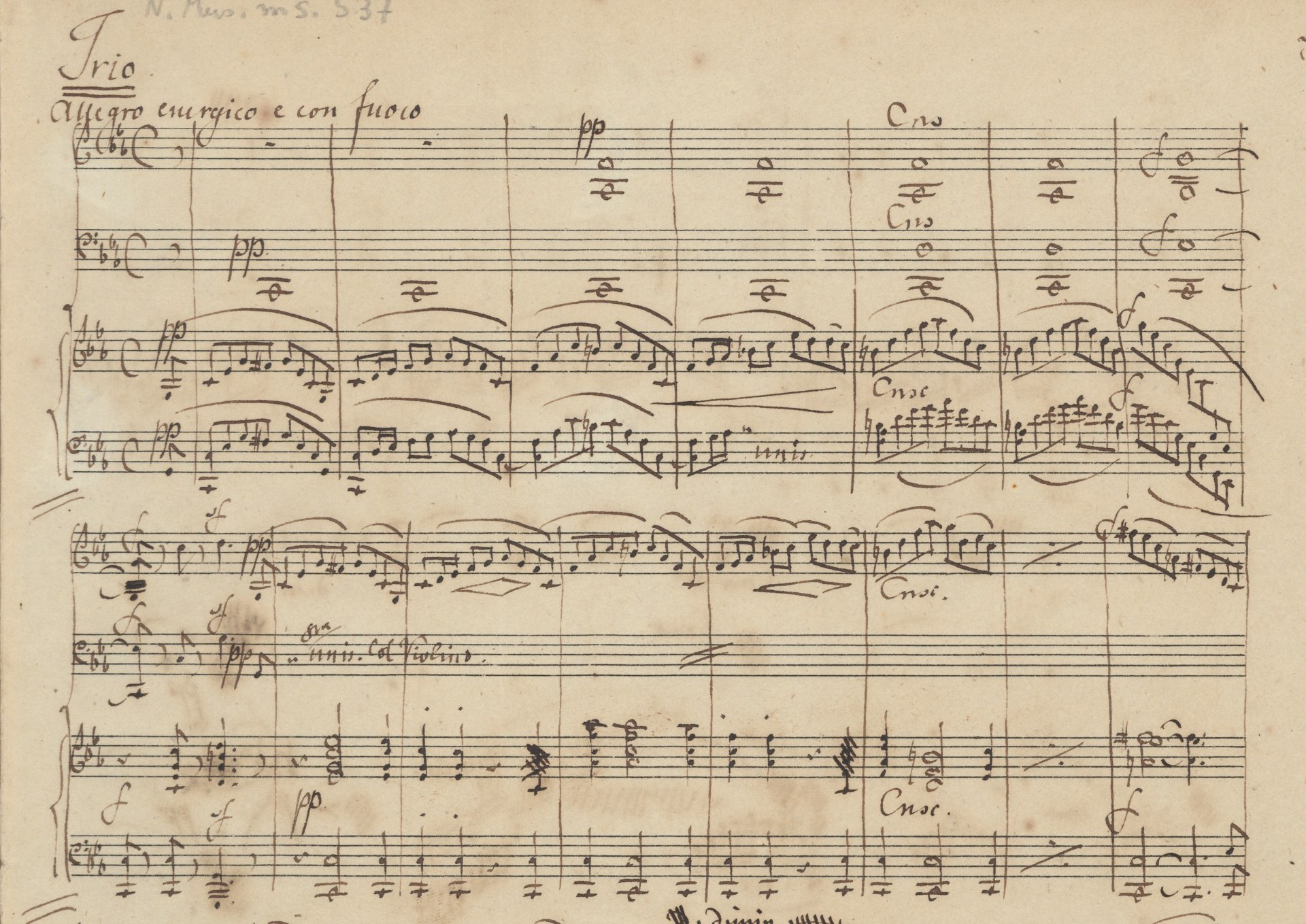
Mendelssohn's C-minor Piano Trio in the composer's manuscript (Staatsbibliothek Berlin)
Blick zurück nach vorn
Im 21. Jahrhundert hat das lange vernachlässigte Klaviertrio wieder an Attraktivität gewonnen – sowohl hinsichtlich des Repertoires als auch mit Blick auf innovative Ensembles, die die einst Maßstäbe setzenden Werke der Romantik mit jenen der Jetztzeit verknüpfen.
Essay von Michael Kube
Blick zurück nach vorn
Musik für Klaviertrio von Prokofjew, Glerup und Mendelssohn
Michael Kube
Kaum eine musikalische Gattung ist so sehr dem 19. Jahrhundert verbunden wie das Klaviertrio. Entstanden um 1800 aus der weit verbreiteten „Sonate für Klavier und begleitende Streicher“ (die vielfach nicht zwingend zu besetzen waren), erlebte es sein vorläufiges Ende in den turbulenten 1920er Jahren, als nach dem Ersten Weltkrieg und in den wirtschaftlichen Krisen nicht nur das Publikum, sondern auch die Hausmusiktradition – geprägt durch das „große“ und mehr noch das „mittlere“ Bürgertum – mehr und mehr schwanden. Im 21. Jahrhundert hat das Klaviertrio wieder an Attraktivität gewonnen, sowohl hinsichtlich des Repertoires als auch mit Blick auf neue und innovative Ensembles, die die einst Maßstäbe setzenden Werke der Romantik mit jenen der Jetztzeit verknüpfen. Dabei war die Kombination aus Repertoire, neuer Originalkomposition und Bearbeitung schon immer entscheidend für das Klaviertrio. Insofern bildet das heutige Programm keine Ausnahme, sondern präsentiert einen Grundcharakter der Gattung: Sie brachte den Konzertsaal in die „gute Stube“ – als musikalische Zerstreuung vom Alltag, als Ausdruck eines Bedürfnisses nach musikalischer Repräsentation oder auch als (nach-)schöpferische Auseinandersetzung mit der Vergangenheit.
Sergei Prokofjew
Auszüge aus Romeo und Julia
Angefangen mit Purcells The Fairy Queen aus dem Jahr 1692 dienten Shakespeares Dramen immer wieder als Vorlage für musikalische Kompositionen, sei es für Oper oder Ballett, sei es für Kantate, Lied oder rein instrumentale symphonische Dichtung. Im Fall von Romeo und Julia denkt man an Werke von Tschaikowsky, Gounod, Prokofjew oder Leonard Bernstein. Wie sehr sich gerade diese Tragödie mit ihren schroffen Gegensätzen zwischen unerbittlichem Hass und versöhnender Liebe für eine musikalische Umsetzung eignet, hatte schon früh Hector Berlioz erkannt, der 1831 bemerkte: „Shakespeares Romeo! Gott, was für ein Stoff! In ihm scheint alles für Musik vorbestimmt!“
Sergej Prokofjew hat das Drama 1935 in eine knapp zweieinhalbstündige Ballettmusik umgesetzt. Doch erst der Erfolg im Konzertsaal mit den aus einzelnen Nummern zusammengestellten Suiten bahnte den Weg für eine Inszenierung des gesamten Werkes, nachdem das Kirov-Theater im damaligen Leningrad bereits nach ersten Vorgesprächen zu dem Projekt auf Distanz gegangen war. Das Moskauer Bolschoi-Theater hielt die Partitur gar für „nicht tanzbar“ und trat vom Vertrag zurück. Erst drei Jahre später gelang es Prokofjew, das vollständige Werk im tschechischen Brno auf die Bühne zu bringen. Dabei hatte er bei der Erstellung des Szenariums schon an die spezifischen Erfordernisse eines Balletts gedacht – wenn auch in beschönigender Weise: Er favorisierte zunächst ein Finale, dessen überraschendes Happy End die ursprüngliche Handlung geradezu konterkarierte: „Wir haben damals in zahlreichen Diskussionen Versuche unternommen, einen glücklichen Ausgang für Romeo und Julia zu finden – im letzten Akt sollte Romeo eine Minute früher ankommen und Julia noch lebend antreffen, so dass alles gut abgelaufen geendet hätte. Die Gründe, die uns zu dieser Barbarei veranlassten, waren rein choreographischer Natur: Lebendige Menschen können tanzen. Sterbende tanzen nicht im Liegen.“
Der Wunsch nach einer lyrischen Versöhnung aller Protagonisten sowie das frühe Scheitern dieser Überlegungen ermöglichen jedoch auch eine ganz andere Sicht auf das Werk. Bedenkt man das politische Umfeld, so wirkt die Liebesgeschichte in Prokofjews Vertonung wie eine Parabel auf das von Stalin in der Sowjetunion installierte System aus Angst, Unterdrückung und Gewalt – ein System, in dem andere Gefühle keinen Platz haben, ganz wie in den rivalisierenden Familien der Montagues und Capulets.
Aus dem umfangreichen symphonischen Tongemälde haben die Musiker:innen des Trio con Brio für ihre Programm sechs Sätze ausgewählt, die sie in eigener Bearbeitung präsentieren.
Rune Glerup
Beschreibungen der Flüchtigkeit
Wie intensiv sich zeitgenössisches Komponieren mit tradierten Gattungen auseinandersetzen kann, zeigt das Schaffen des Dänen Rune Glerup: Für etwa die Hälfte seiner Werke verwendet er Bezeichnungen wie Sonate, Konzert oder Symphonie (ohne freilich die damit verbundenen Formen zu übernehmen); die übrigen tragen offene, poetische Titel. In seinem fünf Sätze umfassenden Klaviertrio Nr. 2 Beskrivelser af flygtighed, was der Komponist selbst mit „Beschreibungen der Flüchtigkeit“ übersetzt, finden sich Form und Poesie gleichrangig wieder. Zwischen diesem 2025 entstandenen Werk und seiner ersten aufgeführten Komposition aus dem Jahr 2000 liegt eine lange Entwicklung des eigenen Denkens, des Materials und des Stils. Glerups Vorstellung vom Klang als einer fast physischen Struktur führte dazu, dass seine Kompositionen mit hängenden Mobiles oder Objekten der bildenden Kunst verglichen wurden. In neueren Werken spielen zudem Poesie und Klarheit eine stärkere Rolle, wie etwa im Violinkonzert Om lys og lyshed (Über Licht und Leichtigkeit, 2022), das für Isabelle Faust geschrieben wurde und 2024 mit dem renommierten Musikpreis des Nordischen Rates ausgezeichnet wurde. Nach Stationen in Berlin und am Pariser IRCAM unterrichtet Rune Glerup heute Komposition und Instrumentation an der Königlich Dänischen Musikakademie – und kehrte damit an den Ort zurück, an dem er selbst Komposition und Elektroakustik studiert hatte.
Zu den musikalischen Beschreibungen der Flüchtigkeit hat der Komponist eine kurze, tranceartige Erzählung über den Moment und die Zeit, über das Selbst und das Verschwinden entworfen: „Ein Ton folgt dem anderen. Ein Takt folgt dem anderen. Er steht vom Schreibtisch auf und geht zum offenen Fenster. Schaut auf die Stadt unter ihm. Er geht zurück zum Schreibtisch. Die Ideen leben voneinander, während ein Satz den anderen ablöst. Das Stück, das er schreibt, ist eine Stadt. Wenig später steht er wieder auf, und einen Augenblick später steht er auf der Straße. Er beginnt zu gehen. Er ist unzählige Male dieselben Straßen entlanggegangen. Er kennt sie in- und auswendig und kennt sie doch nicht. Die Stadt ist ein Labyrinth, und wenn er sich darin bewegt, vermischen sich Vergangenheit und Gegenwart. Dinge tauchen auf, manchmal klar, deutlich, scharf, manchmal diskret, unbemerkt, verschwommen. Je weiter er sich in die Stadt hineinbewegt, je weiter er in seine eigenen Gedanken eintaucht, desto weiter entfernt er sich von sich selbst. Wenn er weitergeht, wird es erst Abend, dann Nacht, und nach einem letzten Blick zurück wird er in der Menschenmenge nicht mehr zu sehen sein.“
Felix Mendelssohn Bartholdy
Klaviertrio Nr. 2 c-moll op. 66
In gewisser Weise spiegelt sich in der Besetzung des Klaviertrios die früh gesammelte musikalische und aufführungspraktische Erfahrung Felix Mendelssohn Bartholdys. Als exzellenter Pianist, der als Solist in öffentlichen Konzerten brillierte, hatte Mendelssohn auch Violinunterricht bei Eduard Rietz erhalten; sein Bruder Paul wiederum spielte Violoncello. Die erste Beschäftigung mit einem Klaviertrio, das allerdings nicht vollendet wurde, lässt sich in den Jahren zwischen 1832 und 1834 nachweisen, als Mendelssohn Anfang 20 war. Zuvor waren bereits drei Klavierquartette mit Widmungen an Fürst Radziwill, Carl Friedrich Zelter und Johann Wolfgang von Goethe im Druck erschienen. Doch im Zentrum jener Jahre stand, wie bei anderen Komponisten der Zeit auch, das kleinformatige Charakterstück – bis Mendelssohn am 17. August 1838 dem befreundeten Ferdinand Hiller seine Hinwendung zu größer besetzter Kammermusik ankündigte: „Zudem ist ein ganz bedeutender und mir sehr lieber Zweig der Claviermusik, Trios, Quartetten und andere Sachen mit Begleitung, so die rechte Kammermusik, jetzt ganz vergessen und das Bedürfniß, mal was Neues darin zu haben, ist mir gar zu groß. Da möchte ich auch gern etwas dazu thun […] und denke nächstens ein paar Trios zu schreiben.“
Zunächst blieb es allerdings bei nur einem Klaviertrio (d-moll op. 49), erst im Frühjahr 1845 sollte ein zweites folgen. Dieses Trio in c-moll blieb dann auch zweieinhalb Jahre vor Mendelssohns frühem Tod seine letzte vollendete kammermusikalische Komposition mit Klavier. Es entstand in einer Zeit der schöpferischen Befreiung und Neuorientierung, nachdem es Mendelssohn unter viel Mühe gelungen war, einen Großteil seiner Aufgaben als Preußischer Generalmusikdirektor abzugeben. 1844 notierte er aus den Familien-Sommerferien in Bad Soden im Taunus: „Ohne Frack, ohne Klavier, ohne Visiten-Karten, ohne Wagen und Pferde, aber auf Eseln, mit Feldblumen, mit Notenpapier und Zeichenbuch, mit Cécile und den Kindern, doppelt wohl.“ Und im Jahr darauf polyglott: „sans Reise, sans Musikfest, sans everything.“
Dass Mendelssohns zeitweise rastloses Leben schon zwei Jahre später zu Ende sein sollte, ist dem Klaviertrio c-moll keineswegs anzumerken; im Gegenteil spricht aus den Ecksätzen eine Intensität und Energie, die sich schon an den Tempoangaben ablesen lässt: Allegro energico e con fuoco und Allegro appassionato. Auch der langsame Satz ist mit besonderem Ausdruck zu spielen (Andante espressivo), und im Scherzo blüht nochmals der für Mendelssohn so typische „Elfenton“ auf. Das Werk ist dem virtuosen Geiger, Komponisten und Kassler Hofkapellmeister Louis Spohr gewidmet, der bei einem Besuch in Leipzig im Juni 1846 gemeinsam mit Mendelssohn sein eigenes Klaviertrio op. 119 im privaten Kreis musizierte. Als der eine Generation ältere Spohr am anderen Morgen mit der damals hochmodernen Eisenbahn abreiste, war Mendelssohn „noch der Letzte, der bei anfangs langsamem Fortschreiten des Zuges noch eine ganze Strecke neben dem Wagen herlief, bis es nicht mehr anging, und seine freundlich glänzenden Augen waren der letzte Eindruck, den die Reisenden von Leipzig mitnahmen.“ Die beiden Komponisten konnten nicht ahnen, dass es ihr letztes Zusammentreffen sein sollte.
Prof. Dr. Michael Kube ist Mitglied der Editionsleitung der Neuen Schubert-Ausgabe sowie Herausgeber zahlreicher Urtext-Ausgaben und war von 2012 bis 2025 Mitarbeiter des auf klassische Musik spezialisierten Berliner Streaming-Dienstes Idagio. Seit 2015 konzipiert er die Schul- und Familienkonzerte der Dresdner Philharmonie. Er ist Juror beim Preis der deutschen Schallplattenkritik und lehrt Musikgeschichte an der Musikhochschule Stuttgart sowie Musikwissenschaft und Musikvermittlung an der Universität Würzburg.