Yulianna Avdeeva Piano
Program
Pierre Boulez
Douze Notations
Maurice Ravel
Pavane pour une infante défunte
Dai Fujikura
Quiet Offering
German Premiere
Maurice Ravel
Valses nobles et sentimentales
Frédéric Chopin
Twelve Etudes Op. 25
Pierre Boulez (1925–2016)
Douze Notations (1945)
I. Fantasque–Modéré
II. Très vif
III. Assez lent
IV. Rythmique
V. Doux et improvisé
VI. Rapide
VII. Hiératique
VIII. Modéré jusqu’á très vif
IX. Lointain–Calme
X. Mécanique et très sec
XI. Scintillant
XII. Lent–Puissant et âpre
Maurice Ravel (1875–1937)
Pavane pour une infante défunte (1899)
Assez doux, mais d’une sonorité large
Dai Fujikura (*1977)
Quiet Offering (2025)
German Premiere
Maurice Ravel
Valses nobles et sentimentales (1911)
I. Modéré, très franc
II. Assez lent, avec une expression intense
III. Modéré
IV. Assez animé
V. Presque lent, dans un sentiment intime
VI. Vif
VII. Moins vif
VIII. Épilogue. Lent
Intermission
Frédéric Chopin (1810–1849)
Twelve Etudes Op. 25 (1832–6)
I. A-flat major. Allegro sostenuto
II. F minor. Presto
III. F major. Allegro
IV. A minor. Agitato
V. E minor. Vivace
VI. G-sharp major. Allegro
VII. C-sharp minor. Lento
VIII. D-flat major. Vivace
IX. G-flat major. Allegro assai
X. B minor. Allegro con fuoco
XI. A minor. Lento – Allegro con brio
XII. C minor. Molto allegro con fuoco
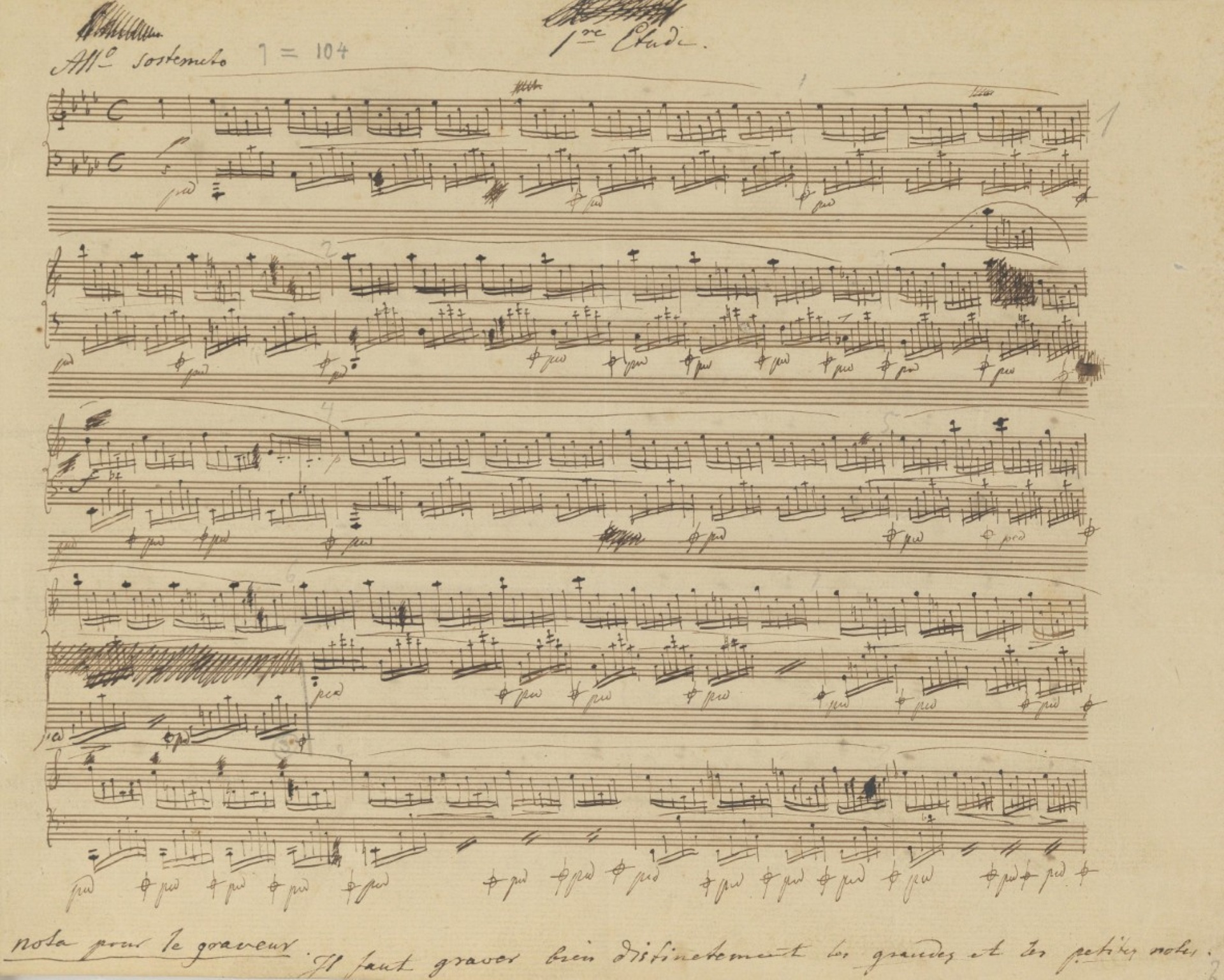
Chopin’s Étude Op. 25 No. 1 in the composer’s manusript
Sonic Architectures
An often quoted aphorism, usually attributed to Goethe, likens music to “liquid architecture” and architecture to “frozen music.” The four composers represented on tonight’s program have used disparate materials and techniques in constructing their musical edifices. Yet the fundamental building blocks remain essentially the same.
Program Note by Harry Haskell
Sonic Architectures
Piano Music from Chopin to Fujikura
Harry Haskell
An often quoted aphorism, usually attributed to Goethe, likens music to “liquid architecture” and architecture to “frozen music.” The four composers represented on tonight’s program have used disparate materials and techniques in constructing their musical edifices. Yet the fundamental building blocks available to Dai Fujikura today are essentially the same as those that Frédéric Chopin employed in the 1830s. As Maurice Ravel once wrote, there are rules to tell architects how to design buildings that will not collapse, but the only guide composers have to follow is their inspiration. Ravel was at heart a classicist, while Pierre Boulez asserted that music should be “violently of the present time,” capable of inducing “collective hysteria and spells.” Yet the German composer Matthias Pintscher discerns an affinity between them as two masters of “sonic architecture” who “follow an intricately detailed plan, while at the same time liberating themselves and giving the music a logical flow.”
Clarity and Concision
Few composers have bridged the divide between rationality of form and spontaneity of feeling with greater aplomb than Boulez. Despite his reputation as a modernist firebrand who promoted a highly cerebral strain of serialism, emotion plays at least as large a role in his music as logic. For Boulez, rational, clear-headed planning never precluded the possibility of surprise. Written in 1945, while Boulez was studying at the Paris Conservatoire, Douze Notations (Twelve Notations) reflects the competing claims of his teachers Olivier Messiaen and René Leibowitz. The latter, a champion of Schoenberg’s still-controversial 12-tone technique, introduced Boulez to the serial procedures that would form the backbone of his later work. But the young composer, by his own account, “soon rebelled against the hero worship” that characterized his mentor’s classroom sessions. Douze Notations was motivated in part by an impish desire to “make fun of Leibowitz’s dogmatism.”
The number 12 informs the work at various levels: each of the 12 highly compressed miniatures is 12 bars long, and each employs a different version of the work’s underlying 12-note tone row. By his own admission, Boulez opted for an aphoristic, Webernesque format because “I couldn’t master long works, for the technique was still new to me.” He saw his “benevolent critique” of Schoenbergian method as a necessary step toward formulating his own, conspicuously undogmatic musical language. In its combination of formal rigor and expressive spontaneity, spiky eruptions and soft, seductive surfaces, Douze Notations anticipates the alluring complexity of Boulez’s mature works. Messiaen’s spirit is apparent in the music’s multifarious timbres, metrical freedom, and precisely measured note durations, to say nothing of expressive markings like fantasque (capricious), hiératique (solemn), and puissant et âpre (powerful and harsh).
Fifty years younger than Boulez, Ravel made his mark in Paris at the turn of the 20th century with his masterful String Quartet and a group of brilliantly crafted piano pieces, including the ever-popular Pavane pour une infante défunte (Pavane for a Dead Princess). Over the ensuing decades he refined his art, ruthlessly pruning away superfluous notes and gestures in search of the “definitive clarity” that was his declared ideal. Many of his works evoke composers and styles of the past, even as they incorporate ultramodern harmonies and compositional styles. Although Ravel’s famous pavane harks back to a stately Baroque dance in duple meter, he insisted that he “had nothing more in mind than the pleasure of alliteration” when he chose the title. “It is not a dirge for a recently deceased princess,” he said, “but evokes a pavane that such a young princess might once have danced at the court of Spain.” A mood of ceremonial solemnity is established in the opening section, its measured eighth-note tread varied only by the introduction of triplets as the music broadens and alights on a sustained B-major chord. This is one of several resting points in Ravel’s musical procession, after each one of which the music resumes with renewed energy, generally thicker textures, and more complex harmonies.
More French Connections
The concept of music as “liquid architecture” has special significance for the contemporary Japanese composer Dai Fujikura. Fluidity of form and texture is intrinsic to much of his oeuvre, from early works such as Fluid Calligraphy for violin and video, Stream State for orchestra, and the viola solo Flux to his fourth opera, The Great Wave, based on the life of Hokusai, which premiered in Glasgow last February. Although Fujikura—who moved to London as a teenager—has long synthesized elements of eastern and western culture, his deepest well of inspiration is nature. “I have spent many nights studying and admiring the beauty of swarming fish and birds on YouTube,” he once wrote. “I have always wanted to be part of a shoal or flock. Swarming birds and fish have a direction, but they are free, flying wildly but with an elasticity of overall shape, not competing to lead but flying in formation…. I imagined every line of my music to be like a single fish or bird in a swarm. How they get together, musically how they play in unison, and sometimes how they melt into a big, wide shape is something I can carefully orchestrate.” Quiet Offering, Fujikura explains, grew out of Yulianna Avdeeva’s performance of an earlier work of his on an 1845 Pleyel piano that once belonged to Chopin’s lover George Sand. “Following this encounter through Bridging Realms, Yulianna asked me to write a new piano work. I began composing the piece while staying in a former palace in Poland, where I was teaching at a summer composition course. Within these connections surrounding Chopin, I felt a strange sense of destiny in the fact that the first sounds of this piece began to emerge in Chopin’s country, in a building that had once been a palace.”
Another musical homage, Ravel’s Valses nobles et sentimentales harks back to Schubert’s two sets of “noble” and “sentimental” waltzes, lyrical gems that distill the essence of the Viennese master’s genius in its purest and most concentrated form. Ravel had no compunction about basking in reflected glory. As he remarked to a friend, “If you have nothing to say, you cannot do better, while waiting for the ultimate silence, than repeat what has been said well. If you do have something to say, that something will never be more clearly seen than in your unwitting infidelity to the model.” Composed in the Indian summer before World War I, Ravel’s waltzes exude an air of innocence and languor—a far cry from the “fantastic, fatal whirling” that he would evoke after the war in his “choreographic poem” La Valse. The swirling, insistently pounding rhythms of the opening Modéré give way to a slow, yearning waltz. The delicate rhythmic patter of No. 3 is almost soporific, while No. 4 features an invigorating overlay of triple and duple meters. Further rhythmic complications ensue in the fifth waltz, ambiguously marked “Presque lent” (Almost slow), while the lively theme of No. 6 climbs and falls back in an endless Sisyphean struggle. No. 7 brings the Valses to a climactic summation, its muted afterglow fading away in the concluding Épilogue.
Hidden Meanings
Around the time he wrote the Valses, Ravel published a glowing centenary tribute to Chopin in which he observed that the Polish master “wasn’t content merely to revolutionize piano technique. His figurations are inspired. Through his brilliant passages one perceives profound, enchanting harmonies. Always there is the hidden meaning [arrière-pensée] which is translated into poetry of intense despair.” As Ravel recognized, Chopin’s combination of bravura technique and poetic feeling defined a new school of Romantic pianism. Throughout the 1830s, he channeled much of his creative energy into a series of short but highly sophisticated piano exercises. In one sense, this focus was a natural outgrowth of the private teaching by which the composer earned his daily bread. But his more than four dozen Études and Préludes rise far above the level of didactic student pieces to explore uncharted realms of musical expression and pianistic technique.
In the 12 Études Op. 25, Chopin casts off the constraints of Classical form, harmony, key relationships, and pianism. Perhaps the most remarkable aspect of these jewel-like miniatures is their extreme economy of expression. In each piece, Chopin goes straight to the meat of the matter, eschewing extraneous preliminaries or musical filler. The development of his ideas is radically compressed, yet each of the Études contains a world of “hidden meaning.” The set begins and ends with exercises in arpeggios, No. 1 delicate and harp-like (hence its unofficial nickname, “Aeolian Harp”), No. 12 roiling and tempestuous. All 12 Études are predominantly fast except No. 7, an oasis of calm that tests the pianist’s powers of sustained lyricism and flexible rubato rhythm governed by a persistent eighth-note pulse. Nos. 2 and 3 form a minor-major pair, focusing on cross-rhythms and contrary motion, respectively, while Nos. 4 and 5 feature leaping staccato figures and playfully dissonant broken chords. The slow centerpiece is flanked by studies in thirds (No. 6) and sixths (No. 8), while Nos. 9 and 10 offer different perspectives on octave motion. Perhaps most dazzling of all is No. 11, with its lumbering, lugubrious melody buffeted by gusts of chromatic passagework that fly like the wind.
Harry Haskell is a program annotator for Carnegie Hall in New York, Shriver Hall in Baltimore, and other venues, and the author of four books, including The Early Music Revival: A History, whose French edition was awarded the Prix des Muses in musicology by the Fondation Singer-Polignac.
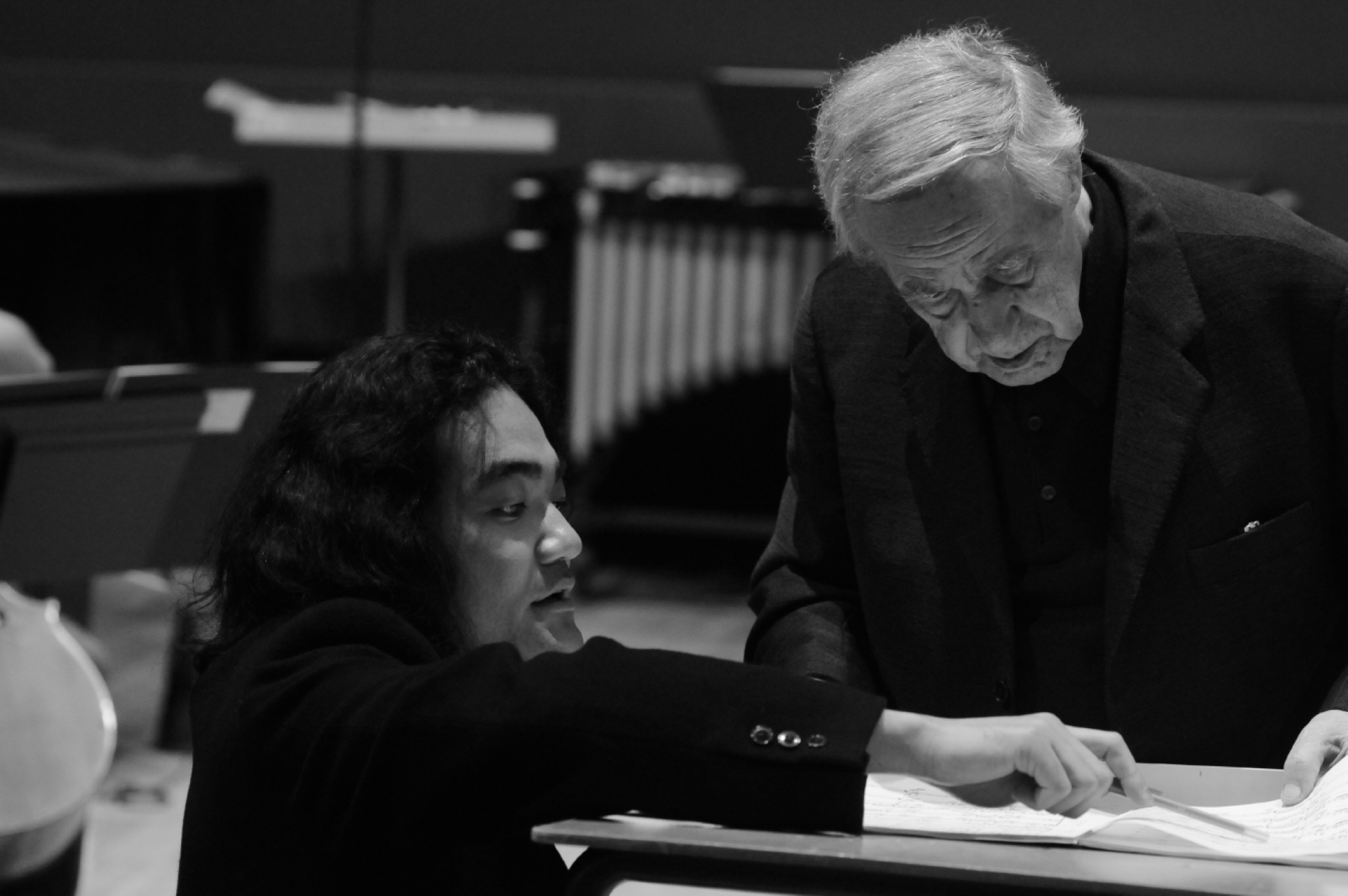 Dai Fujikura with Pierre Boulez in 2008 (© Jean Radel)
Individuelles im Dutzend
Zwölf Monate hat das Jahr, und in zweimal zwölf Stunden wird der Tag unterteilt. Man kennt zwölf Tierkreiszeichen, zwölf Stämme Israels, zwölf Ritter der Tafelrunde – die herausragende Bedeutung, die der Zahl seit Urzeiten beigemessen wird, ließe sich noch mit vielen weiteren Beispielen belegen. Und sie durchzieht auch das Programm von Yulianna Avdeevas Soloabend.
Essay von Jürgen Ostmann
Individuelles im Dutzend
Klavierwerke von Boulez, Chopin, Ravel und Fujikura
Zwölf Monate hat das Jahr, und in zweimal zwölf Stunden wird der Tag unterteilt. Man kennt zwölf Tierkreiszeichen, zwölf olympische Hauptgötter, zwölf Stämme Israels, zwölf Ritter der Tafelrunde – die herausragende Bedeutung, die der Zahl seit Urzeiten beigemessen wird, ließe sich noch mit vielen weiteren Beispielen belegen. Dass Waren früher oft im Dutzend vertrieben wurden, mag damit, aber auch mit der besonders vielfältigen Teilbarkeit der Zwölf zu tun haben. Auch musikalische Werke erschienen vorzugsweise in Heften à zwölf (oder sechs oder drei) Stücken, wobei spätestens seit Bachs Wohltemperiertem Klavier oft noch ein weiterer Aspekt hineinspielte: die vollständige Darstellung der Tonarten. Das westliche Musiksystem unterteilt die Oktave nun einmal in zwölf Halbtöne, und jeder von ihnen kann Grundton einer Dur- und einer Molltonleiter sein. Von der traditionellen Dur-Moll-Harmonik wandte sich Arnold Schönberg zwar ab, doch im System, das sie ersetzten sollte, herrschte noch immer die altbekannte Zahl: Eine vorab festgelegte Reihenfolge aller Halbtöne bildet die Basis jeder Komposition, und ein Ton darf erst wieder erklingen, nachdem alle anderen elf gespielt wurden – so lauten zwei Grundregeln der Dodekaphonie.
Hommage an die Zwölf
Boulez’ Douze Notations
Pierre Boulez, der später die Weiterentwicklung der Zwölftontechnik zur seriellen Musik vorantrieb, lernte 1945 durch seinen Lehrer René Leibowitz die Kompositionen Schönbergs und seiner Schüler kennen. Unter ihrem Einfluss schrieb der 20-Jährige noch im gleichen Jahr seine Douze Notations für Klavier. Die kurzen Stücke basieren alle auf der gleichen Zwölftonreihe, und alle umfassen genau zwölf Takte. Dennoch vermittelt jede der Miniaturen eine andere Stimmung, und scharfe Kontraste gibt es nicht nur zwischen ihnen, sondern teils sogar innerhalb einzelner Sätze – wie etwa gleich des ersten. Manche Stücke wirken ruhig, kontemplativ (Nr. 5), andere wild und rhythmusbetont (Nr. 2). Bisweilen meint man den Einfluss Bartóks zu erkennen (Nr. 4), dann wieder den Debussys und Ravels (Nr. 9, 11) oder Messiaens (Nr. 12). In einem Entwurf des achten, an Xylophonklänge erinnernden Stücks findet sich die Notiz „Afrique“, und zum siebten erklärte Boulez, es sei durch einen Klagegesang asiatischen Ursprungs inspiriert worden. Dutzendware sind die Douze Notations also keineswegs – vielmehr handelt es sich um höchst individuelle Stücke und insgesamt um das früheste Werk, das Boulez auch als reifer Komponist noch als gültig anerkannte. In Druck gab er die originale Klavierfassung zwar erst 1985, doch erweiterte Orchesterversionen der Notations 1 bis 4 (1978–80) sowie 7 (1997) belegen, wie wichtig ihm sein Jugendwerk war.
Schreittanz einer Prinzessin
Ravels Pavane pour une infante défunte
Ursprünglich für Klavier komponiert, doch als Orchesterstück noch bekannter – das gilt ebenso für Maurice Ravels Pavane pour une infante défunte. Den enormen Erfolg beider Fassungen verdankt dieses Werk teilweise wohl bereits seinem geheimnisvollen Titel. Die Pavane ist ein Schreittanz, der aus Italien, vielleicht Padua, stammte und sich vom 16. bis zum frühen 17. Jahrhundert über ganz Europa verbreitete. Danach kam er zunehmend aus der Mode, doch im 18. Jahrhundert nahmen ihn französische Komponisten wegen seines gravitätischen Charakters gerne in ihre Gedenk- oder Trauermusiken auf. Auch Ravels viel später entstandene Pavane könnte man als ein solches Stück verstehen: der Zusatz „pour une infante défunte“ bedeutet wörtlich „für eine verstorbene Infantin“. Der Komponist selbst erklärte den Titel jedoch so: „Es ist kein Trauergesang für ein totes Kind, sondern eher die Vorstellung einer Pavane, wie sie von solch einer kleinen Prinzessin, wie Velásquez sie am spanischen Hof gemalt hatte, wohl hätte getanzt werden können.“ Trotz dieser Klarstellung reizte der Werktitel zahlreiche Kommentator:innen zu Spekulationen und poetischen Ausdeutungen, und schließlich behauptete Ravel, ihn nur wegen des Wort-Klang-Spiels gewählt zu haben. Ganz glaubhaft erscheint das allerdings nicht, denn die Überschrift suggeriert die gleiche nostalgisch getönte Melancholie, die gleiche Mischung von verwunschener Tristesse und gemessener Grazie, die auch in der Musik zum Ausdruck kommt. Ravel komponierte die Klavierfassung der Pavane 1899; die subtil instrumentierte Orchesterversion entstand 1910.
Das Vergnügen einer nutzlosen Beschäftigung
Ravels Valses nobles et sentimentales
Ein Jahr später schrieb Ravel seine Valses nobles et sentimentales. Deren Titel gibt keine Rätsel auf: Er verweist auf Franz Schubert, der 1823 seine 34 Valses sentimentales (D 779) und 1827 die 12 Valses nobles (D 969) komponierte. Ravel selbst bekräftigte in seiner „Autobiographischen Skizze“, er habe eine Reihe von Walzern in Schuberts Stil im Sinn gehabt. Bei einem Komponisten seines Rangs versteht es sich allerdings von selbst, dass er die fremde Schreibweise nicht einfach kopierte. Die Valses nobles et sentimentales lehnen sich in ihrem schwungvollen Rhythmus, den ausgewogenen Phrasen und der unkomplizierten Form zwar an Schuberts Vorbild an, doch ihre Harmonik weist sie als Schöpfung des 20. Jahrhunderts aus. Das Werk besteht aus einer Folge von sieben Walzern, die fast alle (nur den fünften ausgenommen) in einem Epilog erneut auftreten. Dieser lange, ruhige Schlussabschnitt mit seinen wehmütigen Reminiszenzen scheint Ravels Abschiednehmen von einer vergangenen Epoche und ihrer Musik zum Ausdruck zu bringen. Die lustvoll-zweckfreie Kultiviertheit, die er mit ihr verband, kommt zum Ausdruck im Motto-Zitat aus Henri de Régniers 1904 erschienenem Roman Les Rencontres de Monsieur de Bréot: „Das angesehene und stets neue Vergnügen einer nutzlosen Beschäftigung“. Uraufgeführt wurden die Valses nobles et sentimentales im Mai 1911 in der Pariser Salle Gaveau. Bei diesem Konzert erklangen alle Werke des Programms ohne Nennung des jeweiligen Komponisten, und das Publikum war aufgefordert, ihn zu erraten. Nur drei Prozent der Zuhörer:innen erkannten damals die Valses als Ravels Schöpfung.
Schicksal Chopin
Fujikuras Quiet Offering
Dass der Rückblick in die Vergangenheit erstaunlich originelle Musik inspirieren kann, erweist sich am Beispiel Ravels immer wieder. Doch wie modern seine Wrke zur Zeit ihrer Entstehung geklungen haben mögen, lässt sich heute, da sie in den Kanon zeitüberdauernder Kunst eingegangen sind, nicht mehr so einfach nachempfinden. Da hilft vielleicht die Konfrontation mit neuer Musik unserer Zeit – wie sie in Yulianna Avdeevas Programm zwischen den beiden Ravel-Werken erklingt. Unterschwellig allerdings wurde auch diese aktuelle Komposition des in London lebenden Japaners Dai Fujikura durch Musik der Vergangenheit angeregt: In Auftrag gegeben hat Avdeeva das Stück gemeinsam mit Emma Akiyama, der Gründerin des Salon Chopin au Japon. Diese gemeinnützige Organisation veranstaltet Konzerte und Salonabende vorwiegend mit Musik Chopins, wobei ein nach Japan importierter Pleyel-Flügel aus dem Haus von Chopins Lebensgefährtin George Sand in Nohant zum Einsatz kommt. Die Geschichte von Quiet Offering, so berichtet Fujikura, habe damit begonnen, dass Avdeeva, selbst eine preisgekrönte Chopin-Interpretin, auf diesem historischen Instrument seine 2023 für Hammerklavier entstandene Komposition Bridging Realms vorgetragen habe. Ein neuer Kompositionsauftrag war die Folge, und die Arbeit an Quiet Offering begann Fujikura in Chopins Geburtsland Polen, wo er als Dozent bei Sommerkursen lehrte. Das Zusammenfallen all dieser Chopin-Bezüge habe sich für ihn seltsam schicksalhaft angefühlt, schreibt der Komponist. Ob sich das auch im Höreindruck niederschlägt? Der Titel jedenfalls hat einen anderen Hintergrund: Fujikura komponierte das Stück nach seiner Gewohnheit in engem Austausch mit der vorgesehenen Interpretin. Er schickte Avdeeva Fragmente seiner Arbeit, erhielt Smartphone-Aufnahmen zurück und leitete daraus Ideen für die Fortsetzung ab. Noch vor Beginn der Komposition führte er ein halbstündiges Telefonat mit der Pianistin, die dabei ihre Auffassung äußerte, jede Aufführung von Musik käme einem Geschenk an jemanden gleich – so erklärt sich der Titel, der sich als „Stille Gabe“ übersetzen lässt.
Poetische Fingerübungen
Chopins Études op. 25
Waren Chopins Études op. 25 vielleicht ein Geschenk besonderer Art, eine Gabe des Komponisten an Marie d’Agoult, mit der er eine Affäre gehabt haben soll? Das suggeriert zumindest der britisch-französische Film Impromptu aus dem Jahr 1991 (der in Deutschland unter dem wenig originellen Titel Verliebt in Chopin in die Kinos kam). Historisch belegt ist die romantische Geschichte nicht, doch sie böte eine Erklärung für die etwas rätselhafte Widmung des Werks an die Gräfin, die als Lebensgefährtin Franz Liszts und Mutter der späteren Cosima Wagner in die Musikgeschichte eingegangen ist. Chopin schrieb seine beiden Etüdenserien op. 10 und op. 25 zwischen 1828 und 1836, also im Alter von 18 bis 26 Jahren. Auf den ersten Blick mag es merkwürdig erscheinen, dass ein junger, genialer Künstler sich ausgerechnet mit einem so trockenen Stoff wie Fingerübungen intensiv beschäftigt. Doch Chopins Études sind anders: Sie bewegen sich auf einem in dieser Gattung zuvor kaum vorstellbaren musikalischen Niveau – und wären daher als Morgengabe an eine hochstehende Dame durchaus akzeptabel gewesen. Zwar bearbeitete auch Chopin in jeder Etüde ein bestimmtes spieltechnisches Problem, so wie es vor ihm Muzio Clementi, Johann Baptist Cramer oder Carl Czerny getan hatten. Op. 25 Nr. 1 und Nr. 12 beispielsweise verlangen Arpeggien beider Hände, und in Nr. 2 müssen die rasenden Achteltriolen-Girlanden der rechten Hand unabhängig von den Vierteltriolen der linken geführt werden. Weitere Beispiele sind die Vorschlagsnoten in Nr. 5 oder die chromatischen Terzläufe der rechten Hand in Nr. 6. Die Unterschiede zum traditionellen Übungsstück sind dennoch deutlich: Sie liegen zum einen in der poetischen Qualität jeder einzelnen Nummer. Es ist bezeichnend, dass sich für etliche Etüden programmatische Beinamen etabliert haben – etwa „Äolsharfe“ oder „Sternenregen“ für op. 25 Nr. 1, „Schmetterling“ für Nr. 9, „Winterwind“ für Nr. 11 und „Ozean“ für Nr. 12. Zum anderen hatte Chopin, indem er jeweils ein spieltechnisches Problem konsequent verfolgte, einen guten Vorwand für seine geradezu revolutionären harmonischen und klanglichen Neuerungen. Beispiele sind die durchgehend synkopische Melodie in Nr. 4 oder die eigenartig dissonante Wirkung von Nr. 5. Kaum verwunderlich, dass konservative Zeitgenossen Chopins Études als musikalischen „Vandalismus“ brandmarkten. Fortschrittliche Künstler wie Liszt und Schumann dagegen waren begeistert und nahmen sich in ihren eigenen Kompositionen Chopin zum Vorbild.
Jürgen Ostmann studierte Musikwissenschaft und Orchestermusik (Violoncello). Er lebt als freier Musikjournalist und Dramaturg in Köln und arbeitet für verschiedene Konzerthäuser, Rundfunkanstalten, Orchester, Plattenfirmen und Musikfestivals.
The Artist
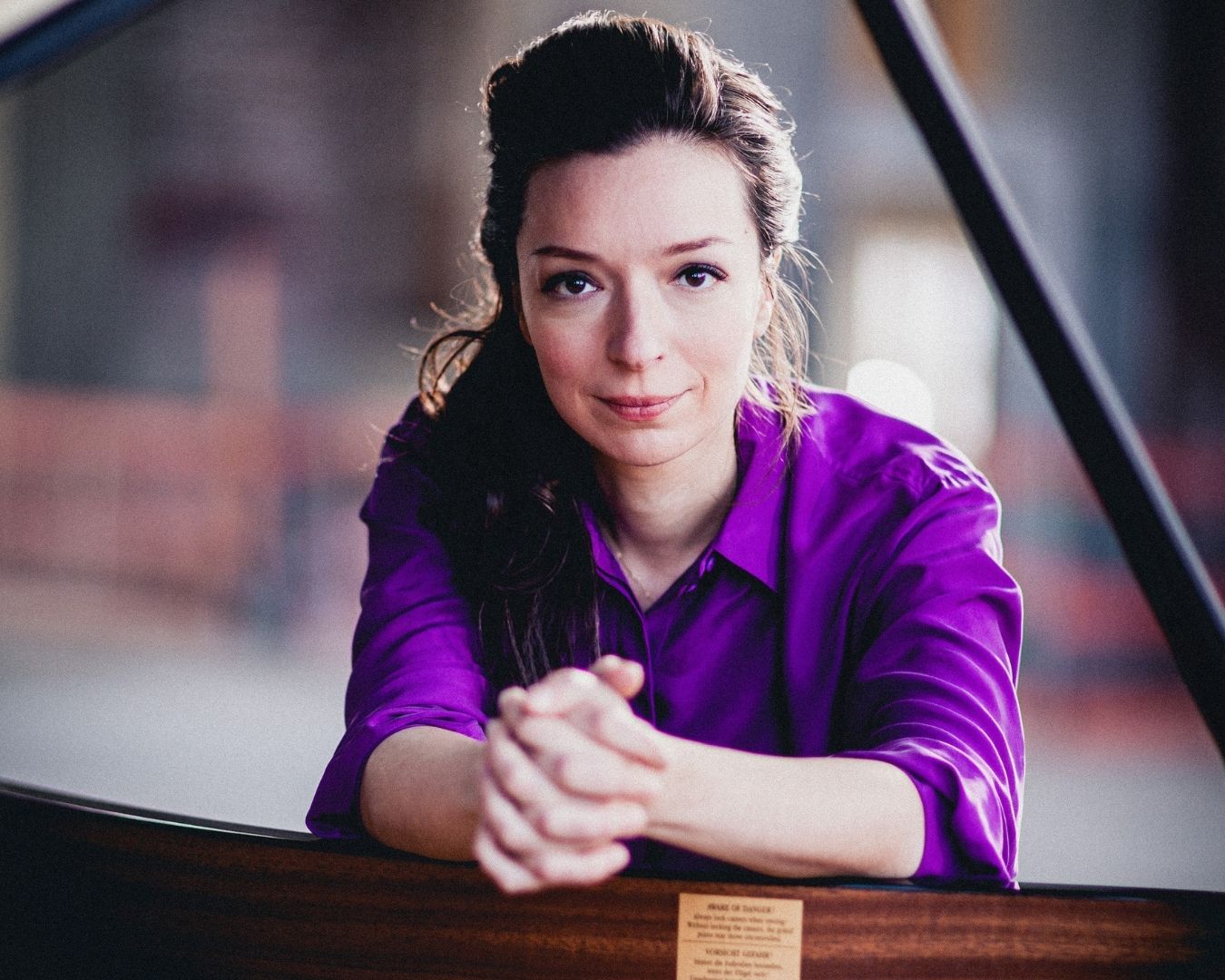
Yulianna Avdeeva
Piano
Yulianna Avdeeva began her musical education at the age of five at Moscow’s renowned Gnessin School of Music and later studied with Konstantin Scherbakov and Vladimir Tropp. She also received important guidance from William Grant Naboré, Dmitri Bashkirov, and Fu Ts’ong. Her first-prize win at Warsaw’s Chopin Competition in 2010 launched her international career, and she has since appeared with orchestras including the Chicago Symphony, London Philharmonic, Frankfurt Radio Symphony, SWR Symphony, Los Angeles Philharmonic, Berlin’s Rundfunk-Sinfonieorchester, and Rome’s Accademia Nazionale di Santa Cecilia. She has particularly close ties to the Warsaw Philharmonic and the National Polish Radio Symphony Orchestra. As soloist and chamber musicians, she has appeared at Hamburg’s Elbphilharmonie, the Rudolfinum in Prague, the Vienna Konzerthaus, London’s Wigmore Hall, Amsterdam’s Concertgebouw, Carnegie Hall in New York, Tonhalle Zurich, and at the festivals of Salzburg, Gstaad, and La Roque d’Anthéron. She has been a regular guest at the Pierre Boulez Saal since 2018. Last season she made recital debuts at the Berlin Philharmonie, the Cologne Philharmonie, and the Vienna Musikverein and appeared on tour with the Gewandhaus Orchestra and Andris Nelsons.
October 2026