Mon, May 11, 2026 at 6:00 PM
AKADEMIE FORUM: ASAD Q. AHMED
Lecture and Reading: Palestine in South Asian Literature
Pierre Boulez Saal - Mozart Auditorium
How far, or rather close, are cities like Jerusalem, Hebron, and Gaza to Srinagar, Lahore, and Kolkata? What role does Palestine, as a real and imagined location, occupy in the South Asian mind? And how does it figure in Urdu and Persian literatures? Prof. Asad Q. Ahmed will share his recent research and reflections on the evolving presence of Palestine in Urdu and Persian poetry written in South Asia before and after the Nakba. He will demonstrate how the figure of Palestine transformed from a reference point for Muslim spiritual unity—a metaphorical locus of identity with no clear geographical demarcation—to a distinct site that is seen to mirror political struggle in other postcolonial contexts and regions: Kashmir, Pakistan, and India. He will give a sense of how, in the aftermath of the Nakba, the religious tenor fades from the figure of Palestine, and the poetic voice shifts to free verse and to literary forms inspired by major Western poets.
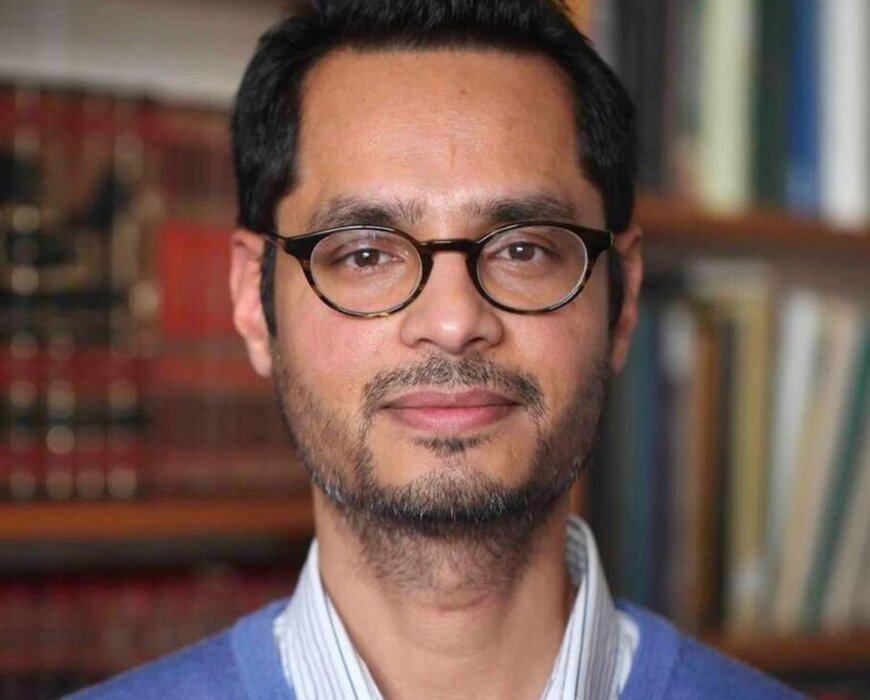
Asad Q. Ahmed is the Magistretti Distinguished Professor of Middle Eastern Languages and Cultures; Professor of Arabic and Islamic Studies in the Department of Middle Eastern Languages and Cultures; Affiliate Faculty in the Department of Philosophy; and the Director of the Center of Middle Eastern Studies at the University of California, Berkeley. He specializes in early Islamic social history and pre-modern Islamic intellectual history, with a special focus on the rationalist disciplines, such as philosophy, logic, legal theories, and astronomy. Among his books are Avicenna’s Deliverance: Logic (2011) and Palimpsests of Themselves: Logic and Commentary in Muslim India (2022). He is also the co-editor of nine collected volumes, including Logic, World and God (2025) and Islamic Intellectual History in the Mughal World (2026). His awards include fellowships from the Institute for Advanced Study at Princeton and the Stanford Humanities Center.
Presented in English
With a musical contribution by students of the Barenboim-Said Akademie
Artists
Lecture and Reading
Presenter
Reading
Violin
Piano
PARTNER