Elias Aboud, Martin Barth, Dominic Oelze Percussion
Alina Pronina, Giuseppe Mentuccia Piano
Program
Works by
Michael Laurello
Ivan Trevino
Thierry de Mey
Iannis Xenakis
Evan Chapman
Alejandro Viñao
Elias Aboud
Benjamin Holmes
Michael Laurello (*1981)
Spine for Percussion and Piano (2015)
Ivan Trevino (*1983)
Seesaw for Percussion Duo (2020)
Thierry de Mey (*1956)
Silence Must Be for Solo Performer (2002)
Iannis Xenakis (1922–2001)
Rebonds B for Solo Percussion (1987–9)
Evan Chapman
Sympathy for two Vibraphones (2019)
Intermission
Alejandro Viñao (*1951)
Dance Groove Drifting for two Marimbas (2011)
Elias Aboud (*1988)
Mosaic for Percussion Trio (2026)
Benjamin Holmes (*1991)
Crossing for Percussion Duo (2021)
Elias Aboud
Broken Rhythm for Solo Percussion (2026)
Michael Laurello
Big Things for two Percussionists and two Pianists (2014/24)
The Choreography of Sound
Dominic Oelze, Marthin Barth, and Elias Aboud perform music for percussion.
Program note by Anne do Paço
The Choreography of Sound
Music for Percussion
Anne do Paço
They are close artistic partners, both members of the Staatskapelle Berlin and the Boulez Ensemble who also perform regularly as a duo and in various chamber music formations: Dominic Oelze and Martin Barth. Together, they conceived tonight’s program—and invited their colleague Elias Aboud and pianists Alina Pronina and Giuseppe Mentuccia to join them in a concert that rather than a percussion show is an invitation to an intense listening experience. “Of course we are presenting a few classics you would expect at a percussion concert, such as Iannis Xenakis’ Rebonds or Michael Laurello’s Spine,” Oelze says. “But we also want to surprise the audience.” Accordingly, the selected works and the instruments they employ cover a remarkably broad range. “Many percussionists specialize. We work differently, with a very broad range, because what we really enjoy is not to start with specific instruments, but with compositions we are really excited about.” Inviting Elias Aboud “was very important to us,” Oelze adds, “because he brings the Arabic percussion tradition from his Syrian homeland, which is based on hand beating techniques.” The Pierre Boulez Saal, which the musician calls his “living room” due to the many concerts he has performed here, is an ideal place for this concert: “There are spaces that don’t interest me, but the Pierre Boulez Saal is extremely attractive in terms of sound. You can play very softly, venturing far into dynamic extremes. At the same time, we’ve set up our positions for the individual works in a way that allows the audience to perceive these pieces in the best possible manner, not just acoustically, but also visually.”
Finding the Backbone
As its title suggests, the above-mentioned Spine by American composer Michael Laurello, which was written in 2014–5 for the Yale Percussion Group, was indeed inspired by the human skeleton. Like a spine, a central musical line forms the basis of the composition: “as a backbone, but also with respect to the line’s perceived control over the direction and progression of the music,” says the composer. The material arises from it; motifs branch off from it. The other voices ornament this “meta-line”, coloring, commenting, diverging from it, and returning to it. The result is an apparently organic sonic process, somewhere between clear construction and an almost improvisational freedom, composed not only for a diverse array of percussion instruments, but also for a piano, which gets to show off its percussive side.
Drumming on a Guitar
Ivan Trevino’s Seesaw, composed in 2020 by for two percussionists performing on a single acoustic guitar, is an unusually playful but also humorous piece, in which the guitar acts both as a string instrument and percussive body. Beaten with sticks, bowed, or plucked, it creates a broad spectrum of sound colors—from resounding surfaces to very specific rhythms. Classical guitar techniques such as flageolets, hammer-ons, or pull-offs enter into a vibrant dialogue with percussive gestures, unlocking sonic territory that is unusual for a guitar—a “seesaw” upon which sounds are continuously rebalanced.
“It’s not a percussion piece in the strictest sense, it could also be played by other instrumentalists,” Oelze explains. “The sound world is creates is not completely unfamiliar, because the guitar sound is present in part, but the entire handling, execution, and the result are not what you might expect in a percussion context.” With this work, Ivan Trevino made a contribution to the idea of multi-instrumentalism, which assumes that players are not specializing in just one instrument but can alternate between different instruments in varying musical contexts.
Seeing Music
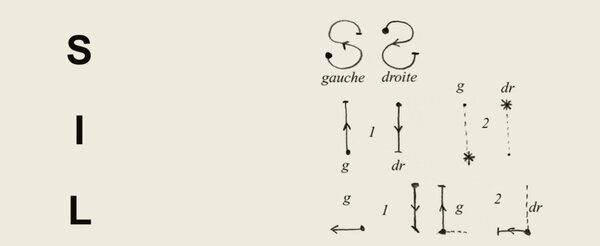
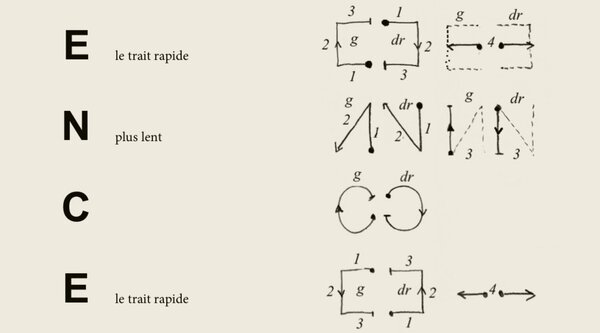
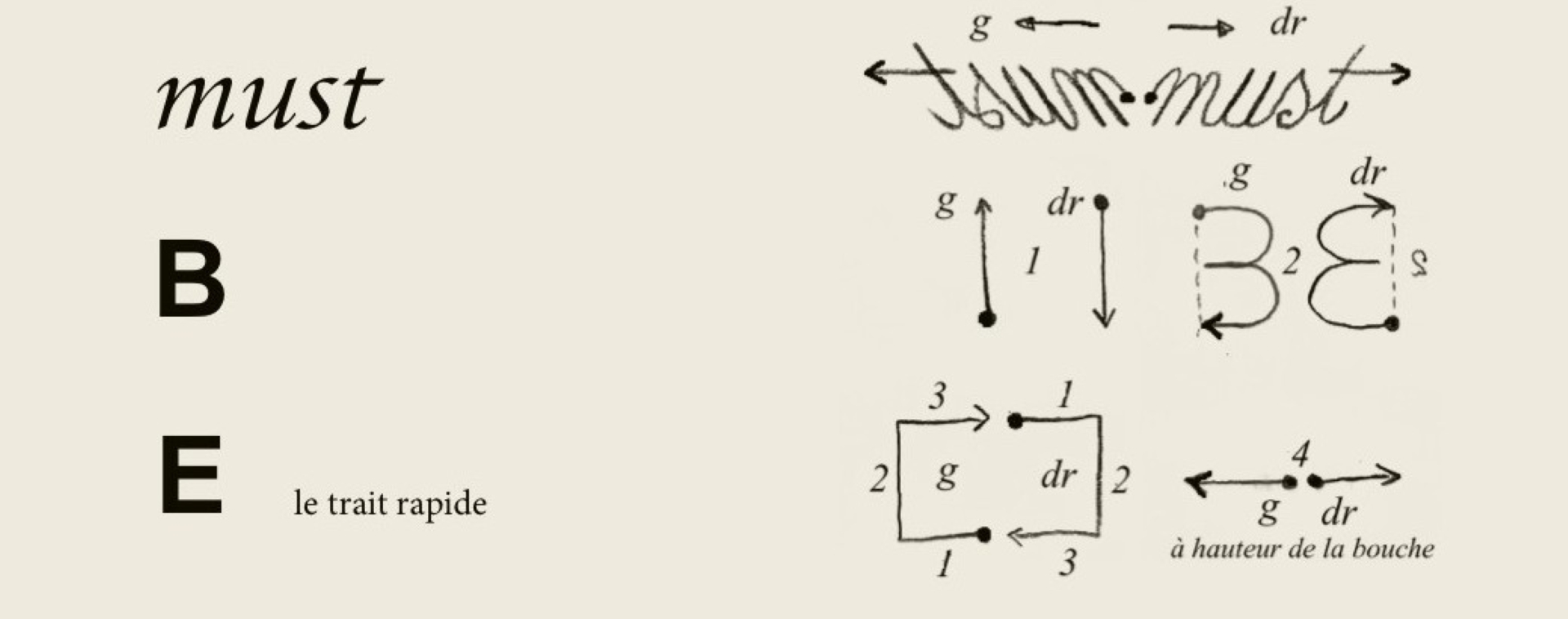
“Compared to other instruments, percussion usually requires expansive movements, and those always create a kind of choreography, ultimately resulting in sound.” That is how Dominic Oelze describes a central aspect of percussion playing: gestures and body language—a physical quality that, being visible action, also offers the audience an interesting visual component. “That’s why we chose Thierry De Mey’s Silence Must Be for this program. It’s a solo, similar to watching a conductor, without hearing the music—but you still get idea of what the music could sound like.” The Belgian composer, who wrote this piece in 2002, is primarily known as a film composer and regular collaborator of such renowned choreographers as Anne Teresa De Keersmaeker and Wim Vandekeybus, creating music for dance theater productions.
The body itself is the focus of the musical action in Silence Must Be. The performer turns to the audience, taking his own pulse as the point of departure and developing from this a multi-layered web of polyrhythms, which are experienced only through gestures and physical presence. Oelze explains: “It’s clearly what should resound, but the thing is that it’s seen, not heard. There are also gestures that are not directly linked to sound but to writing and other elements. That was another reason to add the piece to this program: because it’s really entertaining and it shows how closely related certain movements are, both in percussion playing and conducting.”
Sonic Repercussions
With Iannis Xenakis’s Rebonds, one of the great percussion classics joins tonight’s program—high-octane music with an archaic thrust. The Franco-Greek composer uniquely combined his musical thinking with architecture and mathematics. Influenced by his collaboration with Le Corbusier and ideas of the musical avant-garde of Edgard Varèse and Olivier Messiaen, he developed a sonic language of great structural clarity and physical intensity.
Composed between 1987 and 1989, this solo piece consists of two parts, with the performer choosing the order. While the first section uses only membranophones, including bongos, tom-toms, and large drums, the second extends the spectrum by distinctive wood sounds, especially woodblocks. To master the quick changes between the different instruments—which create the “bouncing” and “rebounding” sound impulses that the title Rebonds (French for rebound, repercussion) alludes to—the composition demands a playing technique that is extremely precise, almost machine-like.
Sympathetic Vibrations
Evan Chapman plays with a “sonic surprise” in Sympathy—“a highly entertaining and fun piece, not just for us,” says Dominic Oelze. “Audience reactions have taught us that listeners usually love it—that’s why we programmed it again.” Chapman, an American composer, combines percussion, sound research, and elements of media, creating interdisciplinary work spanning music and film. Sympathy calls for pairs of vibraphones, bass drums, and snare drums. The snare drums are not played actively; instead, microphones transmit the signals of the vibraphone and bass drum sounds via loudspeakers in such a way that the drums’ snare wires resound with what is called sympathetic vibrations. “The very effect that percussionists normally try to avoid—the snare reverberating on its own—is used here on purpose,” says Oelze. “The result is a sound that is produced not actively but passively, by vibration, so the composition’s sonic spectrum is expanded by resonances that are caused indirectly.” The vibraphone lines, bass drum structures, and floating echoes are woven into dense rhythms that draw the listener in hypnotically.
Drifting Grooves
Born in Buenos Aires and trained at the Royal College of Music in London, among other institutions, Alejandro Viñao writes works that combine instrumental, electroacoustic, and multi-media approaches with a highly rhythmic mindset. Dance Groove Drifting for two marimbas is the last movement of his four-part Book of Grooves, premiered in 2012—a composition built on the principle of groove as a stable rhythmic pattern that directly activates physical movement in the listener. This very principle, however, is questioned by Viñao in his composition, by systematically “unpicking” the groove he initially presents: metric points shift, rhythmical structures are transformed, becoming the driving force behind the musical shape. Varying the original material, new grooves create a fragile balance between stability and change in a linear process without ever reverting to the original. Unlike pop music with its rigid rhythms, Viñao consciously plays with the risk of losing the direct physical connection between groove and listener when the familiar pulse changes. “You are constantly losing perspective, finding it again, and immediately losing it again,” Oelze describes this fascinating game of stability and transformation.
Crossings
Among the highlights of the concert’s second half are two recent pieces by Elias Aboud that introduce traditional Syrian and Arabic elements to the program. “We begin with Mosaic, a trio in which Elias is the soloist and Martin and I accompany him,” Dominic Oelze says. “Then there’s a kind of transition piece, Benjamin Holmes’ duo Crossing, which is almost like a percussion etude with metronome-like click structures. This is followed by a solo by Elias for two traditional percussion instruments.”
The location of the duo that “intersects” with Elias Aboud’s pieces is indicated in its title: a joint or fork, a crossing. Texas-born composer and percussionist Benjamin Holmes devises a scenery in Crossing that is inspired by everyday noises: the sound of a railroad crossing and the characteristic warning signal played when a train approaches. A regular, bell-like pulse beaten on a Zil Bell, and an objet trouvé from a junkyard—a brake drum—contrast with a densely woven carpet of rhythms from two snare drums and two concert toms, which are reminiscent of the dynamic of passing trains. As the two performers pass the complex rhythms between them as if in a game of table tennis, the listener has the impression of a closed-off musical organism—as if there were a central instance controlling all the instruments.
Big Things
The program closes with Big Things, a piece originally conceived for guitar and bass guitar, for which Michael Laurello developed a special working method. “Big Things was one of the first pieces I composed using a process of recording and improvisation, rather than traditional notation,” says the composer. “I started with a rhythmic pattern outlined by an electric guitar, and then improvised other instruments over the top. I recorded most of the instruments myself, section by section, editing each part in my recording software as I went. With this method, I felt free to experiment without worrying about what it might look like on the page.” Laurello describes the fact that this process also led to “copy/paste” kind of errors, leading to patterns shifting by a 16th-note, as a “happy coincidence” that he integrated into his score. He eventually transcribed the score from a recording, subsequently arranging the work in the version for two percussionists and two pianists that is performed tonight. “Big Things is not a classic finale with showy effects,” Oelze explains, “but rather a work that we are particularly interested in. It’s all about creating a unique sound and complex rhythmic structures, which makes it very challenging to play.” Highly virtuosic, the piece oscillates between monolithic passages and delicate ornamentations—as a finale, it certainly develops an almost hypnotic magnetism.
Translation: Alexa Nieschlag
Anne do Paço studied musicology, art history, and German literature in Berlin. After holding positions with the Mainz State Theatre, Deutsche Oper am Rhein, and Vienna State Ballet, she has been a dramaturg at the Hanover State Opera since 2025. She has published essays on the history of music and dance of the 19th to 21st centuries and has written for Deutsche Kammerphilharmonie Bremen, Vienna’s Konzerthaus, and Opéra National de Paris, among others.
The Artists
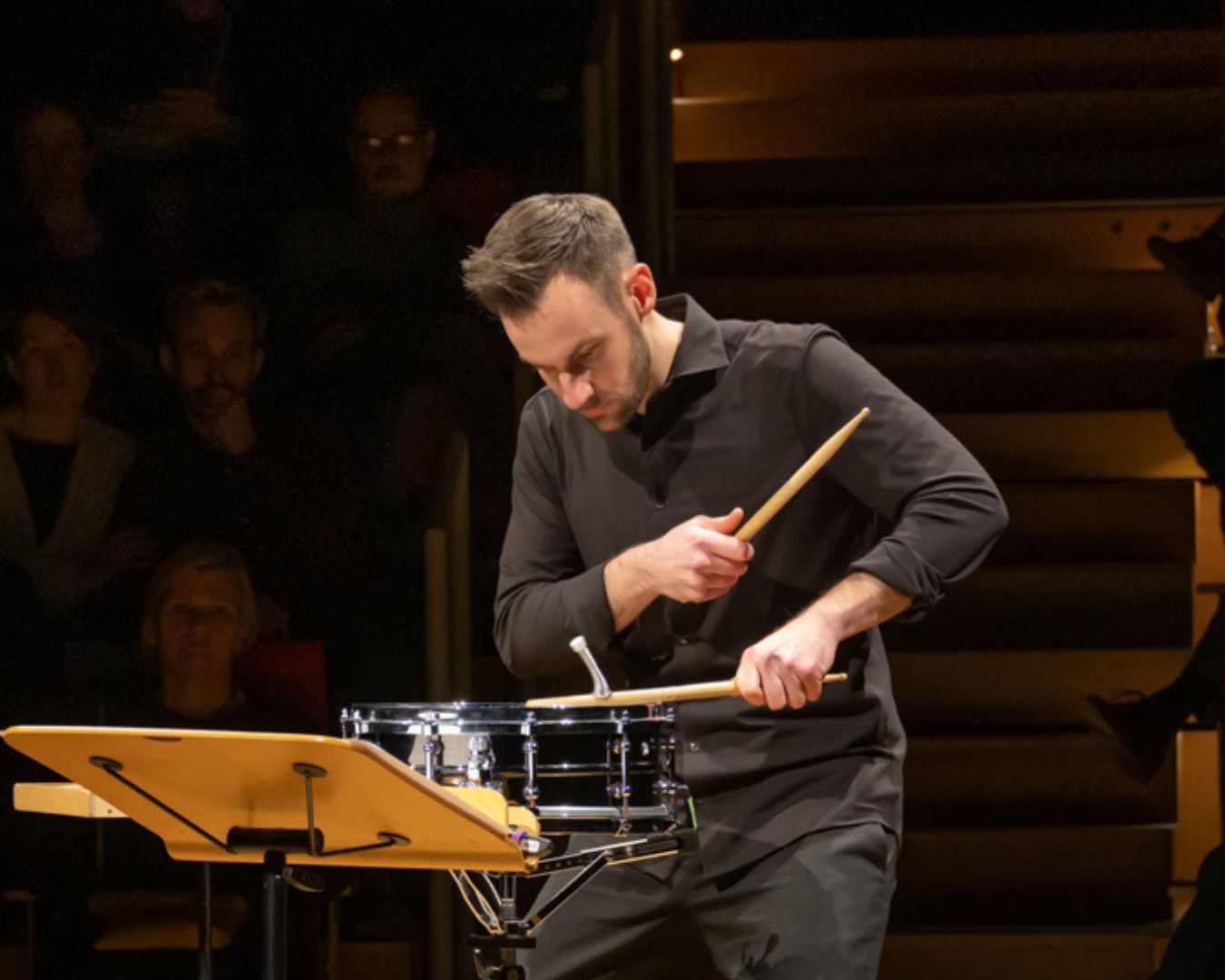
Elias Aboud
Percussion
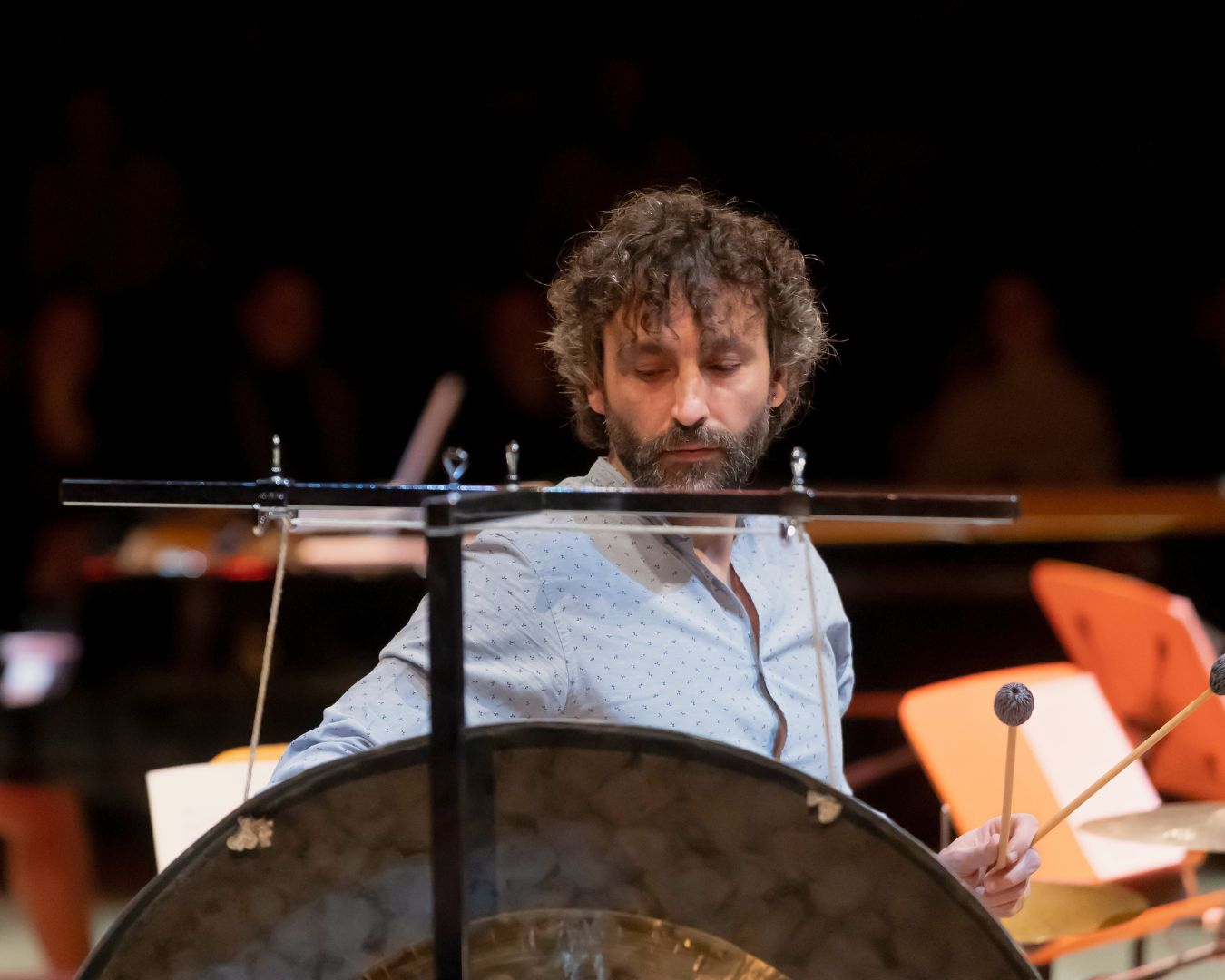
Elias Aboud studied percussion and composition at the conservatory of his native Damascus and after relocating to Berlin continued his education with Dominic Oelze at the Barenboim-Said Akademie and at the Hanns Eisler School of Music. He is a co-founder of the Ramal Ensemble for contemporary Arabic music as well as a member of the Asambura Ensemble and the Syriab Ensemble. With the Ramal Ensemble he has appeared at the Pierre Boulez Saal, the Konzerthaus, and the Villa Elisabeth in Berlin, among others. He has also performed at the Rudolstadt Festival and the Kunstfest Weimar. Since 2014, he has been a member of the West-Eastern Divan Orchestra.
Martin Barth
Percussion
Martin Barth studied timpani and percussion at the Munich Musikhochschule with Franz Bach and Peter Sadlo. He was a member of the Bamberg Symphony’s Joseph Keilberth Orchestra Academy for one year before joining the Staatskapelle Berlin in 2015 as principal percussionist while still a student. Since 2019, he has been a mentor with the orchestra’s academy. He also regularly performs with the Boulez Ensemble and other leading orchestras throughout Germany and, in addition to Daniel Barenboim, has collaborated with conductors including Zubin Mehta, Sir Simon Rattle, Sir Antonio Pappano, Kirill Petrenko, and François-Xavier Roth.
April 2026
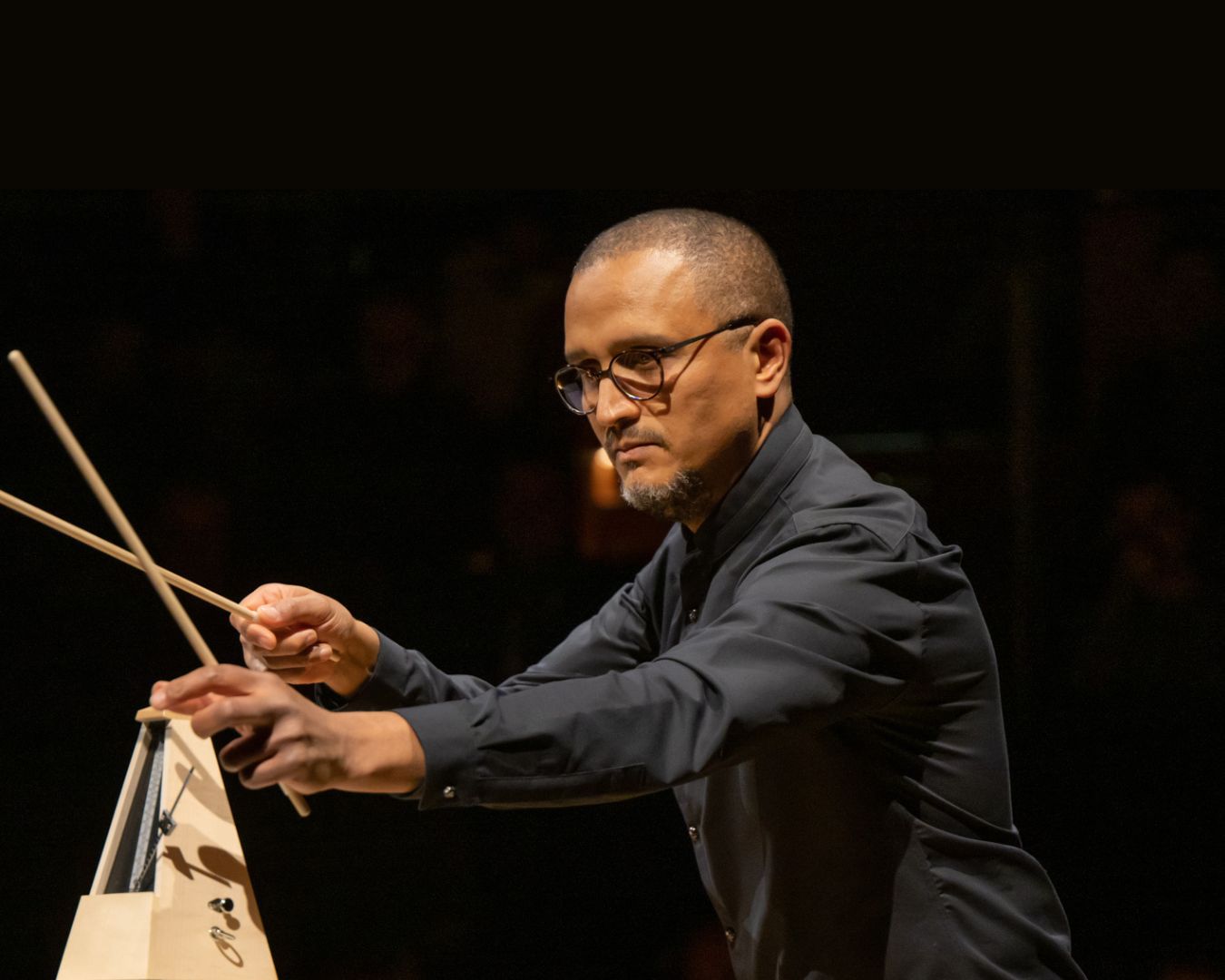
Dominic Oelze
Percussion
Dominic Oelze received piano and percussion lessons from the age of ten and studied in Leipzig with Stephan Storpora and Karl Mehlig and at the Salzburg Mozarteum with Peter Sadlo. After engagements with the Staatskapelle Dresden and the Leipzig Gewandhaus Orchestra, he was invited by Daniel Barenboim to join the Staatskapelle Berlin as principal percussionist and timpanist in 1998. He has been heard as a chamber musician at international festivals in Salzburg, Jerusalem, Paris, and New York and regularly appears at the Pierre Boulez Saal performing contemporary ensemble and solo repertoire. His collaborators have included Martha Argerich, Zubin Mehta, Lang Lang, and François-Xavier Roth, as well as composers such as Pierre Boulez, Elliott Carter, and Jörg Widmann. Together with the Ensemble Quillo, he has presented a concert series of contemporary chamber music and been active in various music education projects for children and young adults in rural Brandenburg since 2007. He teaches at the Barenboim-Said Akademie in Berlin and at the academy of the Fundación Barenboim-Said in Sevilla and held a professorship at the Dresden Musikhochschule from 2012 to 2019.
April 2026
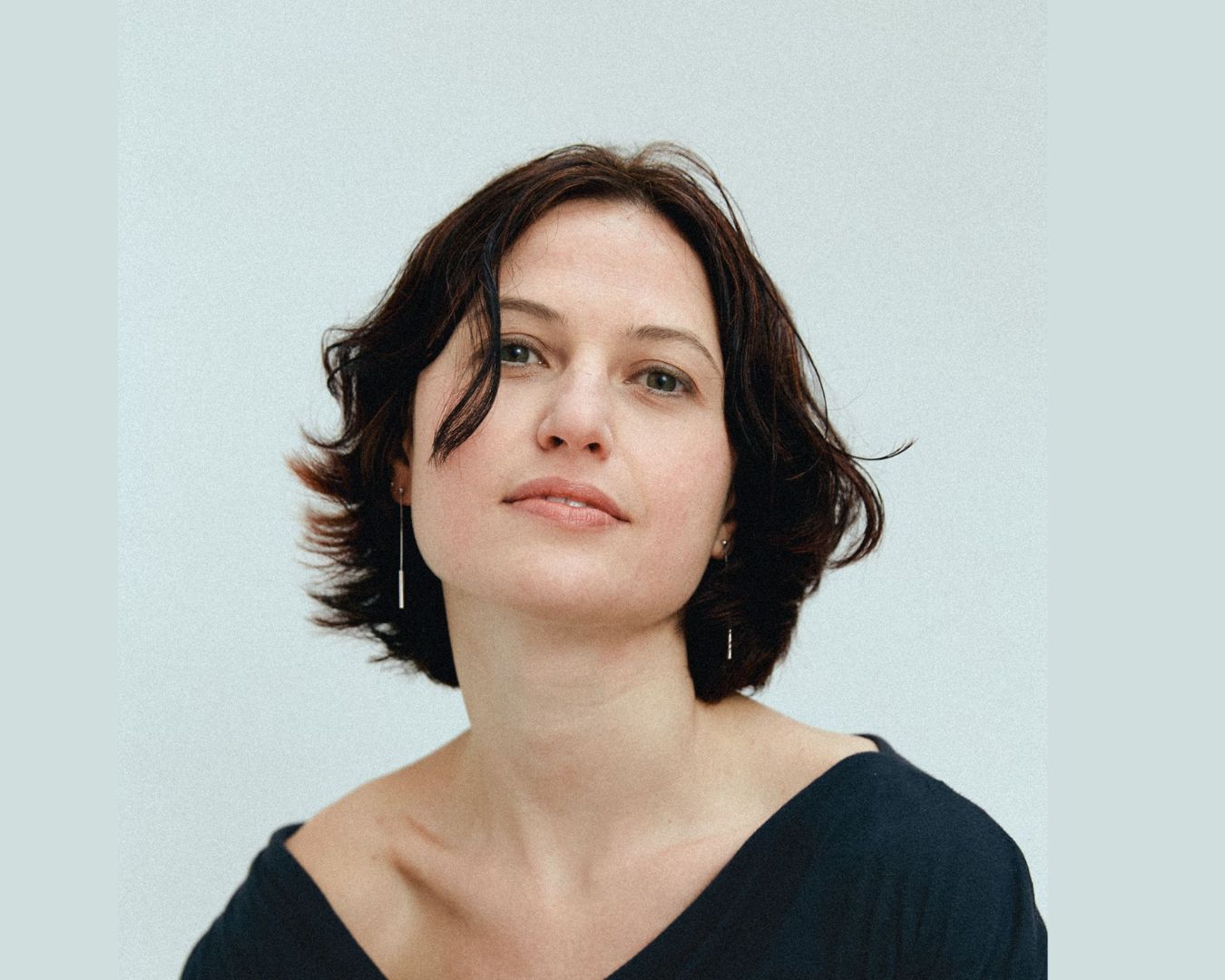
Alina Pronina
Piano
Alina Pronina was born in Kyiv and studied piano at the city’s conservatory, followed by further studies at the Hanns Eisler School of Music in Berlin. She also attended master classes with Dina Joffe, Bernd Goetzke, and Lasar Berman, among others. During her studies, she won several international competitions, including those in Ettlingen, Marktoberdorf, St. Petersburg, and Vorzel, Ukraine. Performances as a soloist and chamber musician have taken her to Austria, Italy, Israel, China, Greece, and the United Arab Emirates. She regularly performs with the Staatskapelle Berlin, the Orchestra of the Deutsche Oper Berlin, the Babelsberg Film Orchestra, and the Essen Philharmonic. Since 2009, she has been a pianist with the Staatsballett Berlin.
April 2026
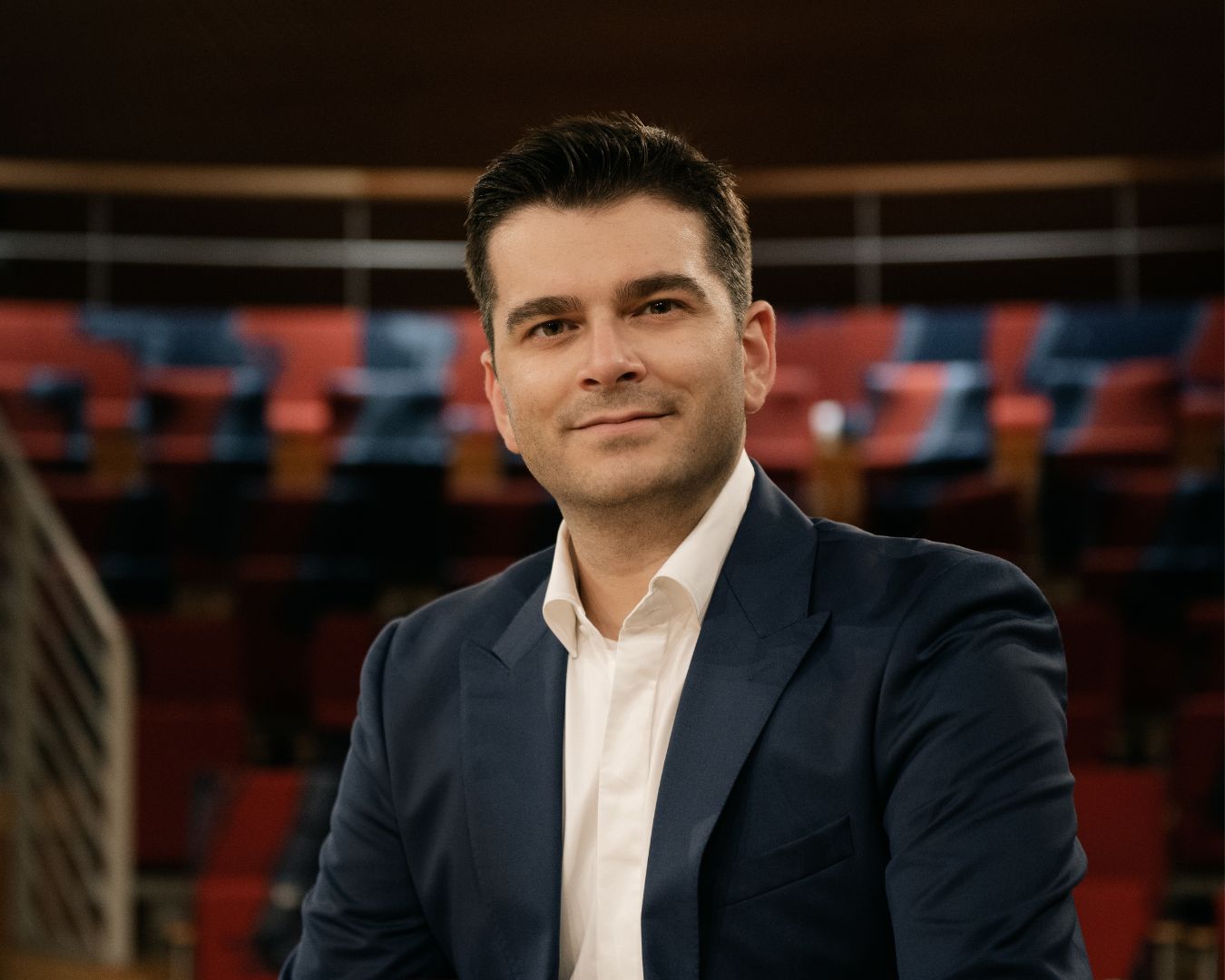
Giuseppe Mentuccia
Piano
Italian conductor and pianist Giuseppe Mentuccia has appeared at renowned venues such as New York’s Metropolitan Opera, the Vienna State Opera, Accademia Nazionale di Santa Cecilia in Rom, the Berlin Philharmonie, and the Staatsoper Unter den Linden in Berlin, where he leads the Children’s Opera Orchestra and served as assistant to Daniel Barenboim from 2018 until the end of his tenure as general music director. He has collaborated with artists such as James Levine, Zubin Mehta, James Conlon, Myung-Whun Chung, and Marco Armiliato, and served as resident conductor and coach for Italian repertoire at the Music Academy of the West, where he directed OperaFest. At the Pierre Boulez Saal, he has appeared several times with the Boulez Ensemble as pianist and conductor.
April 2026