Gareth Lubbe Violin, Viola, Voice
Dizu Plaatjies Uhadi, Umrhubhe, Mbira, Umtshingo, Kudu horn, Nyanga pan pipes, Percussion, Voice
Kathleen Tagg Piano, Curator, Arrangements
Program
The music of tonight’s concert is taken from the following:
Dizu Plaatjies, Traditional and original African melodies
Gareth Lubbe, Miniatures I–IV
Abdullah Ibrahim, African Dawn
Andre Petersen (arr. Tagg), Cape Doctor and Time Watchers
Kathleen Tagg, Berimbau and Second Time Around Part I
Dizu Plaatjies
Xoxa for Voice
Gareth Lubbe
Miniature I for Voice, Viola, and Bowed Piano
Dizu Plaatjies
Ummi for Umrhube
Andre Petersen / Arr. Kathleen Tagg
Time Watchers for Piano, Umrhube, Voice, Violin, and Viola
Traditional (Shona / Zimbabwe)
Nehmensuza for Mbira, Rattles, Piano, and Voice
Dizu Plaatjies
Niyabizwa for Kudu Horn
Abdullah Ibrahim & Andre Petersen / Arr. Kathleen Tagg
African Dawn - Cape Doctor - African Dawn
for Piano, Mtshingo, Voice, and Viola
Traditional (Buganda / Uganda)
Enyana E Kutude for Adungu
Kathleen Tagg
Second Time Part I for Piano and Voice
Dizu Plaatjies
Hayi Kulusizi for Uhadi, Viola, and Piano
Traditional
Sihambele Kuwe for Umrhube
Kathleen Tagg
Berimbau for Piano, Voice, Violin, and Umrhube
Gareth Lubbe / Arr. Gareth Lubbe & Kathleen Tagg
Miniature III
Kathleen Tagg & Gareth Lubbe
Chorale
Dizu Plaatjies / Arr. Plaatjies, Tagg, Lubbe
Sthandwa for Mtshingo, Voice, Violin, and Piano
Without intermission
“We are so grateful to all of you for joining us as we explore identities and emotions through sound. The original material carries memories, feelings, and the love of those far away or no longer with us, and blends it with the joy of being here, making music, and sharing this experience.”
—Kathleen Tagg, Gareth Lubbe, Dizu Plaatjies
Echoes across Time and Space
At the bottom of Africa—a vast continent of 54 countries and 1.6 billion people speaking an estimated 2000 languages—there is South Africa, a rich and complex country with a diverse population and a deep history. Tonight’s program dives into the sound world of three musicians with roots deep in the African soil.
Program Note by Albert Combrink
Echoes across Time and Space
Notes on the Program
Albert Combrink
At the bottom of Africa—a vast continent of 54 countries and 1.6 billion people speaking an estimated 2000 languages—there is South Africa, a rich and complex country with a diverse population and a deep history. Here you will find symphony orchestras, classical concert pianists, and opera singers. But you will also find a treasure trove of traditional and not so traditional music, from jazz to an enormous range of indigenous sounds that become ever more difficult to classify. The country’s music has been pollinated by influences from across the Atlantic and the Equator, but the pollination has also been in reverse. The music of the African continent is alive and thriving, and has infused the world with its rhythms and melodies.
Tonight’s program dives into the sound world of three musicians with roots deep in the African soil. They now have different international bases: Kathleen Tagg in New York, Gareth Lubbe in Germany, and Dizu Plaatjies in Cape Town. But despite their geographical distance—or maybe because of it—exploration and openness are at the heart of this project. These artists, who hail from wildly different backgrounds and traditions, share a profound curiosity and immersion in deep listening and cross-genre collaboration.
***
In any kind of music, overtones are universal. An overtone is a resonant frequency (or pitch) higher than the fundamental frequency of a sound or note. A vibration made audible, it contributes to the complete experience of the note. It can be manipulated, amplified, or muted. In most cases, this is a byproduct of playing or singing any note: something to add to the timbre or color of the sound. This program seeks to use these overtones as a starting point for reflection and communication—a subtle, suggested, or implied meaning in the sounds presented.
The concert blends ancient Southern African musical traditions and instruments, elements of improvisation, and contemporary Western explorations of sound and compositional techniques. Among these is spectralism, which focuses on the internal structure of sound—its acoustic spectrum or timbre—rather than traditional notes, harmony, or rhythm. What you will hear tonight combines the different skills of these musicians with a wide range of music. Kathleen Tagg explores timbre and extended playing techniques as a matter of course in her projects and also studied and plays African music instruments. Dizu Plaatjies is an internationally renowned performer, educator, and culture bearer with expertise on an enormous range of African instruments and styles. Gareth Lubbe is a classically trained violinist and violist whose life and career took a profound turn when he began his own discoveries in the world of overtones and his own voice.
The three musicians have set out on a long journey of discovery. Some of their pieces are fully composed works, while others create space for structured improvisation. The artists resist the notion of “crossover” or “jazz.” The aim is not to play African music on Western instruments or vice versa. It is rather a sincere process of weaving together these seemingly disparate elements into a seamless tapestry, juxtaposing indigenous instruments and techniques with contemporary instruments, compositions, and new collaboratively created work, illuminating the profound connections between these diverse musical worlds.
Each musician is given the opportunity to present their art, their instruments, and their compositions. But this is merely the starting point to create an organic musical experience that highlights each person’s talents and their primary mode of expression, while also pushing one another into unfamiliar and sometimes uncomfortable territory, all with a spirit of deep curiosity. Each piece on the program has a different origin: it may come from a set piece for uhadi or mbira, or from an improvisation on viola that became coded into a coherent form, or from an original work for piano that has since been expanded and modified. Works from the musicians’ other collaborations, completely reworked for this purpose, round out the source material.
Plaatjies and Tagg spent significant time together in Cape Town choosing instruments that could be complementary, as well as documenting possible songs and pieces for inclusion in the project. Likewise, Lubbe and Tagg met in Berlin for intensive workshops, sharing ideas and exploring musical concepts that could be interesting to tease out. The process of deep thinking and creating forms and structures took months, shaping these ideas into a cohesive program. The final forms are tightly structured, while still maintaining a significant amount of flexibility for improvisation within the structured forms. This process requires a number of practical things. One is Plaatjies’s ability to tune his bow instruments through the use of tuning pegs (a modification that allows him to play with musicians from other genres) as well as a willingness to having his original and traditional repertoire be completely reconfigured into new contexts. Equally important for all three players are an openness to the limitless possibilities of material to use, as well as to the possibilities for the organization and rearrangement of all the material by Lubbe and Tagg. Last but not least, there has to be a deep trust among the three performers to allow the reframing, improvisation on, and opening up of their music to include the contributions of the others.
***
Gareth Lubbe discovered overtone singing while studying viola in Germany, at a time when he also encountered jazz musicians whose artistic aims—though approached from entirely different perspectives—echoed questions about sound, structure, and expression similar to his own. What began as curiosity soon revealed itself as something more fundamental: a way of listening. Through this practice, the voice is no longer understood as a single line, but as a spectrum—one sound containing many. Lubbe often describes the phenomenon through the image of light passing through a prism: the voice as the source, the body as the prism, and the resulting overtones as colors that unfold and become perceptible to the listener. Over time, overtone singing, rather than becoming an addition to his musical identity, became a lens through which all music is perceived. It informs both performance and pedagogy, encouraging a heightened sensitivity to the inner life of sound—the harmonics that exist within every tone, regardless of style or tradition.
An artist who has been inspirational to generations of musicians, Dizu Plaatjies has a deep love for the sounds of his homeland and a willingness to explore sounds and music in an enormous range of contexts—from shows with his renowned performance group Amampondo to a worldwide television audience at Wembley Stadium or a simple family gathering. His personal and musical journey has taken him from the townships to the rural spaces of Pondoland and back to the big city of Cape Town, absorbing and collecting performance traditions and instruments along the way. As the child of two traditional healers, he grew up in both rural and urban settings, where he learnt from many sources and people, including one of his aunts, the celebrated musician Latozi “Madosini” Mpahleni. This element is especially important as the traditional South African mouth bows are mostly women’s instruments. Through this background, Plaatjies has become a bearer of these traditions—through performance, teaching, and even the making of the instruments—but he is also open to modifying them to collaborate with artists from other cultures and genres in countries across the globe.
Though predominantly known as a pianist and composer, Tagg has made it a trademark of her career to collaborate with other musicians, artists, genres, and cultures, supplemented by her role as producer of projects and albums that live at the intersection of classical, jazz, and what is known as world music. She first met Lubbe as a young musician in South Africa’s classical music circles. Working as a street performer in Cape Town in her early teens, she encountered Plaatjies and his group and later crossed paths with him again at the University of Cape Town. Her studies there had an immense impact on her as a young musician in a newly democratic country, encountering musicians and music from all over South Africa and the continent. That time set her on a path of exploration that has only continued to intensify in the past 25 years, working with a wide range of musicians in New York, in tandem with her continued collaborations with South African artists.
Albert Combrink is a South African pianist, vocal coach, and educator. He performs in a variety of genres from classical music to tango and has also built a reputation as a writer, with six published music textbooks and many program notes and lectures for venues around the world, including Wigmore Hall and Carnegie Hall.
The Artists
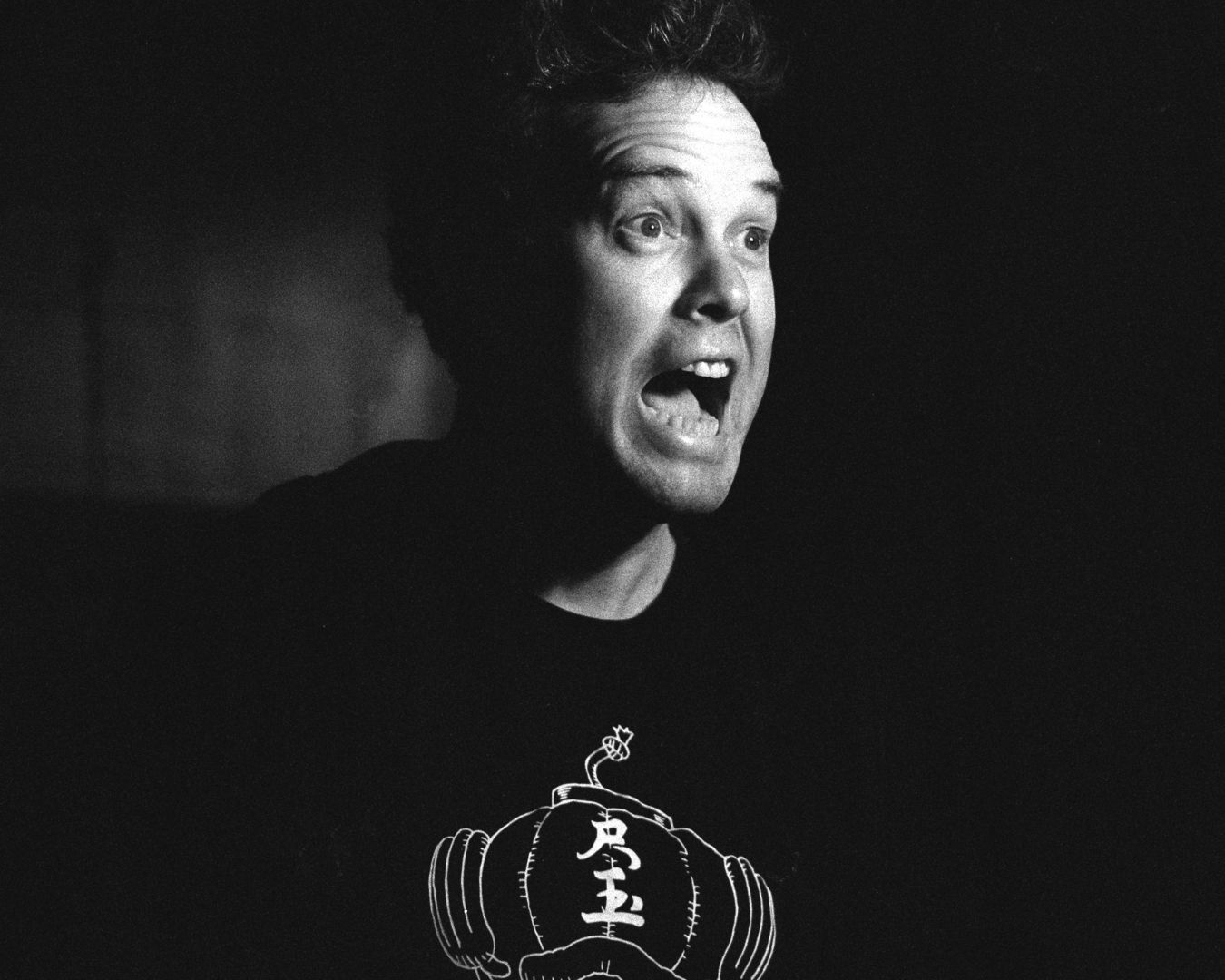
Gareth Lubbe
Violin, Viola, Voice
South African violist, violinist, and overtone singer Gareth Lubbe performs as a soloist and chamber musician in a wide variety of musical contexts. For seven years, he served as principal violist of Leipzig’s Gewandhaus Orchestra under Riccardo Chailly before taking up a professorship at the Folkwang University of the Arts in Essen in 2013. Performances with artists such as Boris Brovtsyn, Janine Jansen, Mischa Maisky, Pinchas Zukerman, and Dame Evelyn Glennie have taken him to venues including Carnegie Hall, Wigmore Hall, and Suntory Hall in Tokyo, among many others. He is also a regular member of Spectrum Concerts Berlin at the Berlin Philharmonie. As a soloist, he has appeared with Berlin’s Deutsches Symphonie-Orchester and the Munich Chamber Orchestra. He performs as an overtone singer and improvisor in projects with jazz pianist Simon Nabatov and composer and trombonist Nils Wogram.
May 2026
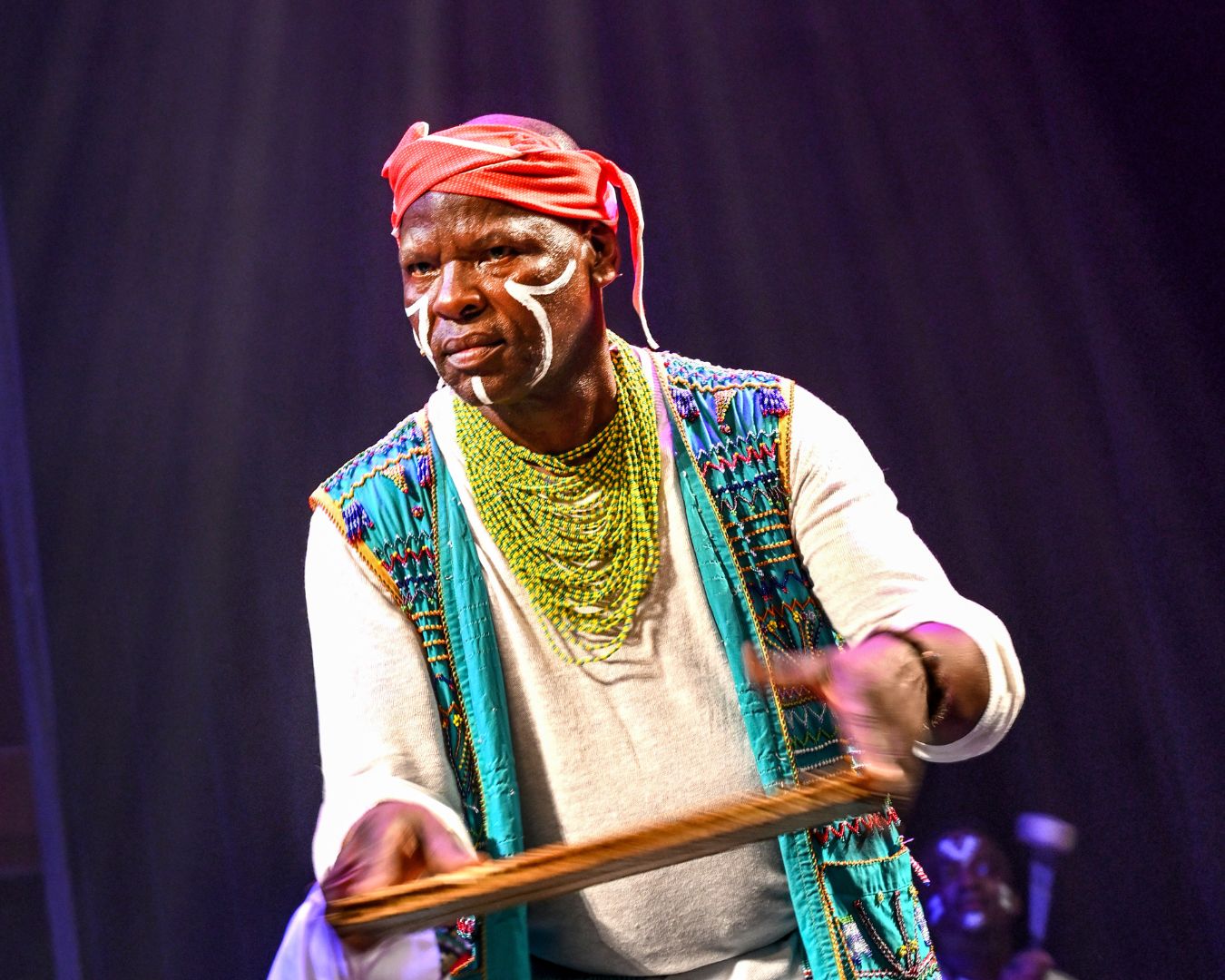
Dizu Plaatjies
Traditional Instruments, Voice
Dizu Plaatjies is one of South Africa’s leading musicians and cultural scholars of the past decades and has had a profound influence on generations of artists in his home country. Raised as the son of a traditional Xhosa healer in the Langa township in Cape Town, he founded the percussion ensemble Amampondo in 1979. The group recorded seven albums, toured internationally, and appeared at Nelson Mandela’s 70th birthday celebration at London’s Wembley Stadium. In 2005, Dizu Plaatjies released his first solo album, Iboyambo. Since then, he has given concerts in Canada, France, Germany, Algeria, Morocco, Zanzibar, and Borneo, as well as at Carnegie Hall. He has taught in the U.S., Australia, Norway, and Finland, among other countries, and is professor emeritus of the University of Cape Town.
May 2026
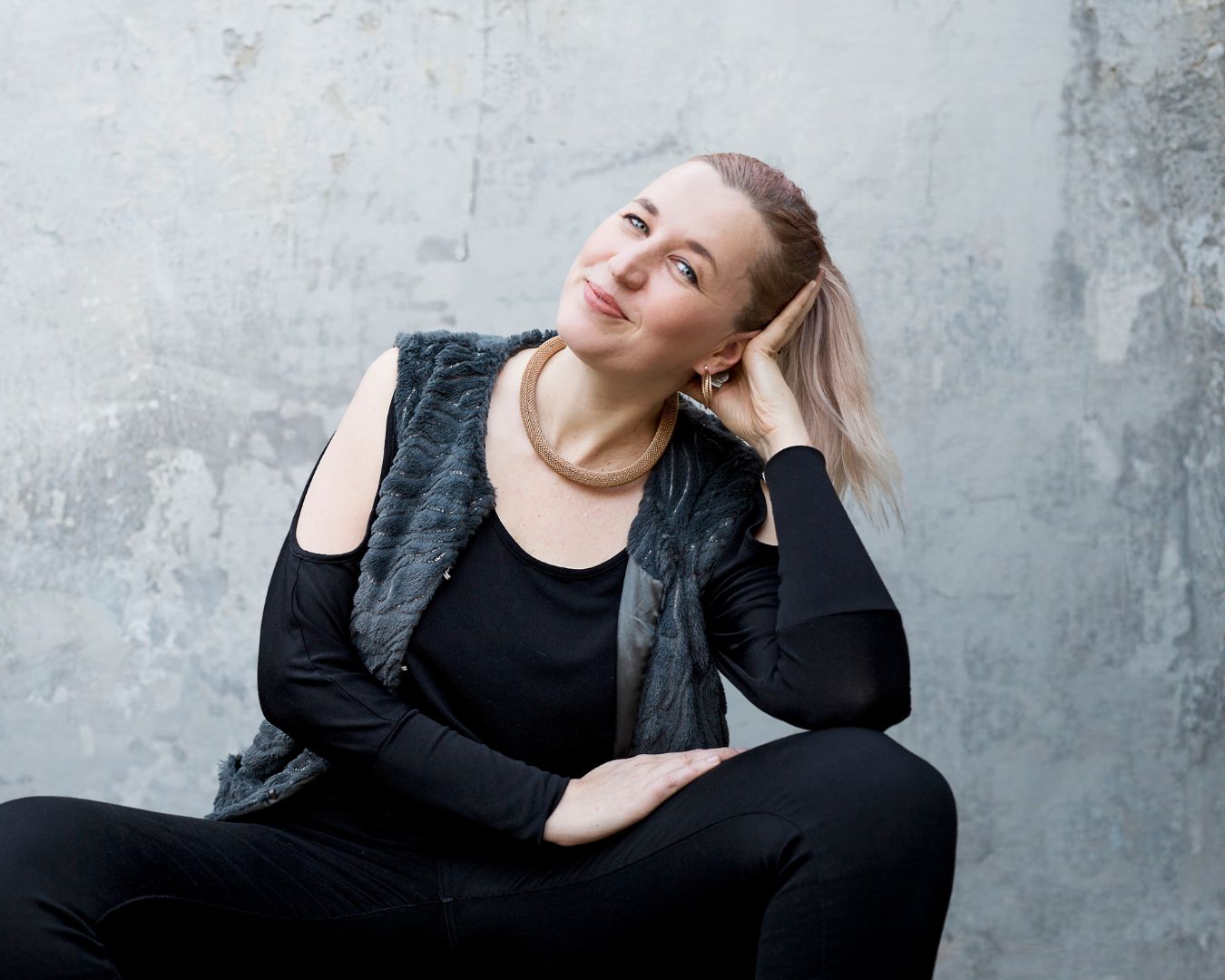
Kathleen Tagg
Piano, Curator, Arrangements
Born in South Africa and based in New York, composer, pianist, and producer Kathleen Tagg moves seamlessly between musical genres and styles. She studied at the University of Cape Town, Mannes School of Music, and Manhattan School of Music, where she received the Helen Cohn Award as an outstanding doctoral graduate. She has performed at prestigious venues such as Carnegie Hall, Lincoln Center, and 92NY in New York, the Théâtre du Châtelet in Paris, or the Schleswig Holstein Music Festival, but is equally at home in non-conventional spaces and theatrical settings around the world. Recent compositions include the song cycle This Be Her Verse on words by Lila Palmer for soprano Golda Schultz and pianist Jonathan Ware, which was heard at the Pierre Boulez Saal in 2022, and Please Dream: In His Words for the Stellenbosch International Chamber Music Festival. Her works also have been performed at the festivals of Lucerne and Aix-en-Provence, the Cologne Philharmonie, and the Melbourne Opera House, among other venues. She has collaborated with clarinetist David Krakauer for many years as co-artistic director of their joint label Table Pounding Music. At the Pierre Boulez Saal, the duo performed the immersive multimedia concert Breath & Hammer in 2019 and again in 2022. Kathleen Tagg was a fellow of the Dramatist Guild of America, an Opera Composition Fellow at the American Lyric Theater, and teaches piano at the Columbia University New York.
May 2026