Kunal Lahiry Piano and Concept
Rubén Nsue Movement
Nadia Marcus Poetry
Emilio Cordero Checa Lighting and Sound Design
Troels Primdahl Stage Direction
A co-production with
trauma.art
Program
Music by
Ludwig van Beethoven
Claude Debussy
Alexander Scriabin
Maurice Ravel
György Ligeti
Luciano Berio
George Crumb
Helmut Lachenmann
Philip Glass
Radiohead
Alexander Scriabin (1872–1915)
from the Sonata No. 4 in F-sharp major Op. 40 (1903)
I. Andante
György Ligeti (1923–2006)
L’Escalier du diable
from Études (1985–2001)
George Crumb (1929–2022)
Primeval Sounds (Genesis I)
from Makrokosmos I (1972)
Luciano Berio (1925–2003)
Wasserklavier (1965)
Philip Glass (*1937)
Etude No. 9 (1994)
Maurice Ravel (1875–1937)
Une barque sur l’océan
from Miroirs (1905)
Claude Debussy (1862–1918)
L’Isle joyeuse (1903–4)
Helmut Lachenmann (*1935)
Guero (Study for Piano) (1970/88)
Radiohead
Karma Police (1997)
Arrangement for Piano by Christopher O’Riley
Ludwig van Beethoven (1770–1827)
from the Sonata in A-flat major Op. 110 (1821–2)
III. Adagio ma non troppo – Fuga. Allegro, ma non troppo
There will be no intermission.
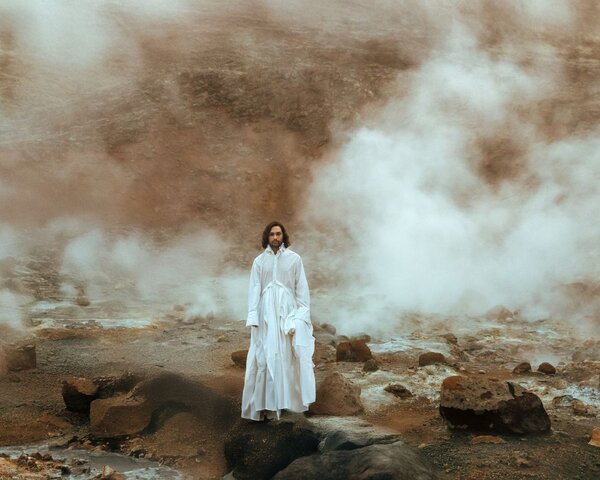
© Yael BC
Finding a New Path
Anyone familiar with Kunal Lahiry will know that he is a musician who relishes the challenge of creating programs that, in his own words, “speak to contemporary society.” Tonight is no exception: indeed, it comes from several years of deep thinking, planning, and experimentation.
Program Note by Katy Hamilton
Finding a New Path
Kunal Lahiry’s Journey to Softness
Katy Hamilton
Anyone familiar with Kunal Lahiry will know that he is a musician who relishes the challenge of creating programs that, in his own words, “speak to contemporary society.” Tonight is no exception: indeed, it comes from several years of deep thinking, planning, and experimentation. In the wake of the recent violent events in the Middle East, Lahiry found himself grappling with questions of “where I fit into this picture, politically, as a human, artistically. I thought about how our inability to take a step back—to understand what we’ve done, acknowledge that we’ve made a mistake and take the necessary action to make right of the situation—is something that rarely ever happens, especially in a political and patriarchal landscape.” And, he adds, “although I had a very limited understanding of the politics, one thing that I was very confident about was that if these (mostly) men in power were able to relinquish themselves of that greed for possession, and the need to be right—if only we could reach a state of softness, rather than pushing back and doubling down—then we wouldn’t be where we are today.” This led him to imagine a creative project that could also be a call to action: a way of taking his audience on that journey through music, sound design, dance, and the spoken word. This evening is a collaboration with TRAUMA, a multi-disciplinary arts organization that, as its founders say, acts as a “refuge and amplifier for practices that resist containment.”
Thus Journey to Softness is not simply a solo piano recital: it is a multi-disciplinary program, featuring dancer Rubén Nsue, poet Nadia Marcus, and sound designer Emilio Cordero Checa alongside Lahiry at the keyboard. The layout of the Pierre Boulez Saal is also crucial, erasing the traditional separation of audience and artists to bring everyone into the performance. To say there are a lot of moving parts is something of an understatement. “It’s been a journey to get to this journey,” the pianist laughs.
***
The voyage begins with the music of Alexander Scriabin. The Fourth Sonata, written in 1903, was a breakthrough work for the 31-year-old composer, a step into a new musical universe that sparkles and dances across two substantial movements. Lahiry plays the first of these, with its glittering harmonies inspired by Wagner’s Tristan und Isolde—Scriabin even wrote a poem to accompany the piece, a paean to a distant star. “In a light mist, a transparent vapor, lost afar yet distinct, a star gently twinkles,” the verse begins. “Oh, to draw near to you, distant star! To bathe myself in your trembling rays, sweet light!…” As the movement reaches its close, we are left with a promise of release and ecstasy to come in its successor. But tonight, its gently teasing, open-ended final bars lead us directly into the piece Lahiry describes as “the first big pillar of the program.” This is György Ligeti’s ferocious L’Escalier du diable from his second book of Études, completed in 1994. It is a monster of a piece, an extraordinary ever-winding staircase unfolding in front of us in a series of increasingly giddy fractals, like the sonic equivalent of an M.C. Escher drawing.
The demonic staircase has a very specific association for Lahiry. “It’s a patriarchal ascent to nowhere. We feel this pressure to climb without ever actually assessing where we’re going or how we’re getting there, and at what cost. And in doing so we’re refusing the complexities within us that make things a lot less black and white, but much more human.” For more than five nightmarish minutes we are forced further and further up the staircase. When the music finally stops (and it most definitely just stops, rather than resolving) we are left reeling, in musical shellshock. The guttural growls and rumbles of George Crumb’s Primeval Sounds emerge from the fading cluster that closes the Ligeti, the piano’s strings strummed with bare fingers and sent fizzing with the impact of metal chains. It is a darkly mysterious sound world. And from its ominous depths, dancer Rubén Nsue emerges.
With Luciano Berio’s Wasserklavier, an exquisite miniature composed in 1965, the mood turns melancholy and nostalgic. This is music saturated with the memories of Schubert and Brahms, a product of Berio’s attempts to discover ways of musical “remembering” that led ultimately to his famous Sinfonia four years later. The piece also hints, as the title suggests, at the gentle fluidity of lapping water—an element that comes to dominate the program as the evening progresses. The tenderness of Berio’s writing gives was to Philip Glass’s Étude No. 9, re-establishing momentum in its pulsing chords and urgent octaves. If Ligeti’s L’Escalier pushes us ever upwards, Glass’s music provides motion outwards, sending us off to somewhere new. And here the third protagonist enters, poet Nadia Marcus.
***
Freedom from the ever-circling staircase is one thing; its ultimate destruction is quite another. As Lahiry points out, the only thing that can erode such a ferocious structure is that most powerful of natural substances: water. And water, too, has a queerness about it: a refusal to conform to rigidity or uniformity. Here, the imagination may float free across the seas. Ravel’s Une Barque sur l’océan is all swirling water, from gently lapping waves to great swells and sprays as the sunlight paints rainbows across the ocean. This is followed by Debussy’s sparklingly seductive L’Isle joyeuse. “Here you will find masks from the Comédie italienne,” the composer wrote, “young women dancing and singing, and everything coming to an end beneath the rays of the setting sun.” But when pressed on the location of this magical place, he would say only that the title and scenario was “pure imagination. Though I must tell you that I don’t have enough fingers to play it.” Ironically, Ligeti had been planning to end his second book of Études with something in precisely the manner of L’Isle Joyeuse. But on settling in a quiet property on the Californian coast to complete his project, he found himself trapped in ferocious winter weather. Mudslides destroyed hundreds of houses, and it was impossible to go outside safely. “The island paradise turned into this L’Escalier du diable etude,” he explained, “a completely black piece.”
So where do we land as L’Isle joyeuse reaches its rapturous conclusion? Although its joyful vision is deeply appealing, it is, as Debussy says himself, no more than pure imagination. For true contentment, beyond a moment of unbridled hedonism, something else is required. The comedown from this sybaritic escape is realized in the crunch and reverberation of Helmut Lachenmann’s Guero, a remarkable miniature in which the inside of the piano is played in order to conjure the sound of the percussive scraped instrument that gives the piece its name.
Memories of pleasure, however illusory, are hard to shake. Radiohead’s Karma Police (arranged by American pianist Christopher O’Riley) reminds us of the sweetness we thought we had found. “But it’s too sweet,” says Lahiry, “it’s a false positive. We can’t live in that memory, which is just a kind of nostalgic sentimentality.” The song floats and sighs, conjuring the community that seems so perfect—in theory, anyway, the final lyrics hinting at a dream we have not quite woken from: “for a minute there I almost lost myself.”
Only in the death of the ego, and the liberation of the self, can a new way forward truly be found: the chance for a full chorus of voices, and space for the grey areas (in all their many shades) between the suffocating binaries of black and white. Lahiry leads us to the Adagio and Fugue of Beethoven’s penultimate Piano Sonata in A-flat major Op. 110. The movement begins with an intimation of recent catastrophe, but this is gradually overturned: the gracefully dignified aria hints now and then at happier times to come, before the fugue unfurls to move us firmly into a place of joy. And the return of the plaintive aria only serves to prompt more intricate, and more joyful, fugal writing. The eternal staircase has been overturned at last and we arrive in a place of many voices: “the multiplicity that makes us human.”
What, then, do Lahiry and his fellow artists would like their audience to take from Journey to Softness? “I hope” the pianist says, “that everyone can see themselves in one of the three of us—myself, Rubén, and Nadia—and pick different things to relate to. Maybe to reflect on where they’ve come from to get to this place—how that’s a feat in itself in today’s world—and how much further they can still go. And I hope that people are thinking to themselves, ‘I never thought that classical music could sound—or look—like that.’”
Katy Hamilton is a writer and presenter on music, specializing in 19th-century German repertoire. She has published on the music of Brahms and on 20th-century British concert life and appears as a speaker at concerts and festivals in the UK, in Europe, and on BBC Radio.
The Artists
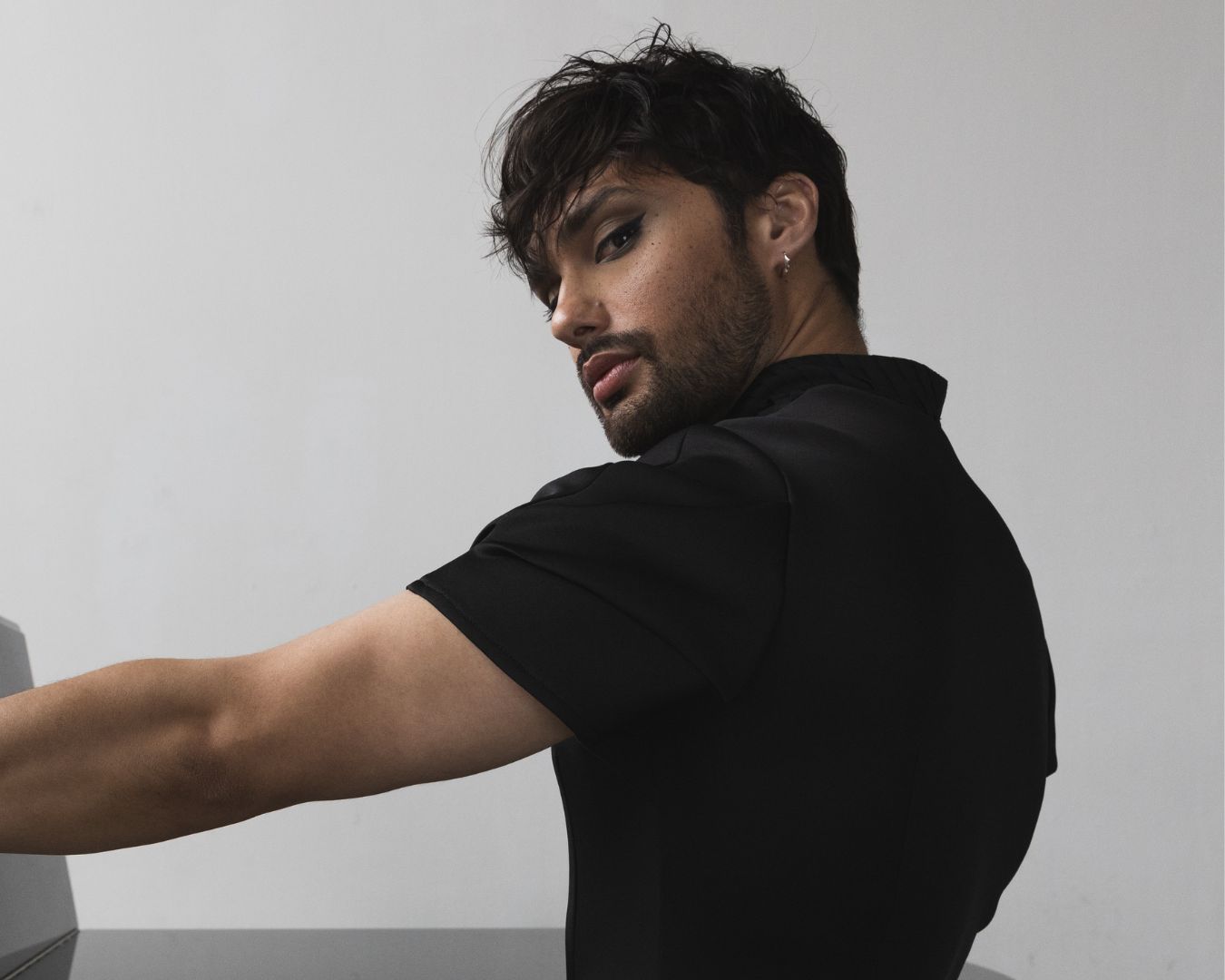
Kunal Lahiry
Piano
Kunal Lahiry is a former BBC New Generation Artist known for reimagining the boundaries of the classical recital. His practice merges traditional repertoire with contemporary commissions and interdisciplinary collaborations, frequently utilizing music to explore current social themes. Recent highlights include performances at Wigmore Hall, Elbphilharmonie, Carnegie Hall, and the Festival d’Aix-en-Provence. He is currently developing transWinterreise*, reimagining Franz Schubert’s song cycle as a contemporary narrative for queer identity. A graduate of the Hanns Eisler School of Music in Berlin, he has appeared at the Pierre Boulez Saal several times as part of the Schubert Week and was last heard here in May 2025 in recital with mezzo-soprano Fleur Barron.
April 2026
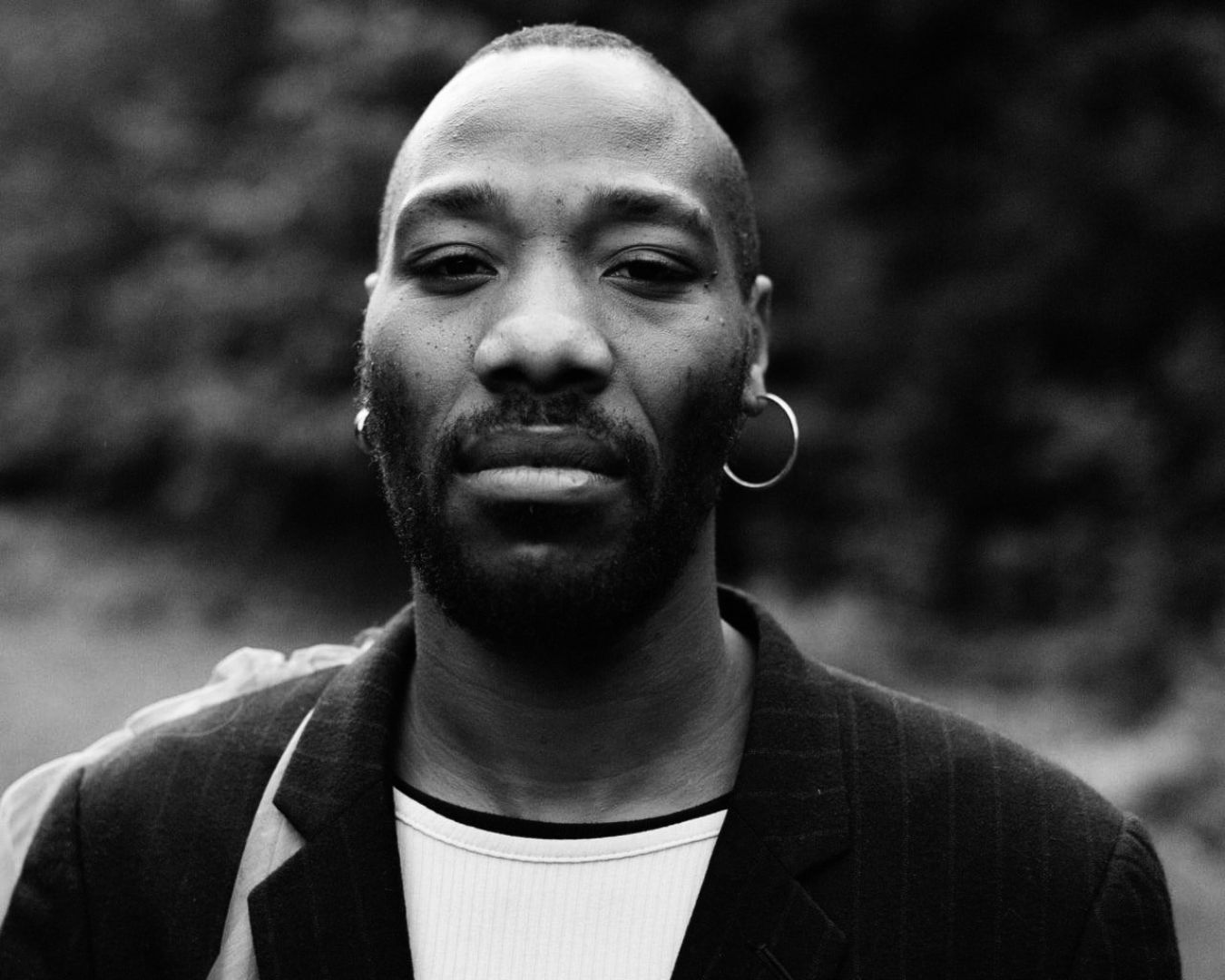
Rubén Nsue
Movement
Rubén Nsue is a Madrid-born, Berlin-based performer and choreographer whose highly kinetic language bridges rigorous contemporary technique with powerful narrative expression. Since 2016, Nsue has developed his own movement research practice, Groove Decomposition, which investigates the relationship between embodied impulse, rhythm, and cultural memory. His work emphasizes somatic intelligence and embodied authorship, accessing the source of movement before it becomes socially conditioned. A founding member of KDV Performance Group and founder of Lokomamia, he has collaborated extensively across Europe with institutions including Dresden’s Semperoper and Grupo Oito Dance Company.
April 2026

Nadia Marcus
Poetry
Nadia Marcus is a poet, designer, DJ, and co-editor of the Berlin-based publishing house and media imprint TABLOID Press. Her multidisciplinary work navigates the intersections of memory, architecture, and identity through text, visual art, and sound. She has presented poetry readings and performances at venues such as KW Institute for Contemporary Art, Volksbühne am Rosa-Luxemburg-Platz, Haus am Waldsee, and Ny Carlsberg Glyptotek. In recent years, she has also exhibited visual works at institutions like Kunstverein München and Felix Gaudlitz gallery in Vienna. She broadcasts regularly on Refuge Worldwide and is a resident DJ for subglow.
April 2026
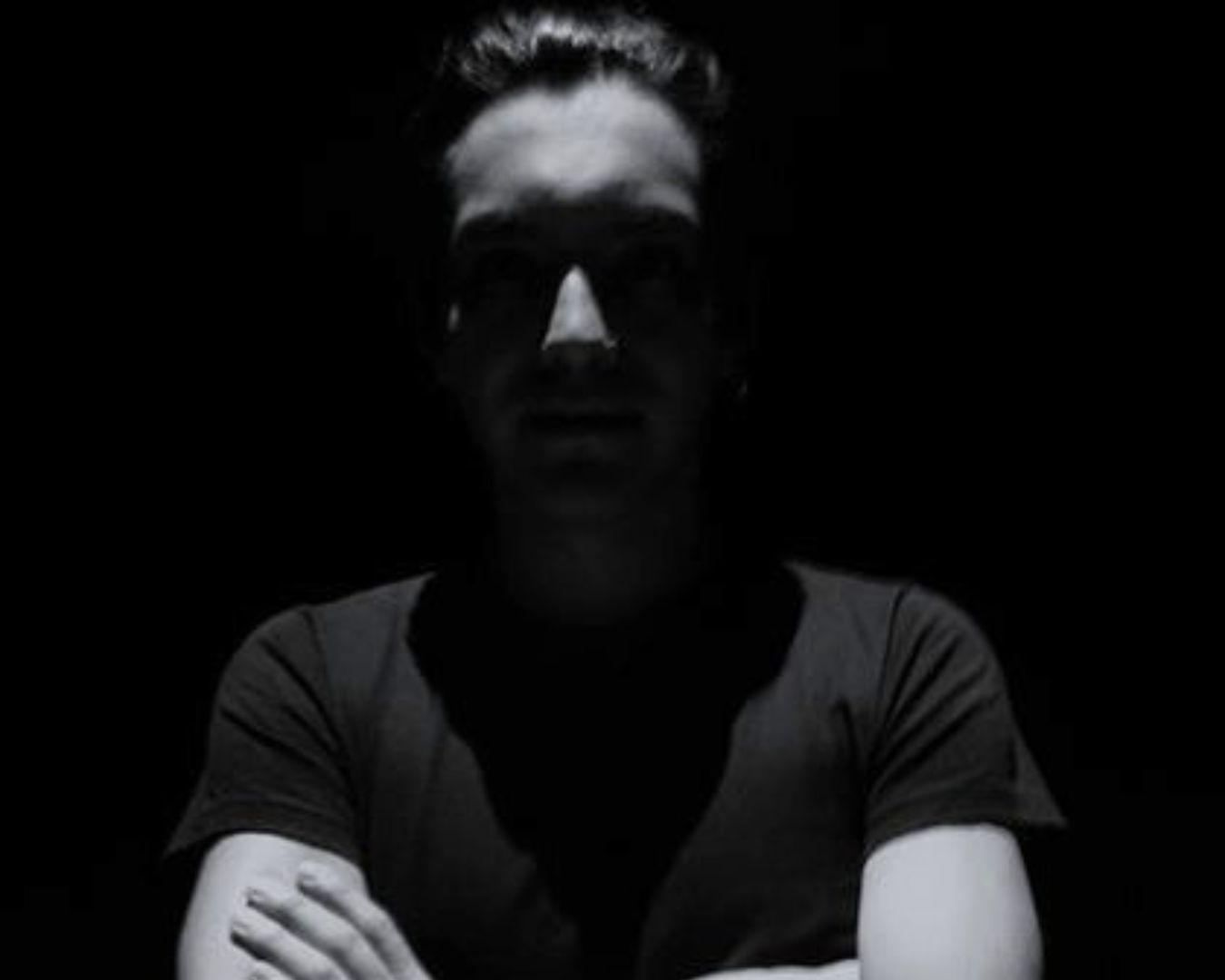
Emilio Checa
Lighting and Sound Design
Emilio Cordero Checa is a Berlin-based lighting designer, sound artist, and creative technical director dedicated to producing light-sound installations and interdisciplinary performing arts pieces. His work focuses on the interaction between live performances and new technologies, using light and sound to conjugate mechanics and human interaction on stage. His creations have been showcased globally across theaters and festivals in Europe and the Americas. He has collaborated with internationally renowned institutions such as the Philharmonie Berlin, Berlin International Film Festival, and Fête des lumières. He is also a co-producer and lighting designer for Culiner Creative Circle, an audiovisual classical music production company.
April 2026
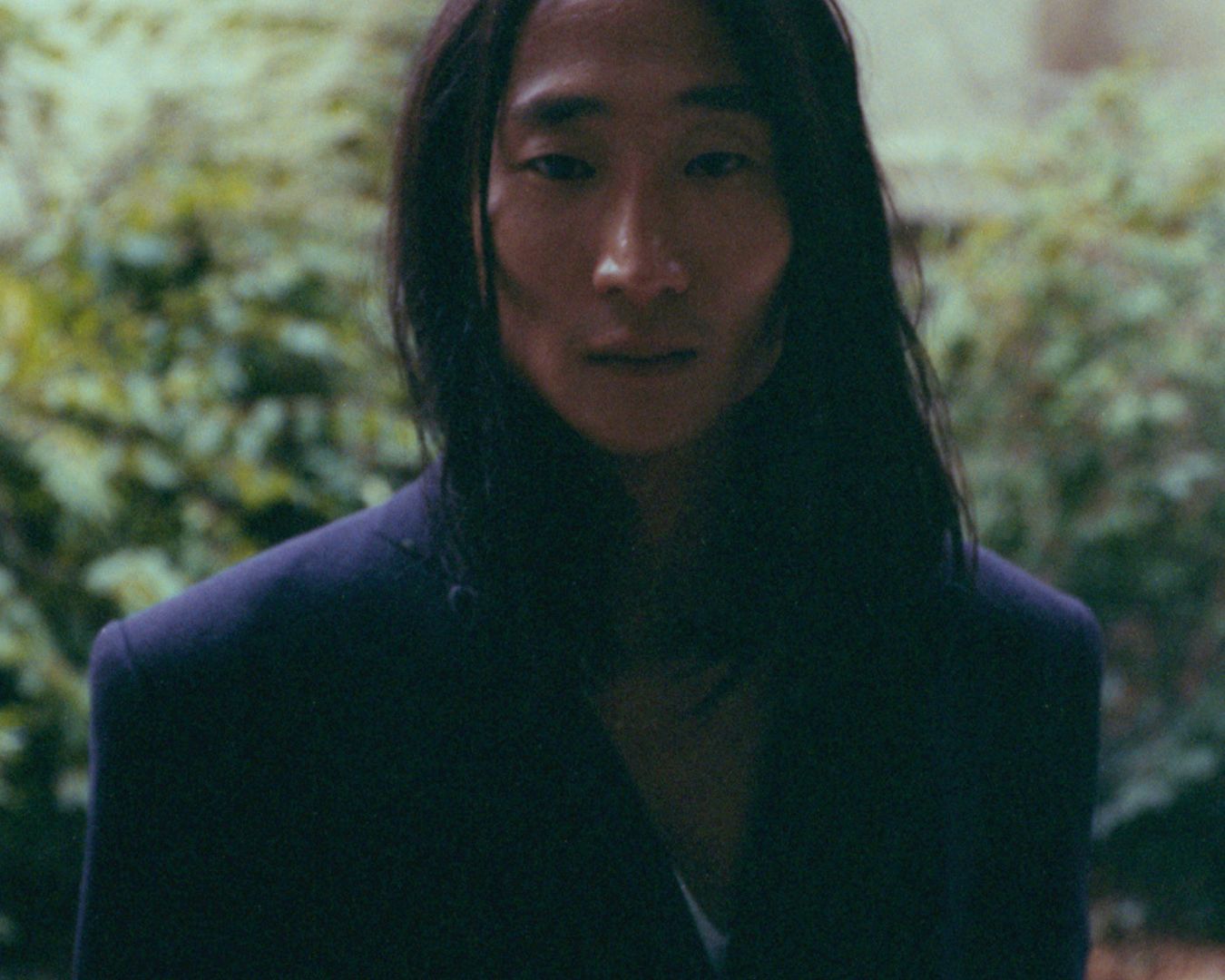
Troels Primdahl
Stage Director
Troels Primdahl is a director, choreographer, and producer whose practice operates in the friction between contemporary stage arts and visual culture. Since 2010, he has navigated a trajectory away from conventional theater, reimagining the stage through interventions in unconventional architectural settings—ranging from decommissioned bunkers and military airbases to renowned institutions and festivals. With a background comprising degrees in Aesthetics and Culture from Aarhus University, alongside training in conceptual art and classical piano, his work is characterized by a distinct visual lucidity combined with a certain existential unrest. His versatile catalogue spans dance, opera, film, and fashion, often driven by a site-specific curiosity. Since 2018, Primdahl has served as the Artistic Director of the multidisciplinary platform TRAUMA.
April 2026