Susan Zarrabi Mezzo-Soprano
Gerold Huber Piano
Ulrike Folkerts Recitation
Program
Songs by
Wolfgang Amadeus Mozart
Ludwig van Beethoven
Carl Loewe
Franz Schubert
Johannes Brahms
Friedrich Hollaender
Kurt Weill
Georg Kreisler
Friedrich Cerha
Texts by
Alfred Döblin
Frank Wedekind
Georg Büchner
Erich Kästner
Readings in German
Alfred Döblin (1878–1957)
from Die beiden Freundinnen und ihr Giftmord (1924)
Friedrich Cerha (1926–2023)
Du bist mein, ich bin dein
from Ein Buch von der Minne (1946)
Carl Loewe (1796–1869)
Du Ring an meinem Finger
from Frauenliebe Op. 60 (1836) (Chamisso)
Ludwig van Beethoven (1770–1827)
Der Kuss Op. 128 (1822) (Weiße)
Franz Schubert (1797–1828)
Die Liebe hat gelogen D 751 (1822–3) (Platen)
Kurt Weill (1900–1950)
Denn wie man sich bettet, so liegt man
from Aufstieg und Fall der Stadt Mahagonny (1930) (Brecht)
Frank Wedekind (1864–1918)
from Lulu (1913)
Wolfgang Amadeus Mozart (1756–1791)
Warnung K. 433 (416c) (1783) (Uz)
Kurt Weill
Ballade von der sexuellen Hörigkeit
from Die Dreigroschenoper (1928) (Brecht/Hauptmann)
Friedrich Hollaender (1896–1976)
Oh Mond
from Lieder eines armen Mädchens (1920–4) (Hollaender)
Georg Büchner (1813–1837)
from Woyzeck (1836–7)
Friedrich Cerha
Ihre Schönheit, das habe ich erkannt (von Fenis)
from Ein Buch von der Minne
Franz Schubert
Der Zwerg D 771 (1822–3) (Collin)
Erich Kästner (1899–1974)
Die Ballade vom Nachahmungstrieb (1931)
Intermission
Heinrich Heine (1797–1856)
Mit deinen blauen Augen (1830)
Johannes Brahms (1833–1897)
Dein blaues Auge Op. 59 No. 8 (1873) (Groth)
Georg Kreisler (1922–2011)
Herberts blaue Augen (1962) (Kreisler)
from the diary of Karl Deutmann from Berlin-Adlershof (1945)
Friedrich Hollaender
Black Market
from the film A Foreign Affair (1948) (Hollaender)
from the outdoor magazine Kompass
Georg Kreisler
Frühlingslied (1956) (Kreisler)
from the local newspaper Blick aktuell , June 1, 2021
Friedrich Hollaender
Die Kleptomanin (1931) (Hollaender)
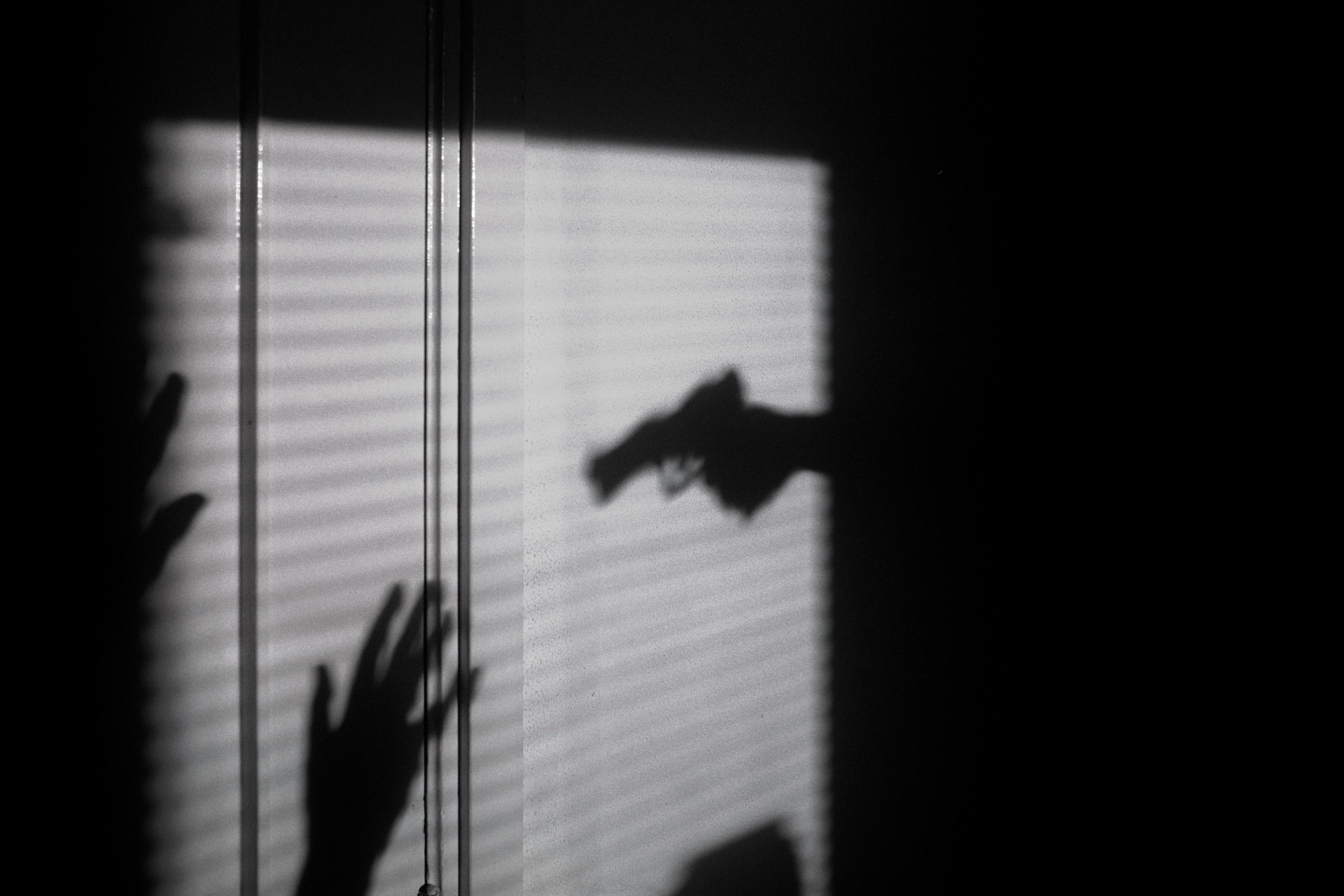
Songs and Crime Scenes
Love is rarely harmless—and not always does it lead to harmonious connection and blissful intimacy. It can also seduce, drive people to dependency, jealousy, and desperation, even end in crime. Conceived as a musical and literary investigation,Tatort: Lied! (Crime Scene: Lied!) examines the darker traces of love through more than 200 years.
Program Note by Anne do Paço
Songs and Crime Scenes
A Musical and Literary Investigation
Anne do Paço
Love is rarely harmless—and not always does it lead to harmonious connection and blissful intimacy. It can also seduce, drive people to dependency, jealousy, and desperation, even end in crime. Tonight’s program Tatort: Lied! (Crime Scene: Lied!) examines the darker traces of love through more than 200 years—a musical and literary investigation conceived by Susan Zarrabi, who is joined by Gerold Huber as well as another prominent protagonist: Ulrike Folkerts, known to German audiences first and foremost as Detective Lena Odenthal in the long-running TV crime drama Tatort. “I only met Ulrike Folkerts a short while ago,” Zarrabi says, “and I was delighted when she happily agreed to be part of this recital. Of course we play with associations of the TV series, but we’re mostly interested in the wider range of the subject of ‘crime scenes.’ We want to explore different aspects and perspectives through music and words—and ask questions: what makes a person commit a crime? Might there be understandable reasons?”
The selection of literary texts delves deep into the abyss of the human soul: in Alfred Döblin’s Die beiden Freundinnen und ihr Giftmord (published in English as Two Women and a Poisoning), an actual criminal case is transformed into an oppressive study of female dependency. Frank Wedekind’s Lulu and Georg Büchner’s Woyzeck feature characters who are destroyed by social strictures and emotional hopelessness. Diary entries, newspaper reports, and magazine articles reveal the extent to which crime is always part of real, daily life. These texts are juxtaposed with more than a dozen songs in vastly different styles.
The program opens with one of the 20th century’s most beautiful musical declarations of love, based on a medieval text: “Du bist mein, ich bin dein, / Des sollst du gewiss sein” (You are mine, I am yours, / This you shall be certain of) are the opening lines of a poem that all but embodies the idea of courtly love poetry of the Middle Ages. The Viennese composer Friedrich Cerha, whose work is still not as well known in Germany as it should be, began studying this lyrical genre intensively in the 1940s. The result was his Buch von der Minne (Book of Courtly Love), a large-scale cycle comprising “4 x 11 songs.” Musically, Cerha harkens back to older forms, avoiding “the illustrative manner of tracing the text, as Wolf and Strauss did,” as he put it. This is true of Du bist mein as well as Ihre Schönheit, das hab ich erkannt, a miniature examining the intoxicating and also dangerous effect of beauty.
In Carl Loewe’s Du Ring an meinem Finger from the 1836 cycle Frauenliebe (A Woman’s Love, preceding Schumann’s setting of the same Chamisso poems by four years), the cantabile vocal line strikes a calm, intimate note, supported by a simple piano accompaniment. A ring worn on a finger—an engagement ring—becomes the symbol of a new destiny: devotion to the beloved person and a life recognized as meaningful. “Loewe’s song reflects the atmosphere of a specific situation,” Zarrabi says. “In some of the other works, including the Cerha songs or Brahms’s Dein blaues Auge, we are more focused on making emotional states audible.”
***
Mozart’s Warnung, a “warning” of the appeal of pretty girls based on a light-hearted folk-song text, reflects the moral yet gallant tone of the rococo period in a short strophic song. Less harmless, but intended to be just as humorous, is Beethoven’s arietta Der Kuss, first sketched as early as 1798 but only completed in December 1822: a woman is kissed against her will, she threatens to scream, is overpowered—and only screams later… What seems highly problematic from a modern perspective (and might result in criminal proceedings) remains, in Beethoven’s setting with its “giggling” piano underscoring the punchline of the last verse, nothing more than the depiction of a slightly frivolous amorous adventure in which female resistance is seen as merely coquettish.
A calamitous connection between love and death is the subject of Schubert’s dark ballad Der Zwerg. The poem by Matthäus von Collin tells of a dwarf who loves a married queen. Rejected by her, he takes revenge during a boat ride by strangling her. The queen accepts her lot with a mysterious yearning. When she forgives the dwarf with her last breath, he seems racked with regret and lets himself drift out to the open seas. The action reflects a perverted eroticism of death: even as her body has sunk beneath the waves, the dwarf ’s heart is still filled “with such longing.” Schubert set Collin’s poem shortly after its publication—in 1823, the year that would prove so fateful for the composer, drastically illustrating the conjunction of love and death when he was diagnosed with syphilis.
***
The 20th-century songs and cabaret numbers selected by Susan Zarrabi offer a sharp, even relentless escalation of the criminal theme—in terms of content as well as interpretation: “It’s a real challenge to reconcile the different demands of the various genres,” the mezzo-soprano admits. “At the same time, as an artist I enjoy having a ball with these different styles. And I’m realizing that these diverse approaches can be mutually enriching vocally, when one kind of repertoire informs the other. Exploring boundaries and growing as a result has been one of the great joys of this musical journey—which is what Tatort: Lied! also is.”
In Kurt Weill and Bertolt Brecht’s 1930 opera Aufstieg und Fall der Stadt Mahagonny, “the bourgeois world is presented as already dead at this moment of horror, and demolished in scandal,” as Theodor W. Adorno wrote. Boundless indulgence, inebriation to the point of excess—in Mahagonny, everything is permitted. But what is trumpeted as a new paradise turns out to be hell instead, where the greatest threat to humanity are human beings themselves. Moral values and ideals such as love have lost all meaning in the logic of pure self-interest: that is the sober and profoundly cynical message of the song Denn wie man sich bettet, so liegt man (As You Make Your Bed You Must Lie). Two years earlier, the two authors had already presented an unsparing depiction of human weakness in Die Dreigroschenoper, portraying a world in which bourgeois respectability differs from criminality only in its outer appearance. The Ballade von der sexuellen Hörigkeit (Ballad of Sexual Dependency) describes sexuality as a destructive force, undermining any form of reason, morality, and self-control.
In his songs Weill combines elements of popular styles of the Weimar period—jazz, music hall songs, cabaret—with a simple, block-like harmonic language, snappy rhythms, and catchy melodies. His use of dissonant, even seemingly “wrong” sounds creates the alienation so typical of his style. Weill and Brecht both employ a distancing tone, assuming a role that makes them neither an accomplice of the characters nor their judge, but rather a sharp-witted investigator.
***
The composer, conductor, and songwriter Friedrich Hollaender, one of the leading figures in Berlin’s Weimar-period cabaret scene, also uses this contrast between light, almost sentimental-seeming music and dark, socially critical texts to great effect. The 1921 ballad Oh Mond (O Moon) from the cycle Lieder eines armen Mädchens (Songs of a Poor Girl) is set in the Berlin dialect and tells the story of a young woman who talks to the moon and is drawn into a fantasy of death until she finally commits suicide.
When the Nazis seized power in 1933, Hollaender emigrated to Paris and from there to the United States, where Hollywood gave him a second career as a composer of film scores. For Billy Wilder’s A Foreign Affair, made in 1948 and starring Marlene Dietrich, he wrote the song Black Market, which describes life in the black market–milieu of devastated post-war Berlin: in a world of scarcity, everything has become a commodity—not only things, but also morals, feelings, and convictions.
In Die Kleptomanin (The Kleptomaniac) of 1931, Hollaender employs exaggerated humor to portray a woman’s compulsion towards shoplifting. That crime that is taken a step further in Georg Kreisler’s Herberts blaue Augen (Herbert’s Blue Eyes): an attempted burglary is discovered, ending in death for the criminal who blindly trusted his friend’s “blue eyes.”
The Vienna-born Kreisler—despised, scandalized, boycotted, and at times even banned in his native country—set standards with his mordantly bizarre humor, which often made fun of politics. To this day, his songs have the potential to rattle us. Many of them make the laughter die on one’s lips, such as Frühlingslied, whose title suggests an innocuous pean to spring while its words describe outings to poison pigeons in the park…
Kreisler and Hollaender are the last stops on the musical and literary journey of Tatort: Lied!, which is more than a mere anthology of crime. With music and texts from three centuries, the program also offers a panorama of human emotions. “People’s basic feelings are the same as they were hundreds of years ago,” Susan Zarrabi says. “Whether a song or a movie conveys a moment of joy, jealousy, or fury is ultimately irrelevant. It’s just the form of expression that’s different, and ideally both forms will speak to people and move them.” The most important thing, she adds, is this: “We must learn to listen again—or, rather, to listen better.”
Translation: Alexa Nieschlag
Anne do Paço studied musicology, art history, and German literature in Berlin. After holding positions with the Mainz State Theatre, Deutsche Oper am Rhein, and Vienna State Ballet, she has been a dramaturg at the Hanover State Opera since 2025. She has published essays on the history of music and dance of the 19th to 21st centuries and has written for Deutsche Kammerphilharmonie Bremen, Vienna’s Konzerthaus, and Opéra National de Paris, among others.
The Artists

Susan Zarrabi
Mezzo-Soprano
Munich-born Susan Zarrabi studied with Daniela Sindram at the Hochschule für Musik und Theater in her hometown. She joined the ensemble of Berlin’s Komische Oper in 2022, where she has been heard as Dorabella, Cherubino, Hansel, Varvara in Káťa Kabanová, and Nefertiti in Philip Glass’s Akhnaten, among others. This season her roles include the Page in Salome, Cyrus in Handel’s Belshazzar, and Sonyetka in Shostakovich’s Lady Macbeth of Mtsensk. She has also appeared at the Bavarian State Opera in Munich, Dresden’s Semperoper, Hamburg’s Elbphilharmonie, Philharmonie Berlin, and at the Vienna Festival. She has won particular acclaim in the lied repertoire. A 2022 prize winner of the Wigmore Hall Song Competition, she was a member of the Lied Academy of the Heidelberger Frühling Festival led by Thomas Hampson and has performed at the Gustav Mahler Festival in Steinbach am Attersee, Austria, and (together with Hampson) at the Mahler Forum for Music and Society in Klagenfurt. At the Pierre Boulez Saal, Susan Zarrabi has appeared several times, including as part of the Schubert Week, and in November 2023 joined the Boulez Ensemble for the world premiere of Vladimir Genin’s mono opera Alkestis, conducted by Oksana Lyniv.
March 2026
Gerold Huber
Piano
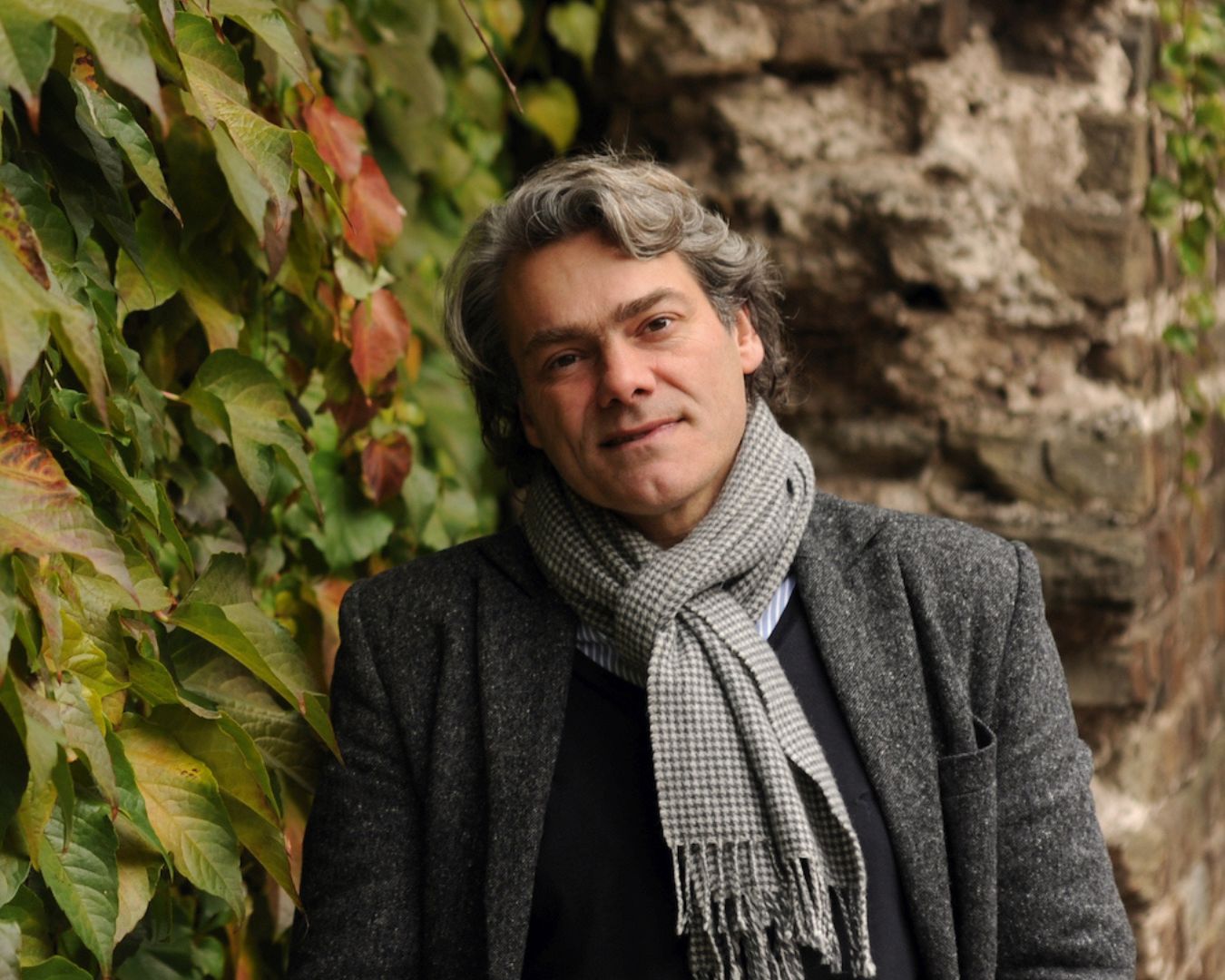
Born in Straubing, Bavaria, Gerold Huber studied piano with Friedemann Berger at the Munich Musikhochschule and attended Dietrich Fischer-Dieskau’s lied class in Berlin. He regularly appears at the Schubertiade Schwarzenberg-Hohenems, the Salzburg Festival, Schleswig-Holstein Musik Festival, Munich Opera Festival, Schwetzingen SWR Festival, and Rheingau Musik Festival. He has also performed at the Cologne Philharmonie, Frankfurt’s Alte Oper, the Konzerthaus and Musikverein in Vienna, Amsterdam’s Concertgebouw, London’s Wigmore Hall, at Lincoln Center and Carnegie Hall in New York, and at the concert halls of Essen, Dortmund, and Baden-Baden. He has enjoyed a close collaboration with baritone Christian Gerhaher since their teenage years. In 1998, the duo won the Prix International Pro Musicis, and their artistic partnership has resulted in many award-winning recordings, including most recently the complete songs of Robert Schumann and an album of songs by Johannes Brahms. Gerold Huber also regularly performs with artists such as Christiane Karg, Julia Kleiter, Christina Landshamer, Julian Prégardien, Günther Groissböck, Georg Zeppenfeld, and Franz-Josef Selig. As a soloist, his focus is on the works of Bach, Beethoven, Brahms, and Schubert, and he has also collaborated with the Artemis Quartett and the Henschel Quartett. He regularly teaches master classes, including at the Pierre Boulez Saal’s Schubert Week, and is a professor of lied accompaniment at the Würzburg and the Munich Musikhochschule.
March 2026

Ulrike Folkerts
Recitation
Actress Ulrike Folkerts was born in Berlin and studied at the Hochschule für Musik, Theater und Medien in Hanover. Since 1988, she has appeared as Police Inspector Lena Odenthal in more than 80 episodes of the TV crime drama Tatort, making her the longest-serving investigator of the series. She has also been seen in a number of other TV productions and films, collaborating with directors such as Ralf Huettner, Hannes Stöhr, and Gregor Schnitzler. On stage, she has appeared at the Mannheim Nationaltheater, Hamburg’s Kammerspiele, Landestheater Niederösterreich, and the Salzburg Festival, where she played the role of Death in Christian Stückl’s production of Hofmannsthal’s Jedermann in 2005–6. She was awarded the Federal Cross of Merit by the German government and has received a Bambi and the Star of the German Police Union, among other honors.
March 2026