Abel Selaocoe Cello and Vocals
Special Guest
Ganavya Doraiswamy Vocals
Programm
Works by
Abel Selaocoe
Michel van der Aa
Giovanni Sollima
Ben Nobuto
Colin Alexander
Johann Sebastian Bach
Abel Selaocoe (b. 1992)
Pula
Tsohle tsohle
Giovanni Sollima (b. 1962)
Lamentatio
Traditional (South Africa)
Nagula
Johann Sebastian Bach (1685–1750)
Sarabande
from the Suite for Solo Cello No. 3 in C major BWV 1009
Ben Nobuto (b. 1996)
Living
Abel Selaocoe
Sefako
Colin Alexander
Alva’s Riff
Abel Selaocoe & Michel van der Aa (b. 1970)
Entanglements
for Cello, Voice, and Live Electronics (2025)
Abel Selaocoe
Tshepo
Ka Bohaleng
There will be no intermission.
The Fluidity of Culture
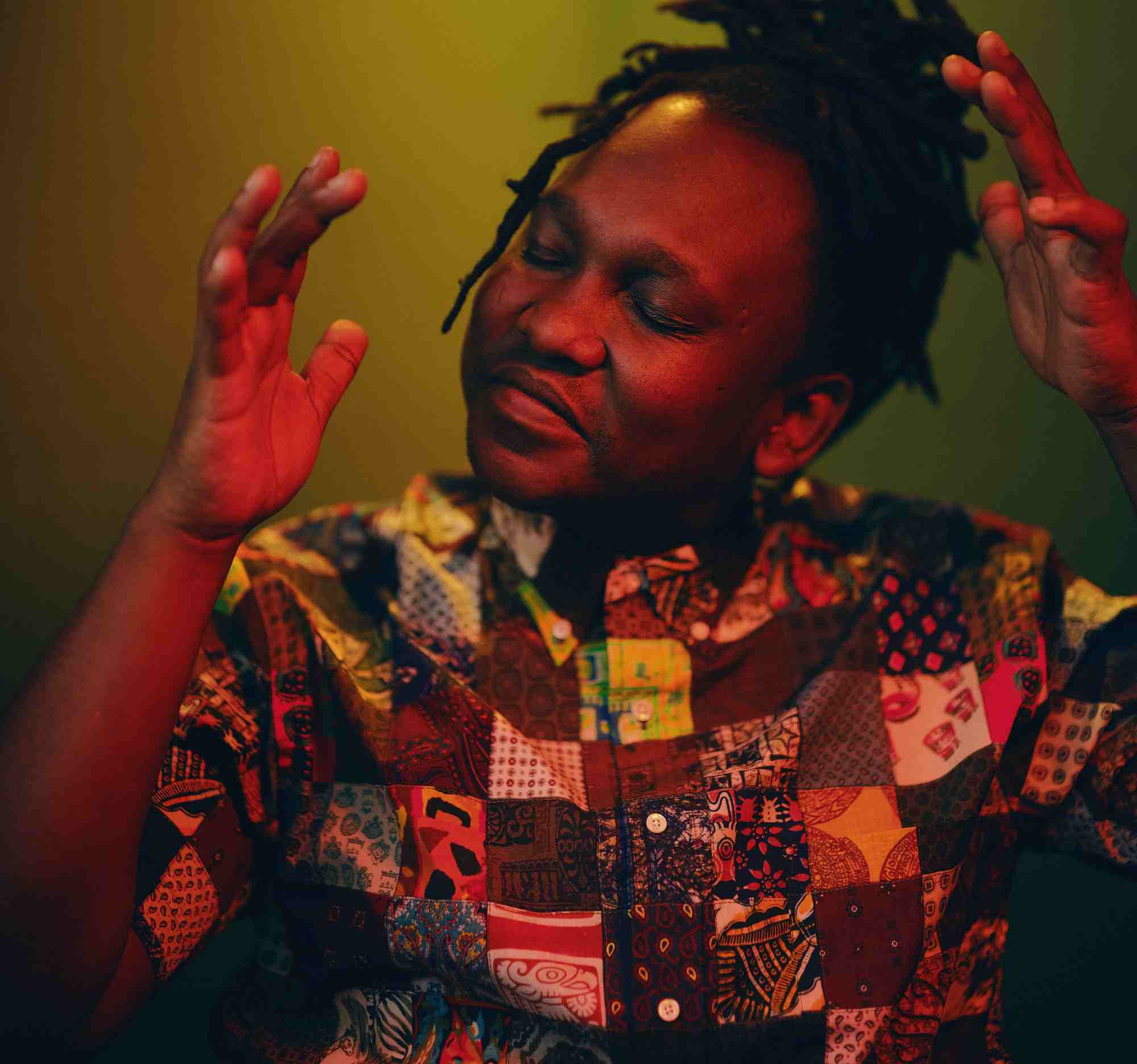
Abel Selaocoe describes the guiding framework for his Pierre Boulez Saal debut program as inspired by the “fluidity of culture”—the conviction that “sonic spaces such as folk/traditional, electronic, and classical can co-exist without distinctions.” This belief in the creative interplay between genres, histories, and modes of expression has become central to Selaocoe’s musical identity.
Notes on the Program by Thomas May
The Fluidity of Culture
Bach, Baka, and Beyond
Thomas May
Abel Selaocoe describes the guiding framework for his Pierre Boulez Saal debut program as inspired by the “fluidity of culture”—the conviction that “somehow, there is a fabric that binds people together,” and that “sonic spaces such as folk/traditional, electronic, and classical can co-exist without distinctions.” This belief in the creative interplay between genres, histories, and modes of expression has become central to Selaocoe’s musical identity. His concerts unfold as journeys through time and place, connecting the ritual power of ancestral music with the improvisational freedom of jazz and the compositional intricacy of the European classical tradition.
Selaocoe first came to international attention for performances that fuse cello and voice into a single storytelling instrument. He describes the cello as “a body that breathes,” evoking both the earthy pulse of traditional percussion and the human cry of lament or joy. In performance, he combines cello, voice, improvisation, and body percussion into a single, physical act of storytelling—amplifying a shared human need for expression, connection, and belonging.
His mission is not to erase cultural difference but to open a sonic space where the languages of African tradition, jazz, and classical music can converse. For Selaocoe, creative discovery—and the kind of experimentation explored in his new collaboration with Michel van der Aa, Entanglements—means, as he puts it, “a process of knowing each other and that moving your body to a groove is for everyone.”
Born in 1992 in Sebokeng, a township south of Johannesburg, in the early years of South Africa’s democracy, Selaocoe grew up in a family of mixed Tswana and Zulu heritage—his father a mechanic, his mother a domestic worker—and recalls a childhood filled with music, from church hymns and community celebrations to the sounds that surrounded daily life. His musical education expanded to include classical training on the cello when his older brother Sammy encouraged him to attend a weekend outreach program that had been established by the legendary South African violinist Michael Masote.
Selaocoe was still in his teens when he moved to Manchester to study at the Royal Northern College of Music. He has since made the city his home base while establishing a uniquely charismatic presence on the international scene, performing everywhere from major concert halls to jazz festivals and clubs. Selaocoe has also founded two genre-defying ensembles—the experimental trio Chesaba and the Bantu Ensemble—cultivating the collaborative network that underpins projects such as his album Hymns of Bantu.
(While performing this program on tour over the last couple of weeks, Abel Selaocoe has constantly modified and updated the selection of works. Therefore, not all pieces heard in tonight’s concert are included in the following program notes.)
***
Abel Selaocoe
Pula
In Setswana and related Sotho-Tswana languages, pula means “rain,” but also “blessing” or “fortune.” In Botswana it is a word of greeting and celebration—and even the name of the national currency. Selaocoe’s Pula opens the evening with that layered resonance: a prayer for renewal and a downpour of energy. “A piece based on gratitude in my culture of Batswana,” is how he describes it. “Pula means rain, a powerful life-giving force of nature, providing sustenance to those who need it in physical form but also signifying a huge spiritual connection to our ancestral world. When we seek advice or a way of conjuring a conversation with those who came before us, we say ‘Pula,’ and you respond ‘Ha ine’—rain, let it rain! We rejoice in togetherness, a sense of belonging in this vast world.”
***
Ben Nobuto
Living
British-Japanese composer Ben Nobuto writes music that reflects the rhythms and textures of contemporary life, shaped by his fascination with digital media and popular idioms. Often combining acoustic instruments with electronic sounds, he explores how human gesture and technology can mirror and transform one another. His new solo cello piece Living was commissioned for Selaocoe and forms part of a series of collaborations with performers who blur boundaries between classical and contemporary practice.
Nobuto takes as his point of departure a verse about joy from the Dhammapada (Path of the Dharma), one of the best-known and most widely read collections of teachings in Theravada Buddhism. The composer explains that Living draws on “fragments of this verse [that] repeat and rotate in different combinations, looping and stuttering playfully, obsessively, like a mantra,” translating the meditative idea of joyful stillness into musical form.
Live in joy, in love,
even among those who hate.
Live in joy, in peace,
even among the troubled.
Look within, be still.
Free from fear and attachment,
know the sweet joy of the way.
—Buddha
***
Abel Selaocoe
Sefako
“A song of turbulence,” Selaocoe explains, “sefako means a hailstorm, a natural part of life but one that requires endurance and understanding. Even further, it requires Ubuntu [the Bantu concept of empathy and interconnectedness], a humanity and innate compassion for others. Hardship and conflict tear through different parts of the world, and as others see this through a lens of technology in abundance it ceases to impress an urgency or reality. Sefako is a sonic exploration of perceiving the world’s vastness in its nearness and distance to you, as in the language of Sesotho, ‘Hanyane hanyane’—little by little!”
***
Colin Alexander
Alva’s Riff
British cellist-composer Colin Alexander wrote this piece to celebrate the birth of Alva, the daughter of his friend Abel Selaocoe—who calls it “a beautiful gift from a dear friend” and adds, “Colin and I share a deep love for harmonics and the cosmic sounds a cello can make.” A softly repeating pizzicato pattern on the cello underpins the lullaby-like vocal melody, unfolding with calm tenderness and the quiet aura of a blessing.
***
Abel Selaocoe/Michel van der Aa
Entanglements
This collaboration between Selaocoe and Dutch composer and filmmaker Michel van der Aa fuses cello, voice, and live electronics into a shifting soundscape where human gesture meets digital processing. The electronic track is fashioned from recordings of Selaocoe’s own playing and singing, expanding the live cello’s natural resonance into a richly layered texture. “Entanglements is written to be a glaring example of the past looking a bit like our present,” Selaocoe notes. “It reflects on apartheid in South Africa with two poems by Lesego Rampolokeng and Ingrid Jonker. Michel’s language is so special—he used my voice and sounds in ways I never expected, creating a beautiful gathering with South African acoustic spiritual music and electronic sounds.”
The work combines music, spoken text, and theatrical gesture, incorporating poems by Lesego Rampolokeng (b. 1965), whose rhythmically charged performance poetry confronted the violence of apartheid, and Ingrid Jonker (1933–1965), whose lyrical Afrikaans verse became a symbol of empathy and resistance. (Nelson Mandela famously quoted Jonker’s poem The Child Who Was Shot Dead by Soldiers at Nyanga at the opening of South Africa’s first democratic parliament in 1994.) Van der Aa’s composition, which unfolds in three parts, is informed by two distinct African musical lineages—the polyphonic, improvisatory vocal textures of the Baka people of Central Africa and the modal patterns of Ethiopian song, with their Mediterranean and Eastern inflections—interpreted through his own contemporary language.
***
Abel Selaocoe
Tshepo
In Sesotho, tshepo means “faith” or “hope.” This piece draws on Selaocoe’s spiritual roots and the communal power of song, echoing the energy of southern African worship traditions. In its melding of rhythm, song, and reflection, Tshepo evokes faith as a lived experience—an inner strength that seems to grow through collective music-making and shared presence.
Thomas May is a writer, critic, educator, and translator whose work appears in The New York Times, Gramophone, Strings, Chorus America’s The Voice, and other publications. The English-language editor for the Lucerne Festival, he is also U.S. correspondent for The Strad and program annotator for the Los Angeles Master Chorale and the Ojai Festival.
The Artist
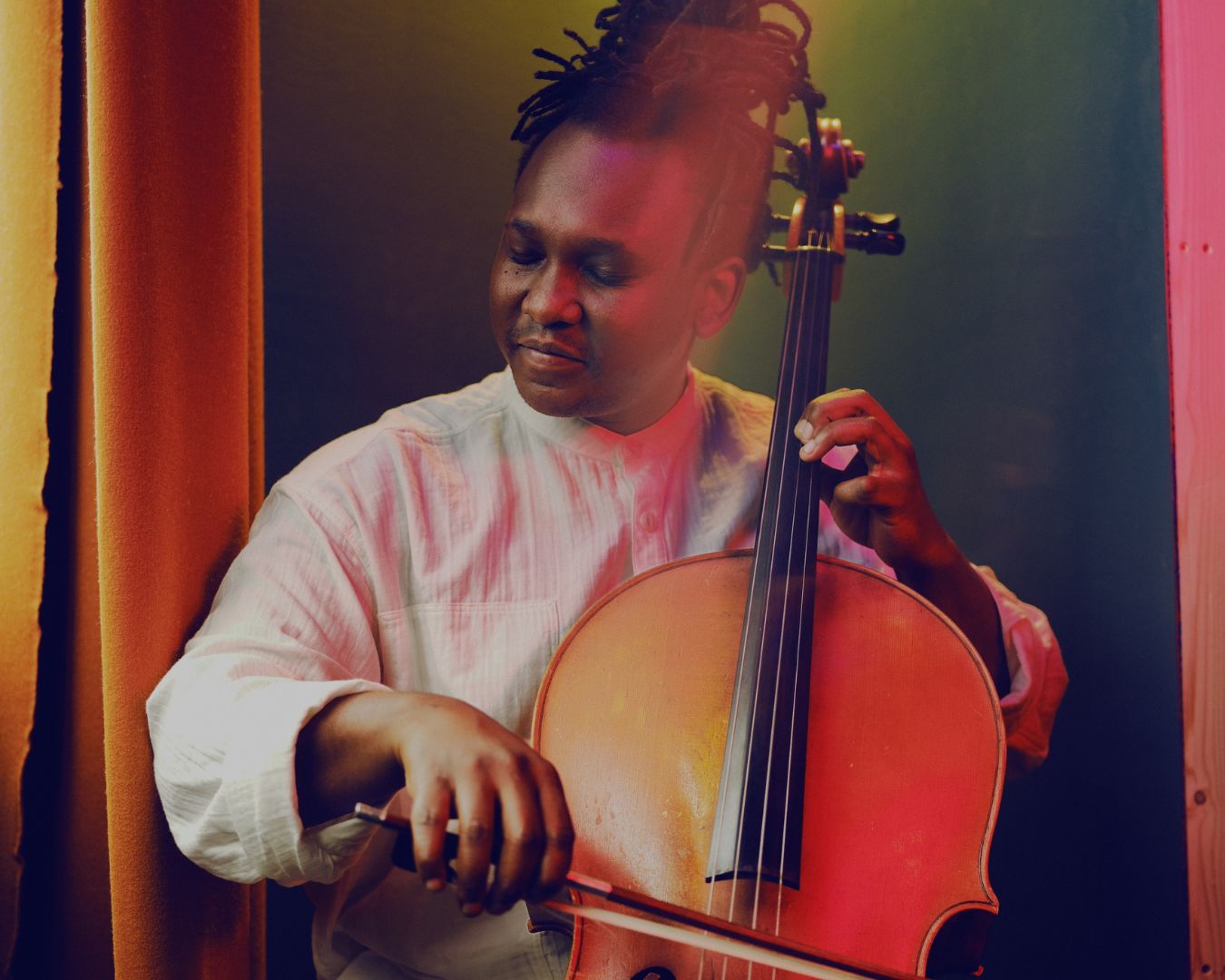
Abel Selaocoe
Cello and Vocals
South African cellist and composer Abel Selaocoe moves across a wide range of genres and contexts. In his own works and concert programs, in which he often combines composition with improvisation, singing, and body percussion, he focuses particularly on the connections between Western art music and other musical traditions. He collaborates with artists from a wide range of musical backgrounds, including composers Bernhard Schimpelsberger and Giovanni Sollima, kora virtuoso Seckou Keita, percussionist Dudù Kouaté, and the Manchester Collective. In 2016, he founded the trio Chesaba, which specializes in music from the African continent. In 2022, he launched the Bantu Ensemble, which performs his own works with him around the world, including at New York’s Carnegie Hall and this year’s Glastonbury Festival. This current season, he is Artistic Partner of the Saint Paul Chamber Orchestra and Artist in Focus of Deutsches Symphonie-Orchester Berlin, which he will join in the world premiere of a new work for cello and orchestra by Jessie Montgomery in March 2026. In February 2025, Abel Selaocoe released his second album, Hymns of Bantu, which was followed this past August by a recording of his own cello concerto, Four Spirits, with the Aurora Orchestra.
November 2025